This story is a collaboration between Inside Climate News and ProPublica.
Hakim Dermish moved to Catarina, a small South Texas town, in 2002, seeking a rural lifestyle on a budget. Initially, his property had no electricity or sewer lines, but that didn’t bother him.
“Even if we lived in a cardboard box, no one could kick us out,” Dermish said.
Catarina was once a quiet place. A decade later, the rise in oil and gas drilling brought financial opportunities. Dermish started businesses to support the industry, offering services from site guards to worker housing.
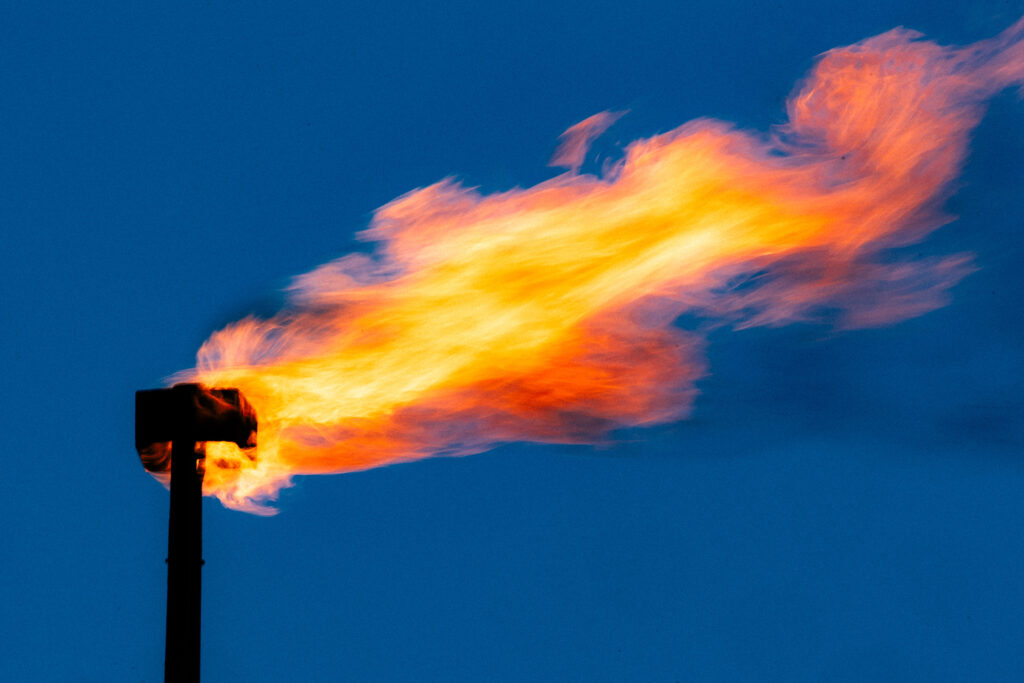
The growth also introduced flares—flames burning off excess natural gas—visible day and night. Initially supportive of the industry, Dermish worried about pollution threatening the health of the town’s 75 residents. In 2023, he began lodging complaints with the state, urging companies to curb emissions.
Inspectors from the Texas Commission on Environmental Quality investigated, finding only a handful of violations, some of which were addressed by companies. However, concerns persisted as flares continued lighting up the sky and gas odors lingered.
“Starting first thing in the morning, talk about the stench. Then you call the state and nothing happens,” Dermish said. “They do absolutely nothing.”
His neighbor Lupe Campos, who worked in the oil fields for over three decades, lives three blocks from a flare. Toxic hydrogen sulfide escapes from nearby wells, giving the air the smell of “burnt rotten eggs,” Campos said. “It’s hard to bear.”

While expanding oil and gas production, President Donald Trump’s administration claimed U.S. drilling is cleaner than elsewhere due to stricter oversight. For Earth Day, the White House stated that increased natural gas exports meant sharing cleaner energy globally.
However, Texas, the heart of the oil and gas industry, provides a different narrative.
Texas regulators emphasize efforts to curtail emissions by requiring permits to release or burn gas from wells.
Yet a first-of-its-kind analysis of permit applications to the Railroad Commission of Texas reveals a system approving most applications. Between May 2021 and September 2024, over 12,000 flaring and venting permits were requested, with only 53 rejected, a 99.6 percent approval rate.
Natural gas is primarily methane, a potent greenhouse gas, but also contains hydrogen sulfide, deadly at high concentrations. Gas escapes as wells are drilled and before capture infrastructure is in place. It can be intentionally released if pressure poses a risk or is unprofitable to capture. Drillers usually flare gas they don’t capture, converting methane to less harmful carbon dioxide, but sometimes release gas without burning it.
The analysis found companies requested to flare or vent over 195 billion cubic feet of natural gas per year, enough to power 3 million homes. These emissions have a climate impact equivalent to 27 gas-fired power plants operating year-round, even if flares burned every methane molecule released.
“It’s a gargantuan amount of emissions,” said Jack McDonald, senior analyst at Oilfield Witness. “So much gas is methane, and much is either incompletely combusted or not combusted at all, leading to a huge climate impact.”
Oilfield Witness analyzed the Railroad Commission data on exemptions to flaring rules and shared it with Inside Climate News and ProPublica. News organizations verified the data, consulting Texas university professors.
Railroad Commission spokesperson R.J. DeSilva said Texas has made “significant progress” in addressing methane emissions. Companies must provide evidence that flaring is necessary, and the agency follows all applicable rules when approving permits. “If an application lacks justification, it is returned for clarification,” he said.
“I am proud of the progress made to reduce natural resource waste,” said Jim Wright, Railroad Commission chair, adding there’s “room for further improvement.”


The analysis likely overstates emissions, as companies may request permits for larger amounts to ensure compliance. Operators in four Texas counties flared about 70 percent of the permitted volume, according to a recent comparison of state flaring data and satellite information. The Railroad Commission sometimes approves smaller volumes than requested, not captured in the data.
Todd Staples, president of the Texas Oil and Gas Association, stated that the industry is committed to reducing flaring and emissions while meeting global oil and gas demand. “The Texas oil and natural gas industry is committed to ongoing progress,” he said.
Residents surrounded by flares and leaking wells, like Catarina, want more action to control emissions. The Railroad Commission approved eight flares within 5 miles of the town and 280 in Dimmit County during the study period.
The gas danger became apparent on March 27 when a 30-inch pipeline near Catarina failed. The rupture released over 23 million cubic feet of gas, enough for 365 homes annually, according to the pipeline owner Energy Transfer’s report to the Railroad Commission.
Dermish recorded the chaos with his cellphone. “The house is shaking,” he says in the video as the escaping gas roars, jostling the camera.
Fearing for their safety, he and his wife evacuated to a neighboring town. Upon returning, Dermish noticed new gas flares, presumably lit to release pressure in the pipeline network. A cellphone video shows a towering flame, taller than a nearby telephone pole.

“Have you ever seen ‘Lord of the Rings’? Do you remember the Fire of Mordor?” Dermish said. “That’s what we have here.”
An incident report by Energy Transfer attributed the pipeline failure to a technician’s errors. Without Railroad Commission objections, the pipeline was repaired and back in service three days later. The agency did not penalize Energy Transfer.
Energy Transfer did not respond to a request for comment.
After more than two decades in Catarina, Dermish and his wife are planning to move away. “It’s just too dangerous,” he said.
American Oil and Gas: Cleaner?
While the Trump administration presents American oil and gas as cleaner, it has rolled back methane regulations.
The Environmental Protection Agency delayed implementing previous rules mandating methane leak monitoring and addressing by the industry. Trump and Republicans repealed the country’s first methane tax. In June, Trump revoked Biden administration guidance on complying with a law to reduce methane pipeline leaks.
The White House did not respond to a request for comment.
As the top oil and gas producer, Texas is a barometer of the U.S. regulatory environment’s success in creating a cleaner industry.
The Permian Basin, the largest U.S. oil field, was estimated in a 2024 study to emit the second-most methane globally.
The industry disputes this, citing a S&P Global Commodity Insights report showing a 29 percent drop in Permian Basin methane emissions between 2023 and 2024. “Methane emissions management” is increasingly part of operations, said Raoul LeBlanc, S&P vice president. However, the report acknowledged satellite data showed a modest 4 percent reduction, contradicting the company’s airplane data.
“We can say confidently that there is no evidence that methane emissions from the Permian Basin are low,” said Steven Hamburg, chief scientist at the Environmental Defense Fund.
Texas’ Effort to Rein In Flaring
In Texas, State Rule 32 prohibits flaring and venting gas at wells, except under specific conditions: during drilling, the first 10 days post-completion, and for safety. Otherwise, drillers must seek exceptions.
The Railroad Commission updated its application process for exemptions in 2020 and issued new guidance in 2021. Operators must explain why drilling can’t be suspended and indicate that all options for using the gas were explored before flaring.
Oilfield Witness gathered exemption requests since 2021, showing the agency approved permits non-compliant with guidelines. Companies often requested indefinite flaring or failed to justify it, leaving application sections blank.

Capturing gas requires expensive infrastructure that can cost more than its value. Companies often cited financial reasons for exemptions, which were nearly always approved, despite the agency’s stance that finances are insufficient justification according to its guidelines.
“The Railroad Commission seems very interested in devolving decision-making processes to the companies themselves,” McDonald said.
The data also showed 90 percent of approved applications were backdated, retroactively permitting existing flares. Companies typically sought permission 10 days after starting to flare.
A spokesperson said the commission allowed a longer filing period after starting to flare when guidelines were revamped in 2020. Even so, 900 permits applied for after the updated window were accepted.
The Railroad Commission approved more than 7,000 flares in areas where gas reservoirs were high in hydrogen sulfide, increasing toxic gas escape risk. Of those, 600 were within a mile of a residence, data showed.
Minimizing flaring is “not a priority in any sense” for the Railroad Commission, said Gunnar Schade, an atmospheric sciences associate professor at Texas A&M University. “The priority is oil produced, and that means revenue for the state. Oil and gas is a priority, so who cares about the flaring?”
Overstating Progress
The Railroad Commission and Texas oil industry highlight their work to reduce flaring. The agency cites data showing dramatic flaring rate drops, especially since 2019. The Texas Oil and Gas Association announced that Permian Basin drillers “slashed methane emission intensity by more than half” in two years.
Such claims are misleading, experts say, including David DiCarlo, an associate professor at the University of Texas at Austin. Using 2019 as a baseline creates a false impression of decline, he said, as methane emissions were high then due to booming production.
DeSilva, the Railroad Commission spokesperson, defended 2019 as a baseline because “about five years ago, we began proactive steps to reduce flaring.”
A longer view shows 2.2 percent of gas at Texas oil wells was flared or vented over the past decade, according to state data reviewed by Inside Climate News and ProPublica. It hovered just north of 2 percent recently, indicating a smaller reduction than claimed. The industry still lacks sufficient pipelines to capture gas at oil wells, so flaring rises with production.

“They can’t get it below 2 percent because they keep drilling,” DiCarlo said. Emissions remain high while new wells are drilled. “That’s just the nature of the beast.”
Endeavor Energy Resources was among the largest beneficiaries of the state’s lax permitting system. More than half the approved exemptions went to Endeavor, which merged with Diamondback Energy in 2024. Endeavor also applied for the longest permit—6,300 days. The Railroad Commission approved it without changing its duration.
Diamondback Energy did not respond to a request for comment.
The industry claims it’s addressing methane while resisting oversight.
Steven Pruett, president and CEO of Elevation Resources, saw a 2,408 percent flaring increase after new wells were drilled, according to emails uncovered by Fieldnotes and shared with Inside Climate News and ProPublica. Pruett blamed inadequate infrastructure in emails with University of Texas faculty preparing a grant application.
Weeks later, Pruett participated in a tour with EPA staff, claiming American oil and gas is cleaner and companies complied with emissions reduction efforts.
During his term as trade group chair, it led lawsuits against the EPA over methane rules.
Pruett did not respond to a request for comment.
“A Constant Roar”
Opponents of flaring face challenges in halting the practice, even when the Railroad Commission hears objections.
Tom Pohlman, former Fisher County sheriff, had a flare near his home starting in October 2023. The responsible driller, Patton Exploration, evaluated pipeline extensions and gas use for bitcoin mining. By July 2024, no deal was finalized, prompting another permit request to flare up to 1 million cubic feet of gas daily for 18 months. “Patton is diligently pursuing solutions but needs more time,” the company wrote.
When Pohlman learned of the new permit, he and neighbors urged denial.
“The flame’s sound is a constant roar we hear throughout our property,” neighbors wrote. “There is no peace and quiet since its ignition.”
In September 2024, Pohlman challenged the permit in a hearing with Patton Exploration before a Railroad Commission judge.
“For approximately 20 residents, it lights up their yard,” Pohlman said, describing the 45-foot-high flare. “I need liveability for this neighborhood. We’ve had issues here.”

Patton Exploration’s lawyer, David Gross, acknowledged frustrations but emphasized the well’s importance.
“You can’t produce oil without gas,” he told the judge. “It’s Texas policy to recover state reservoirs because it’s in the public interest.”
In January, the Railroad Commission approved the permit for another 12 months.
ProPublica investigates abuses of power. Subscribe to Dispatches for weekly stories in your inbox.
Original Story at insideclimatenews.org