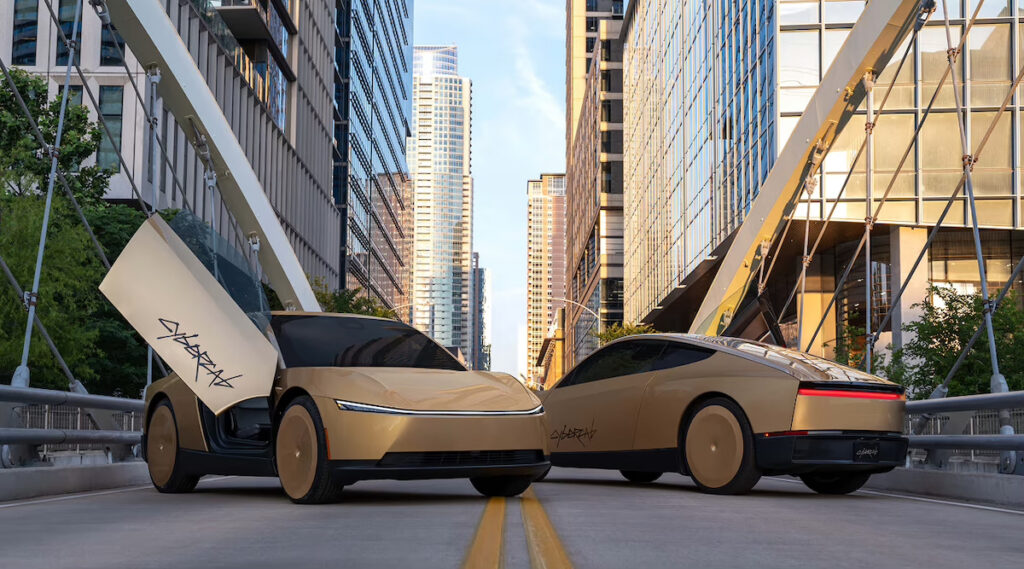
Tesla Unveils Cybercab: The Future of Robotaxi Fleets?
The unveiling of Tesla’s Cybercab, an autonomous robotaxi without a steering wheel, took place in Austin, Texas, on September 3, capturing significant attention. However, the event left many with more questions than answers, especially regarding the Cybercab’s place in existing robotaxi fleets.
Exploring Fleet Opportunities
Tesla is actively seeking interest from external operators for the Cybercab. On its website, the company invites potential partners to join its robotaxi network with a focus on four main areas:
- Cybercab fleet vehicle purchasing
- Mobility hubs and infrastructure
- Event collaboration
- Other
Individual ownership of the Cybercab appears unlikely unless owners have access to DC fast charging, as the vehicle isn’t compatible with Level 1 or Level 2 home charging. This restriction limits its appeal to the gig economy and certain EV fleets.
Some industry observers are questioning Tesla’s strategy: If the Cybercab is a guaranteed moneymaker, why isn’t Tesla retaining it solely for its own fleet? This raises the possibility that CEO Elon Musk might eventually shift focus away from the robotaxi business.
Lessons from Past Partnerships
The partnership between Tesla and Hertz is a case in point. In October 2021, Hertz announced plans to purchase 100,000 Tesla EVs. However, the transition to electric mobility was challenging for Hertz and its customers, as well as the public charging infrastructure.
Price cuts by Musk further complicated matters. “By early this year, it was clear the massive bet on EVs was a catastrophe. Musk had slashed Tesla prices by as much as 30%, sending the value of the electric cars in the Hertz fleet plummeting,” observed CleanTechnica in April 2024.
The experience of Mistergreen, a Dutch auto leasing startup, also offers insights. As reported by Fleets Europe, Mistergreen’s strategy of exclusively leasing Tesla EVs failed, leading to asset sales due to “significant losses, largely caused by write-downs on its Tesla fleet.”
Safety Concerns for First Responders
Concerns about the Cybercab’s safety for first responders were highlighted by NBC News reporter David Ingram on September 5. Tesla’s emergency guidance warns that pushing the robotaxi incorrectly could risk electric shock and motor overheating. Tesla advises, “LACK OF MOVEMENT OR VISUAL INDICATION OF AUTONOMOUS MODE DOES NOT MEAN AUTONOMOUS MODE IS OFF.”
First responders are instructed to wait for a Tesla representative to confirm that Autonomous Mode is disabled before significant vehicle interaction. However, Tesla acknowledges that contacting “Tesla Robotaxi First Responder Support” may not always be feasible.
NHTSA’s Inquiry
On September 4, the National Highway Traffic Safety Administration (NHTSA) initiated an Audit Query regarding the Cybercab’s compliance with Federal Motor Vehicle Safety Standards. While NHTSA is developing new regulations, the current standards remain in effect.
Market Reaction and Controversy
The market response to the Cybercab launch was tepid, with Tesla’s stock declining following the event. Compounding the situation, Elon Musk stirred controversy with a social media post on September 6, congratulating Germany’s far-right Alternative for Germany party on its electoral success, drawing criticism for promoting extremist views.
Amid these developments, questions continue to swirl around the Cybercab’s future in the evolving landscape of autonomous vehicles.
Original Story at cleantechnica.com