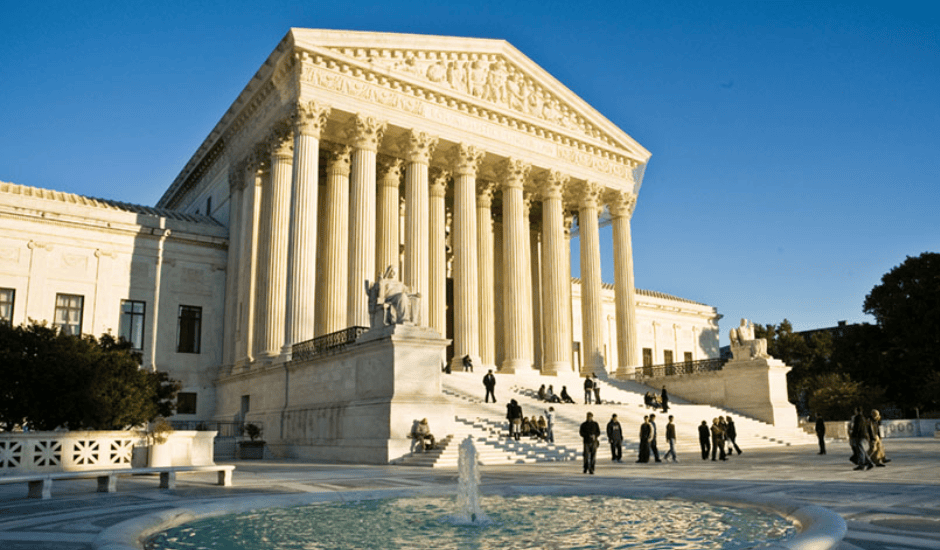
As the U.S. Supreme Court prepares to address a pivotal climate lawsuit this October, the case of Suncor Energy Inc. v. County Commissioners of Boulder County has become a focal point for both environmental and legal communities. Involving Boulder, Colorado’s 2018 lawsuit against major energy companies, the case seeks reparations for climate change impacts, drawing diverse support and scrutiny.
The Case at Hand
Numerous state and local governments, including Boulder, have initiated lawsuits against energy companies, claiming billions in damages for localized climate change costs. A Colorado state court initially denied the energy companies’ motion to dismiss these claims, a decision upheld by the state Supreme Court. Now, the U.S. Supreme Court will address whether federal law overrides these state-law claims and if the case is ripe for federal review. The key questions include:
- Do federal laws prevent state-law claims related to greenhouse-gas emissions affecting the global climate?
- Does the Supreme Court have jurisdiction over this case?
This lawsuit is part of a broader movement aimed at achieving environmental goals outside traditional legislative avenues. The defendants have criticized this approach as a misuse of the legal system. The Pacific Legal Foundation, in support of the energy companies, argues that Boulder’s theory of liability could destabilize the U.S. energy sector.
“[B]ecause Petitioners produced and sold fossil fuels, they should be liable in state court for natural disasters that cannot be directly traced to them. That theory is not simply wrong as a matter of tort law but threatens to serve as a blueprint for dismantling America’s domestic energy sector through litigation.”
A decision on federal preemption could significantly impact climate litigation strategies, which often rely on state tort laws.
Organizations Backing Boulder
Fifteen nonprofit organizations have submitted or joined amicus briefs supporting Boulder, with a combined revenue exceeding $436 million. Although climate activism underpins the lawsuit, only a third of these nonprofits are environmental groups.
Environmental Advocacy
The Natural Resources Defense Council (NRDC) argues that advancements in “attribution science” can link emissions to specific weather events. The NRDC, a major environmental litigator, reported nearly $249 million in revenue in 2025.
The Union of Concerned Scientists collaborated with academics on a brief addressing alleged fraud by energy companies, reporting $42 million in revenue for 2024. The Environmental Protection Network, composed of former EPA officials, also supports Boulder, with 2024 revenues of over $3.8 million.
Newcomer WHEN Justice and Our Children’s Trust have added their voices, focusing on the public health impacts of fossil fuels.
Diverse Support
Non-environmental groups have also rallied behind Boulder. The American Association for Justice disputed claims that the lawsuit could bankrupt the fossil fuel industry. Other supporters include the National Association of Counties, National League of Cities, and International Municipal Lawyers Association.
Unexpected allies like the Brady Center and Giffords Law Center have linked climate litigation to public nuisance claims against gun manufacturers. Other groups like Public Citizen and the Constitutional Accountability Center have also filed briefs.
Additional Insights
Ten cities and counties with similar lawsuits and ninety Democratic Congress members have submitted briefs supporting Boulder. The outcome of this Supreme Court case, expected in 2027, could reshape the landscape of climate-related litigation.
Original Story at capitalresearch.org