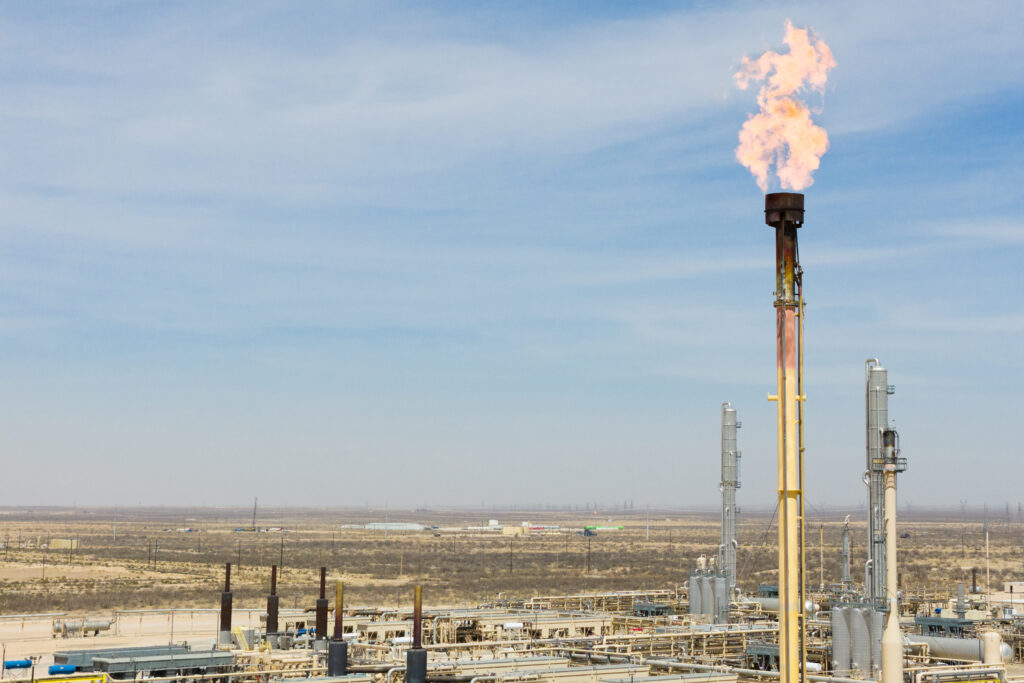
U.S. Senator Sheldon Whitehouse (D-RI) has initiated an inquiry into discrepancies in reported and observed methane emissions from the Permian Basin, the largest oil field in the U.S. This follows findings from MethaneSAT, a collaborative effort involving the Environmental Defense Fund and Harvard University, which highlighted that emissions from May 2024 to June 2025 were quadruple those estimated by the U.S. Environmental Protection Agency (EPA).
Whitehouse, the senior member of the Senate Environment and Public Works Committee, noted the gap between EPA’s Greenhouse Gas Inventory reports and satellite data. He emphasized that this presents opportunities to reduce waste and mitigate climate change. Methane, a potent greenhouse gas, contributes significantly to climate change and poses public health risks. It is over 80 times more effective than carbon dioxide in warming the planet within two decades of its release.
Senator Whitehouse has requested responses by April 1 from major oil companies in the Permian Basin, including EOG Resources, ConocoPhillips, and ExxonMobil, regarding their efforts to monitor and mitigate methane emissions. Chevron spokesperson Allison Cook expressed the company’s readiness to collaborate on increasing natural gas supplies and reducing consumer costs. EOG Resources highlighted its low methane emissions rate in its 2024 sustainability report.
S&P Global Energy explained the emissions discrepancy as a result of EPA’s reporting requirements. Their report indicated a 20% decline in methane emissions from 2022 to 2024, despite increased oil and gas production. However, Sharon Wilson of Oilfield Witness criticized the absence of peer review in the S&P report. Similarly, MethaneSAT’s findings are currently under review by EGUsphere.
According to Steven Hamburg of the Environmental Defense Fund, emission levels in the Permian Basin significantly surpass industry reduction targets. He noted that reducing these emissions is both technically and economically feasible. Companies like ExxonMobil and Occidental Petroleum have committed to reducing methane emissions to 0.2% of total gas marketed by 2030, whereas MethaneSAT reported a 2.4% rate for the entire basin.
All companies but Mewbourne Oil participate in the Oil and Gas Methane Partnership 2.0, a UN program aimed at reducing emissions. A UN spokesperson acknowledged the critical role of data from initiatives like MethaneSAT for transparency and informed decision-making.
Whitehouse argued for more robust federal oversight, stating that fossil fuel companies cannot be relied upon to manage methane leakage effectively. He underscored the need for further investigation into the significant discrepancies in methane emissions reporting in the Permian Basin.
In a related development, Whitehouse remarked that cutting methane emissions “can largely be done at no net cost,” given its value as the main component of natural gas. However, Wilson contested this view, pointing out the need for significant infrastructure investments to capture methane otherwise flared due to insufficient pipelines in the region.
Original Story at insideclimatenews.org