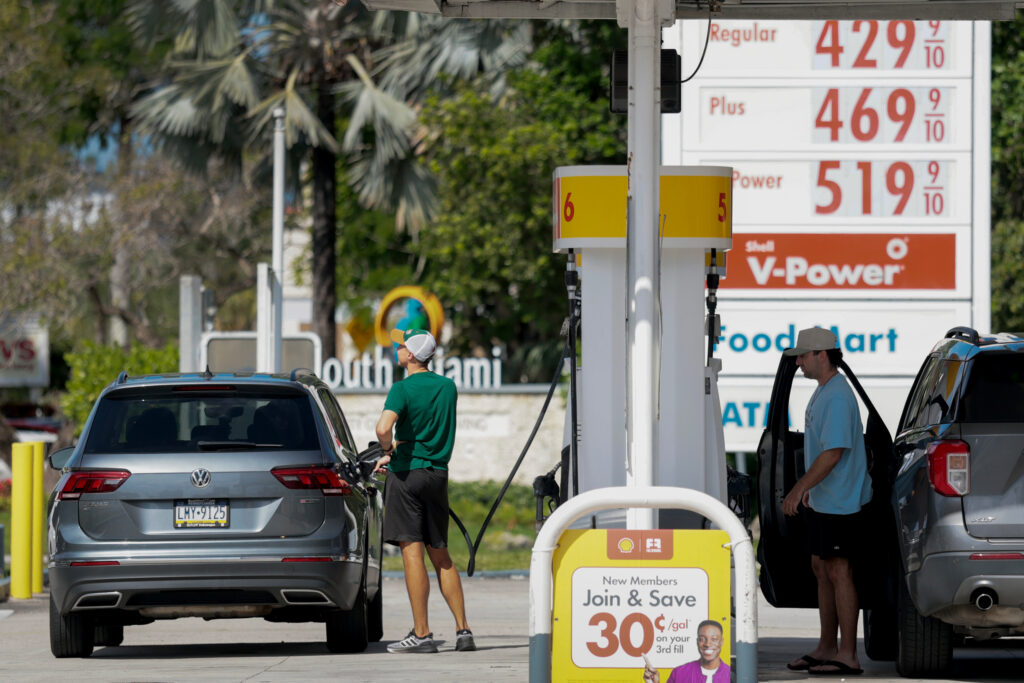
During a recent family trip in central Kentucky, gasoline prices exceeded $4 per gallon, marking a notable moment in the current price surge.
Despite knowing that U.S. gasoline remains cheaper than in many other countries, the cost impacted my vacation budget significantly.
I anticipate that my next vehicle will be an electric vehicle (EV), but my current Honda CR-V still has years of life left. This highlights the challenge of linking short-term gasoline price trends to a shift from internal combustion engines.
Whenever gas prices rise, there is a spotlight on the potential for EVs to grow market share. However, rapid change requires factors not currently present in the U.S. market, such as supportive policies and a range of affordable models.
Unless high prices due to the Iran conflict persist for six months or more, with U.S. averages consistently above $4, the impact on EV sales is likely minimal.
Historical experience, such as the 2008 price spike, shows that buyers lean towards fuel-efficient cars during price hikes, but revert to trucks and SUVs when prices stabilize.
Research by Joshua Linn, an economist at the University of Maryland and a senior fellow at Resources for the Future, has shown that higher fuel prices encourage purchases of vehicles with better fuel economy.
Linn’s research indicates that while consumers do shift towards fuel-efficient cars, the overall increase in miles per gallon is modest.
With the availability of hybrids and EVs, potential fuel savings are greater now. Yet, short-lived price spikes have minimal impact on consumer decisions.
“Many consumers might believe gas prices will drop again,” Linn stated.
Prolonged high prices may prompt more consumers to consider hybrids or EVs.
High gasoline prices reduce consumer spending across the economy. David Reichmuth of the Union of Concerned Scientists notes that consumers can’t swiftly switch vehicles, as purchases occur only every few years.
Reichmuth advises that EVs are financially beneficial, even when gas prices are lower than they are now.
U.S. policymakers and automakers have missed aligning incentives and vehicle offerings with consumer needs.
Currently, drivers seek better fuel cost management. As of last October, the tax credit for new or used EVs was eliminated, influencing automakers to prioritize gasoline trucks and SUVs over EVs.
This shift contributed to a 27% drop in U.S. EV sales in the early months of 2026 compared to the prior year, according to Cox Automotive.
Stephanie Valdez Streaty of Cox highlighted that the market is now driven more by fundamentals than policy, with long-term prospects favoring EV growth.
However, automakers are canceling EV models, reducing options, especially in the affordable range. Recent reports highlight Honda’s decision to halt plans for three U.S.-made EVs.
General Motors plans to produce the revamped Chevrolet Bolt EV for a limited run, ending next year, as reported here.
Volkswagen announced it will stop selling the ID.4 in the U.S., removing a key model from the market.
Despite these announcements, the global EV market is thriving, particularly in Europe, with North America and China experiencing declines in early 2026, according to Benchmark Mineral Intelligence.
In China, changes in government policy and economic slowdown led to expected declines, but automakers are gaining market share globally.
Ford CEO Jim Farley emphasized the importance of protecting the U.S. manufacturing economy from Chinese competition. During a Fox News interview, Farley highlighted tariffs keeping Chinese vehicles out of the U.S. market.
Farley stressed that Ford must ensure its vehicles are competitive with Chinese models, expressing confidence in upcoming Ford EVs.
Currently, U.S. consumers have limited budget-friendly EV options, unlike the vast selection available in other markets.
Other notable developments in the energy transition this week:
China’s Role in the Iran Conflict: The Iran conflict emphasizes the risks of dependence on imported oil and natural gas. A shift to wind, solar, and batteries, where China leads in manufacturing, benefits the country as reported by The New York Times.
Maine’s Moratorium on Data Centers: Maine’s legislature passed a bill pausing large data center development until 2027 to allow for consumer and environmental protection rules, detailed in a report. Gov. Janet Mills has yet to decide on signing the bill, the first of its kind in the U.S.
Renewables Surpass Natural Gas in U.S. Power Generation: In March, renewables generated more electricity than natural gas for the first time in U.S. grid history, as reported by Yale E360. Though typically a low-generation month, it’s a sign of shifting energy sources.
California’s Energy Challenges Amid Iran Conflict: California climate and clean energy advocates discussed future challenges at a recent summit, as reported by Inside Climate News. Concerns include Gov. Gavin Newsom’s policies and energy implications of the Iran conflict.
“`
Original Story at insideclimatenews.org