The energy landscape in the Philippines is witnessing a pivotal shift as recent data indicates a decline in coal-fired electricity generation for the first time since 2008, dropping by 5.2% in the first half of 2025. This change comes amid discussions about the country’s energy transition, with significant attention on liquefied natural gas (LNG) as a potential replacement for coal. However, a closer look at the data reveals that renewable energy sources are playing a more critical role in this transition.
Renewable Energy vs. LNG: The Real Drivers
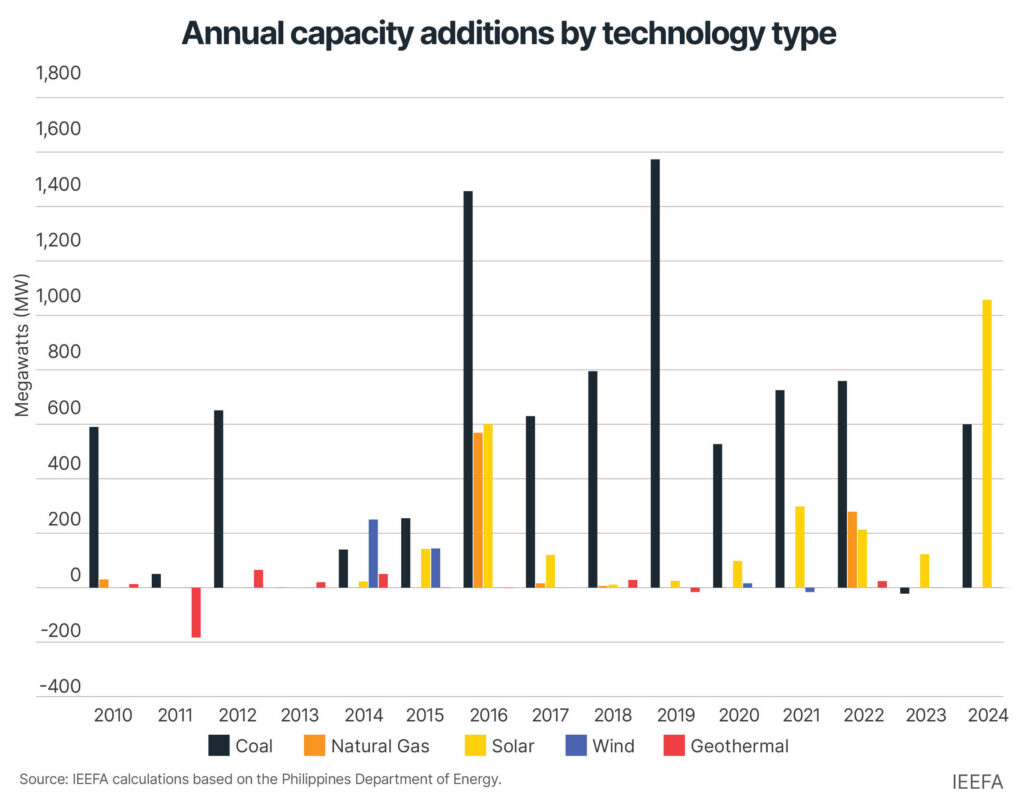
Contrary to claims that LNG is the primary driver behind the reduction in coal usage, the growth of renewable energy has been more substantial. Government data shows that the Philippines has not added new greenfield LNG-fired power capacity since 2017, with the last notable increase in gas capacity occurring in 2022. Meanwhile, the country added over 1 gigawatt of solar power in 2024, surpassing all other energy asset classes and exceeding previous projections for solar deployment.
Government-led initiatives, including centralized auctions, are spurring the development of renewable projects. A fourth auction round is set to take place this year, targeting up to 10.5GW of new renewable capacity, further emphasizing the focus on clean energy.
Challenges for LNG and Coal
In the Philippines’ competitive electricity market, projects must secure supply contracts through auctions by offering the lowest price. This presents a significant hurdle for LNG projects, as only one greenfield LNG-fired power project has won a competitive selection process to date. Simultaneously, coal capacity continues to expand due to exemptions in the 2020 moratorium on new coal plants.
Reports attributing coal’s decline to LNG overlook the fact that hydropower and solar generation have increased more significantly than gas in the first half of 2025. Several coal facilities have also faced outages, further explaining the decline in coal generation.
Natural Gas Generation: Below Historical Levels
The role of natural gas in the Philippines remains limited, with generation still below historical levels despite an 8.3% rebound in 2024. This is primarily due to decreasing output from the Malampaya gas field, which preceded the operational start of LNG import terminals in 2023.
Coal generation’s decrease in early 2025 can be attributed to factors such as increased solar and hydropower output and outages at several coal plants. During the first quarter of 2025, eight coal plants were offline for over 30 days, contributing to the overall dip in coal utilization.
Cost Considerations in Energy Choices
Despite some arguments that LNG is becoming more cost-competitive, its prices in Asia remain higher than historical averages. Current coal prices are significantly lower than LNG on an energy-equivalent basis. The Philippines’ largest distribution utility, Meralco, reports that LNG imports have increased generation costs from gas-fired plants to PHP8-11 per kilowatt-hour, surpassing both solar and coal generation rates.
These dynamics impact electricity prices for consumers, as LNG keeps costs higher compared to other energy sources. The Independent Electricity Market Operator of the Philippines (IEMOP) notes that falling prices in the Wholesale Electricity Spot Market (WESM) are due to the rapid growth of renewables and infrastructure investments. Bloomberg New Energy Finance analysis shows solar is the cheapest electricity source in the Philippines, with solar-plus-storage systems becoming competitive with new thermal plants.
Original Story at ieefa.org