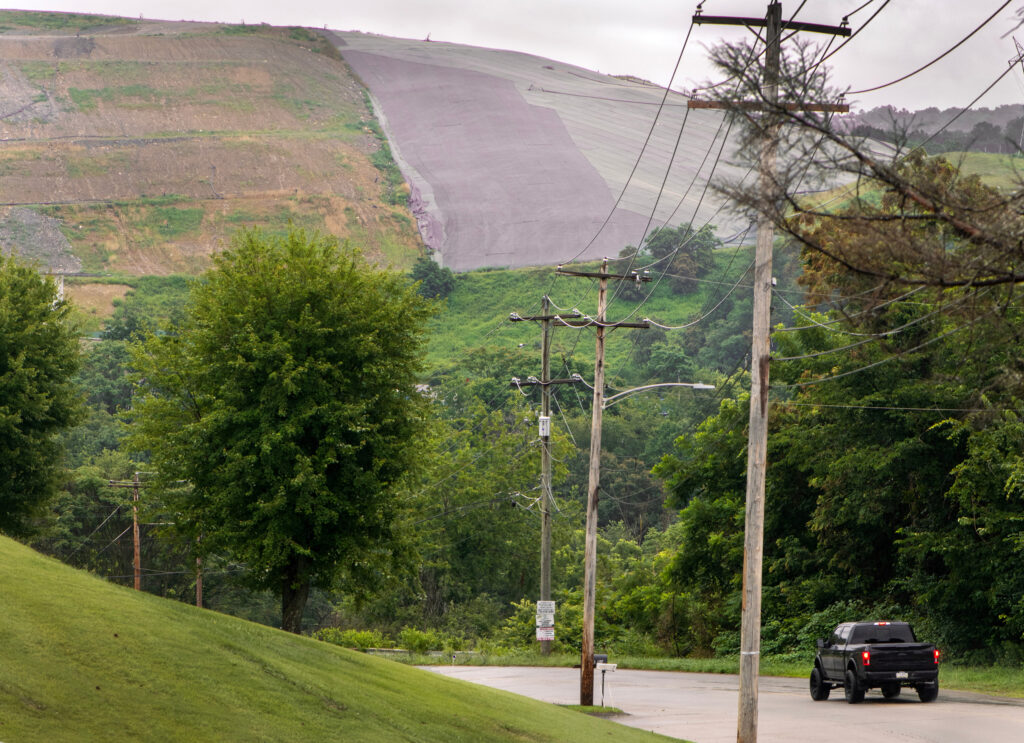
A decade ago, Pennsylvania’s Department of Environmental Protection (DEP) published a study on radioactivity in the oil and gas industry, driven by concerns that the rising volume of toxic fracking waste could harm the environment and public health. That study suggested more research was necessary, particularly about the impacts on landfills where this waste is disposed.
On Friday, the agency released a follow-up study focusing on landfill leachate, a liquid byproduct formed when rainwater passes through waste, collecting contaminants.
“The takeaway here is that there is no risk to human health from radiation in landfill leachate,” said Jessica Shirley, DEP’s secretary, in a press release. DEP’s study analyzed samples from 49 landfills in Pennsylvania from 2021 to 2023, including 23 landfills that received oil and gas waste.
However, experts caution that this study is too limited to draw firm conclusions about potential long-term harm from leachate contaminated by such waste.
“This is an interim report,” said Daniel Bain, an associate professor at the University of Pittsburgh, who studies oil and gas waste. “We’ve looked at the problem. There doesn’t appear to be a problem now.”
Bain noted the study’s snapshot doesn’t rule out different future results and provides limited insight into cumulative environmental effects.
The study acknowledges that its finding of “no current cause for concern” relies on limited data. More landfill leachate samples and radiochemistry analysis are necessary to confirm these initial findings, the study’s authors noted.
David Allard, former director of DEP’s Bureau of Radiation Protection, expressed no surprise at the results. “It’s in line with what they were seeing early on,” he said, adding his comfort with the findings but advocating for consistent, long-term monitoring. “My opinion is there should be at least annual sampling.”
In 2021, then-Gov. Tom Wolf announced that Pennsylvania landfills would need to test regularly for radium. Gov. Josh Shapiro, then attorney general, supported this decision. DEP confirmed in December that the requirement had not been implemented and did not announce any such rule alongside the new report.
DEP found samples from only 11 landfills exceeded the U.S. Environmental Protection Agency’s limits for combined radium-226 and 228 in drinking water, with none surpassing the U.S. Nuclear Regulatory Commission’s standards for untreated wastewater.
However, as Allard pointed out, there are no specific standards for leachate.
DEP also found “no correlation” between samples exceeding EPA standards and landfills that had accepted oil and gas waste according to state records. However, a 2025 Inside Climate News analysis noted inconsistencies between reported waste by operators and landfills.
Oil and gas operators reported creating nearly 8.8 million tons of solid waste from 2017 to 2024, with about 6.3 million tons going to landfills across the state.
Environmental groups in Pennsylvania have long expressed concerns over the consequences of generating and disposing of substantial amounts of oil and gas waste, often radioactive and containing heavy metals and toxic chemicals.
David Hess, former DEP Secretary, highlighted previous issues with radioactive fracking waste, including its disposal at public wastewater treatment plants unable to process it properly.
“Like many aspects of the shale gas industry, we are learning things the hard way,” Hess said.
Studies have shown that some radioactivity from oil and gas waste has already entered the environment, such as downstream discharge points from facilities processing the waste.
Bain warned about the nature of pollutants in oil and gas waste and the volume produced annually, urging regulators to monitor radioactivity in the environment and at landfills long-term. “We’re going to have to be watching forever,” he said.
Original Story at insideclimatenews.org