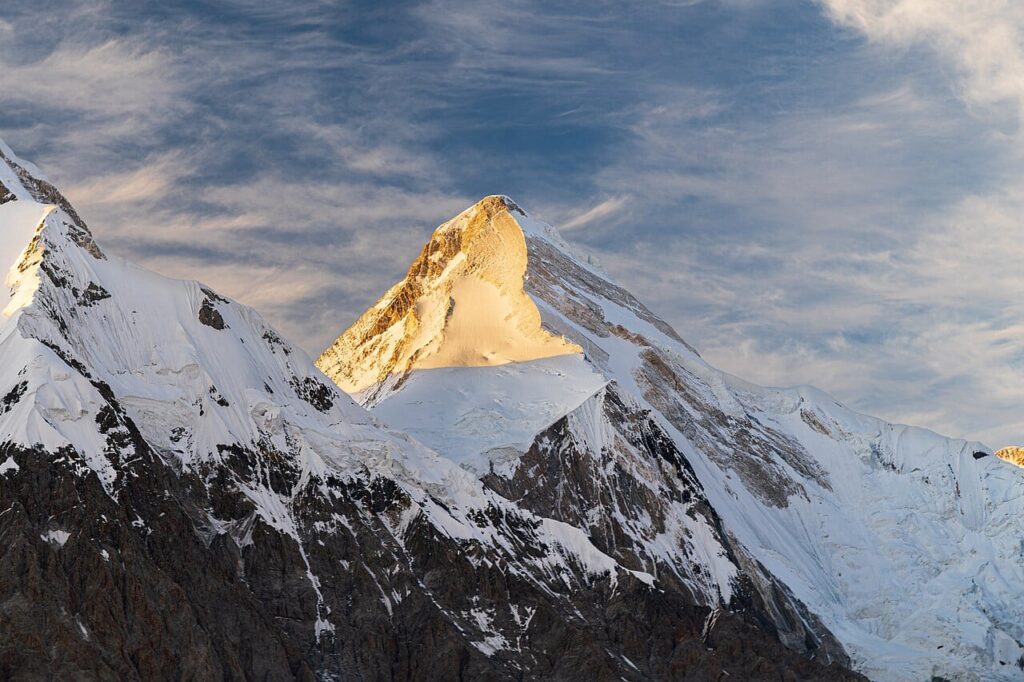
Glaciers, once considered steadfast sentinels against climate change, are now showing alarming signs of distress. In the Pamir and Tien Shan mountains, ice that has remained stable for decades is now retreating at an unprecedented pace.
New observations from the Kangxiwa Glacier in the eastern Pamir, among other studies in Central Asia, indicate an alarming trend in 2025, where glaciers experienced record-breaking ice loss. This rapid melting, driven by prolonged heat, early thawing, and diminishing snowfall, has significant implications for the millions dependent on these glaciers for water, agriculture, and energy. As these “last stable glaciers” join the global ice decline, experts warn of an increasing threat to regional water security.
Kangxiwa Glacier’s Alarming Retreat
Kangxiwa Glacier, located in China’s Xinjiang Uyghur Autonomous Region, serves as a stark example of this trend. Rising to 5,350 meters above sea level, it has been closely monitored since 2011. Before 2022, its ice loss was minimal, with occasional years of growth. However, 2025 saw an alarming increase in melting, with the glacier losing the equivalent of 1.5 meters of water across its surface, a rate 4.1 times higher than its annual average from 2011 to 2024. Even the glacier’s highest areas, typically snow-covered, experienced significant melt.
The research led by Fan Yu from the Chinese Academy of Sciences attributes this to relentless heat. Unlike previous years where high temperatures were short-lived, 2025 saw consistent warmth from May to September. The glacier’s surface darkened as snow cover receded, reducing its albedo—how much sunlight it reflects—to its lowest since 2003. This darker surface absorbs more heat, accelerating the melting process.
Widespread Ice Loss
Kangxiwa’s situation is not unique. Other glaciers in the Pamir also experienced severe mass loss in 2025, indicating a regional phenomenon. A study by Lander Van Tricht of Vrije Universiteit Brussel and ETH Zürich, using data from 16 glaciers across the Tien Shan and Pamir, estimated that Central Asian glaciers lost approximately 30 ± 6 cubic kilometers of ice in 2025, about 2% of their total mass. Notably, 64% of glaciers larger than 1 square kilometer experienced their most negative mass-balance year during the study period.
The Implications for Water Resources
The glaciers of Central Asia act as crucial water sources, feeding rivers that support farming, hydropower, ecosystems, and drinking water across arid lowlands. These glaciers function as a “water tower,” accumulating snow and ice during winter and releasing meltwater in hot, dry months when demand peaks.
However, this role can be deceiving. As glaciers shrink, meltwater availability may increase temporarily, but the long-term effect is a reduction in reliable water supply as ice reserves dwindle. The regional study highlighted that 2025’s conditions—warm temperatures, an early melt season, fewer snowfall days, and early exposure of dark ice—are concerning. Snowfall was not significantly lower overall, but it was less frequent during critical months when it would typically protect the ice.
While these findings indicate a troubling trend, scientists urge caution in interpreting a single year’s data as indicative of long-term change. Kangxiwa’s direct mass measurements date back only to 2011, limiting historical context. Shaun Eaves from Victoria University of Wellington noted to New Scientist that although the results align with expectations under human-driven warming, it is premature to conclude the current melt rate is inevitable.
Nonetheless, the trajectory is evident. A region once reputed for its resilient glaciers is now aligning with the global pattern of ice retreat. The studies were published in Advances in Climate Change Research and Environmental Research Letters.
Original Story at www.zmescience.com