The shift to renewable energy is gaining momentum, yet significant hurdles remain. Wind and solar power reached a milestone by comprising 17% of U.S. electricity generation last year, but fossil fuels still dominate the energy landscape. Meanwhile, numerous natural gas plants are planned to support the growing energy needs of data centers.
According to Ömer Karaduman, assistant professor at the Stanford Graduate School of Business, the challenge is not technological or financial. “The economics generally favor renewables,” he asserts, pinpointing administrative barriers, misaligned incentives, and mismatched supply-demand dynamics as the main roadblocks.
Karaduman, who is also a fellow at the Stanford Institute for Economic Policy Research and the Precourt Institute for Energy, has devoted years to diagnosing these issues and devising strategies to overcome them. His core inquiry is, “How can we redesign electricity markets so that clean technologies are able to scale quickly, while maintaining affordability and reliability?”
The Battery Paradox
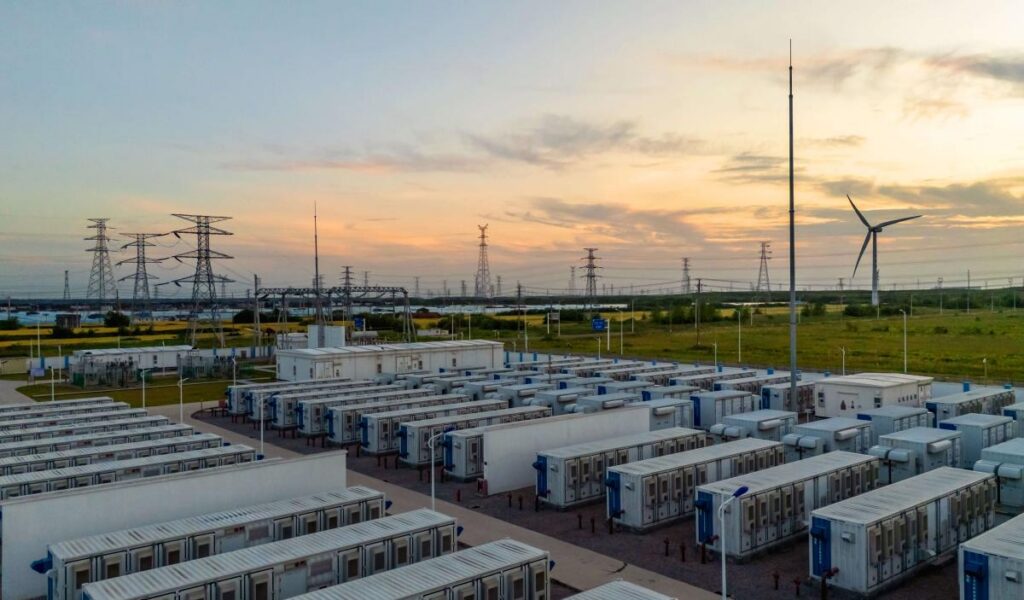
Although solar and wind are key to clean energy, their intermittent nature requires pairing with large-scale battery storage to ensure stability. These storage units, often as large as shipping containers, store energy to be used when demand exceeds supply. Karaduman’s research models a market where storage operators buy low-cost energy and sell it during peak demand.
However, he discovered that the financial returns on storage investments fall short of the societal benefits like emission reductions. “The problem,” he explains, “is that storage itself affects prices. By balancing supply and demand, it reduces price volatility — negating the source of profit.” This dynamic suggests a need for revised incentives, such as “capacity payments” for standby power, to encourage investment.
Breaking Gridlock
A significant bottleneck in expanding renewable energy infrastructure is the lengthy review process for new projects. This process, once manageable, is now overwhelmed by the sheer volume of proposals, delaying project approvals by several years. “The capacity of projects in the interconnection queue is twice the existing capacity in the U.S.,” Karaduman notes. To address this, he and his collaborators, including Yue Hu and Lin Zang, explore solutions such as “cluster studies” which group project evaluations by geography.
Quote
Humans are very adaptable when they have no choice. I think we’re going to figure this out.
Author Name
— Ömer Karaduman
These innovations aim to streamline the process, as demonstrated in a model based on PJM Interconnection, the largest U.S. grid operator. PJM has adopted “first-ready, first-served” processing, a strategy informed by Karaduman’s research for increasing efficiency.
Automating Demand
To fully leverage renewable energy, demand-side flexibility is crucial. Karaduman and colleagues, including Stefan Wager and Mohammad Mehrabi, suggest automation as a solution. Consumers could use home energy management systems to automate energy use based on personal preferences, thereby aligning consumption with generation patterns.
The team developed an algorithm to help utilities set dynamic prices based on demand response, allowing for a seamless shift in consumption without sacrificing convenience. “A system like this allows demand to shift without reducing comfort or needing constant attention from consumers,” Karaduman explains.
Transfer of Power
Karaduman’s analysis of industry restructuring, particularly in a study with Mert Demirer, suggests that mergers and acquisitions in the power sector can enhance efficiency. Improved management led to a 5% increase in efficiency and a notable decline in outages and emissions.
Despite infrastructure challenges, such as outdated transmission lines, Karaduman remains optimistic about overcoming these obstacles. “You no longer have fuel expenses, and that means you can’t rely on pricing through marginal cost, the way markets usually work. At some point, our current pricing system will break down.” However, he believes adaptability will drive the transition to clean energy, asserting, “Humans are very adaptable when they have no choice. I think we’re going to figure this out.”
Original Story at www.gsb.stanford.edu