As tensions rise over renewable energy projects in North America, Nova Scotia is taking bold strides toward harnessing its abundant offshore wind resources. This move positions the Canadian province at the forefront of clean energy innovation, much to the chagrin of US President Donald Trump, who has consistently opposed such developments. Offshore wind projects, particularly, seem to be Trump’s nemesis.
North American Offshore Wind Tensions
Trump’s disdain for wind turbines, especially those offshore, has been evident. His administration has made several attempts to halt the progress of offshore wind projects along the US Atlantic Coast, though courts have ruled these actions unlawful. Nonetheless, ongoing reviews by the Department of Defense have stalled onshore projects.
In a further effort to stymie offshore wind developments, Trump has proposed financial incentives for leaseholders to abandon their projects. This strategy has left coastal states, eager for reliable and local power generation, to seek alternatives. Massachusetts, for instance, has turned its attention to Canada, exploring a partnership with Nova Scotia through the ambitious “Wind West” project.
Cross-Border Collaborations
Earlier this year, a Memorandum of Understanding was signed between Massachusetts Governor Maura Healey and Nova Scotia Premier Tim Houston to collaborate on offshore wind projects in the North Atlantic. Premier Houston expressed his excitement about the partnership, emphasizing the potential for job creation and economic growth in Nova Scotia.
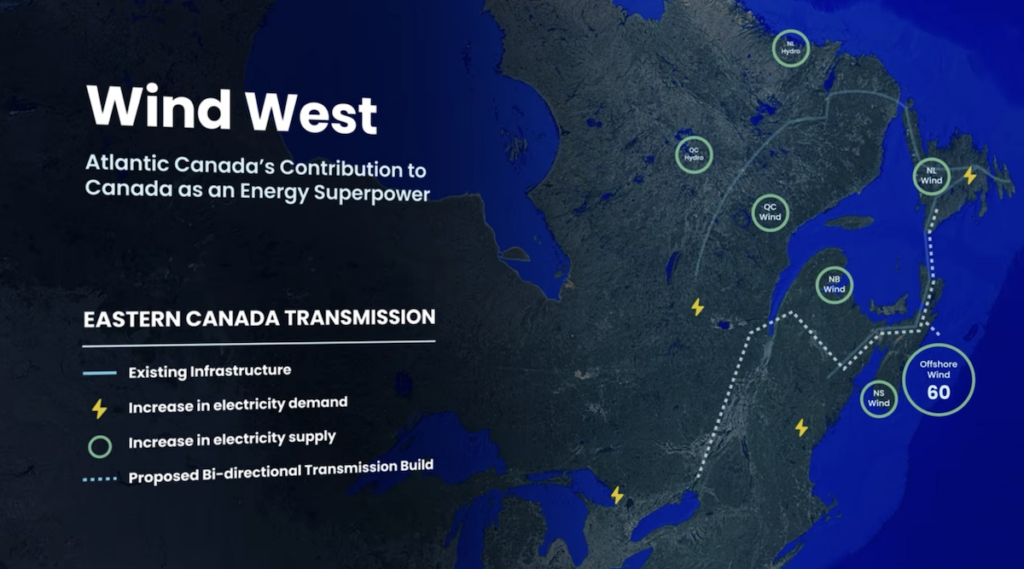
Nova Scotia’s Wind West project is a key focus, showcasing the province’s potential with average offshore wind speeds among the highest in North America. The project aims to generate 5 gigawatts of power in its initial phase, doubling Nova Scotia’s current peak electricity demand.
The Future of Offshore Wind
The Wind West project is just the beginning. Nova Scotia plans to leverage its vast offshore wind potential, which could meet a quarter of Canada’s electricity needs. The Eastern Energy Partnership aims to enhance transmission connections among Eastern Canadian provinces and with US markets, promoting clean energy trade.
The recent opening of the Champlain Hudson Power Express transmission line, which supplies up to 20% of New York City’s electricity demand with hydropower from Quebec, illustrates growing US-Canada clean energy collaborations.
Challenges and Innovations
Despite federal challenges, the US Department of Energy is exploring creative ways to advance its wind power programs. By rebranding wind turbines as “aeromechanical energy systems,” the Department hopes to bypass political roadblocks. The newly formed Integrated Energy Systems Office further supports this initiative, focusing on wind energy reliability and component recycling.
Legal battles continue as states push back against the Trump administration’s efforts to undermine offshore wind projects. Attorneys general from several states have filed lawsuits to challenge the administration’s agreements with energy companies, seeking to preserve access to renewable energy resources.
Original Story at cleantechnica.com