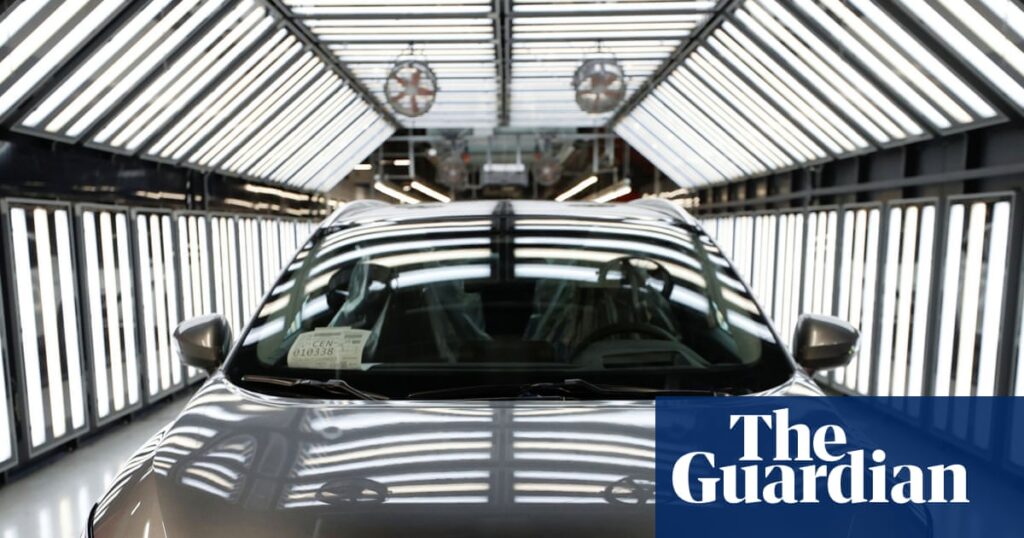
Nissan has made a strategic decision to pause the development of an all-electric version of its popular Qashqai model, which has been the brand’s bestseller in Europe. This move comes amidst the company’s broader plan to reduce its model lineup and manage costs more effectively.
The Japanese automaker stopped the EV Qashqai project last year at its Sunderland plant, the largest car manufacturing facility in the UK, as reported by Reuters. Nissan is now engaging with the UK government to explore financial support options for the future of this site located in north-east England.
Recently, Nissan announced the closure of one of its production lines at Sunderland due to a decline in demand for its vehicles. In April, the company stated that they were evaluating various options for the factory and its 6,000 employees.
One potential avenue under consideration is producing vehicles for other manufacturers. Nissan has signed a non-binding agreement with China’s Chery to explore contract manufacturing opportunities at the Sunderland facility, as outlined here.
Facing significant financial challenges, Nissan reported substantial losses for the fiscal year ending in March. The company is undergoing an extensive cost-reduction initiative, which has involved the shutdown of seven factories and the elimination of 20,000 jobs.
Despite the halt on the Qashqai EV, which was initially slated for production in 2023, Nissan remains committed to expanding its portfolio of electrified vehicles, including hybrids. The company has already been producing the electric Leaf at Sunderland and recently announced plans to manufacture an all-electric Juke there.
Nissan spokesperson commented on the situation, “Qashqai is a global bestseller and we will continue to build on our rich history of electrifying our products. We’re excited to share future plans, so watch this space.”
The European market’s fluctuating demand for electric vehicles has led Nissan to adopt a balanced approach to its electrification strategy. In 2025, the Qashqai, available in petrol and hybrid variants, made up approximately 45% of the company’s 330,000 car sales in Europe.
This development has surfaced around the 10th anniversary of the Brexit vote, with the Sunderland factory’s fate becoming a significant topic in discussions about Brexit’s industrial impact. The factory’s production numbers have significantly decreased from 507,000 cars in 2016 to 273,000 last year.
Nissan’s future strategies include focusing on “AI-defined vehicles” with plans to incorporate autonomous driving technologies in 90% of its vehicles. This technological push aims to boost sales in Japan, the US, and China by substantial margins by 2030. The initiative may also benefit Wayve, a British AI startup that has partnered with Nissan.
As traditional carmakers like Nissan face the challenge of investing in new battery electric technologies, competition from Chinese companies such as BYD, which recently outpaced Tesla in electric car sales, continues to rise. Meanwhile, changes in EU regulations have allowed for flexibility in the 2035 ban on new petrol or diesel cars, responding to industry and political pressures.
Original Story at www.theguardian.com