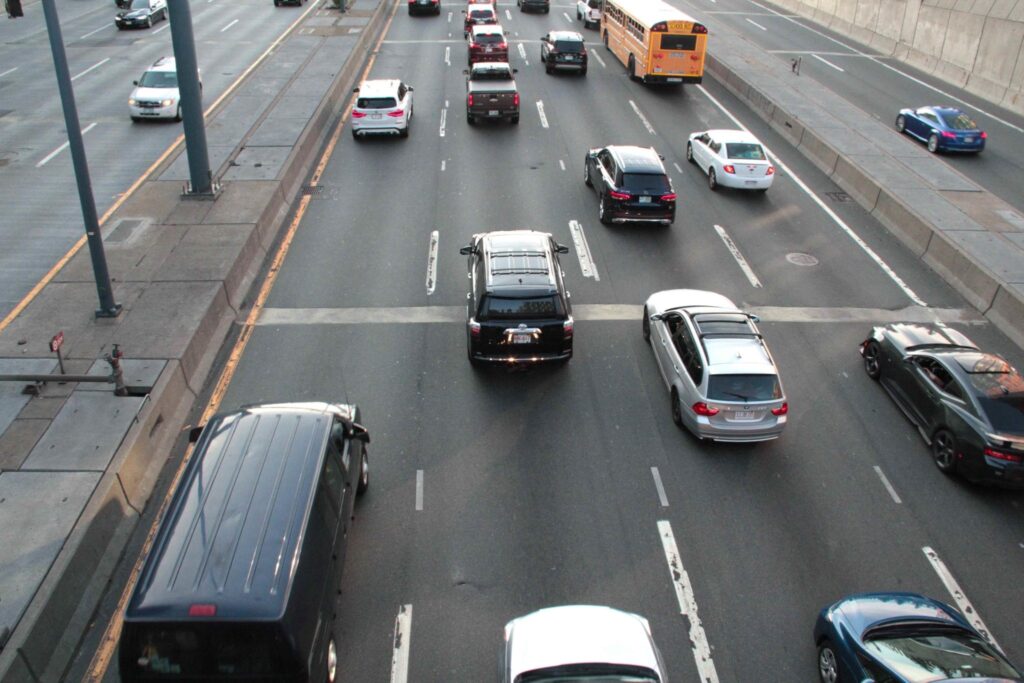
Massachusetts Weighs New Approaches to Transportation Funding Amid Declining Gas Tax Revenue
The landscape of transportation funding in Massachusetts is facing significant challenges as gas tax revenues continue to dwindle. With an eye toward future sustainability, state lawmakers are exploring innovative solutions to ensure adequate funding for infrastructure maintenance and improvements.
Senator Brendan Crighton, co-chair of the Legislature’s transportation committee, underscores the urgency of this matter, stating, “EVERYTHING SHOULD be on the table.” This sentiment reflects a broader willingness to engage in challenging discussions about transportation revenue in Massachusetts, a state where such conversations have historically been contentious.
Recent data indicates a troubling trend: Despite a 7 percent increase in driving from 2022 to 2025, gas tax revenues have not kept pace, decreasing by around 1 percent. This decline in revenue comes as vehicles become more fuel-efficient and electric vehicle (EV) adoption grows, reducing dependency on traditional fuel sources and thus gas tax contributions.
The diminishing returns from gas taxes pose a threat to Massachusetts’s ability to fund its multimodal transportation infrastructure adequately. As inflation erodes the purchasing power of gas tax revenues, the state must seek alternative funding mechanisms.
Among the proposed solutions is the implementation of road usage charges, which would require drivers to pay fees based on miles traveled. This model has been successfully tested in other states. For instance, Utah’s road usage charge program offers EV owners the option of paying per-mile fees or an alternative fuel fee, with nearly 10,000 EVs enrolled in the per-mile plan as of last year.
Similarly, Virginia has instituted a highway use fee for vehicles with high fuel efficiency, while Oregon is moving toward mandatory participation in its road usage program for EVs.
The regressive nature of gas taxes disproportionately affects lower-income drivers, who often drive less fuel-efficient vehicles and therefore pay more relative to their income. Transitioning to a road usage charge could provide a more equitable solution, ensuring that all users contribute fairly to the upkeep of transportation networks.
Massachusetts currently stands apart from 41 other states by not imposing special registration fees on EVs. While a flat fee might appear as a straightforward interim solution, it conflicts with the state’s environmental goals. Instead, a diversified approach to replace the waning gas tax is necessary.
As of January 2026, Massachusetts counts about 470,000 hybrid or electric vehicles among its 4.8 million total registered vehicles. The state is encouraged to trial various models for modernizing its transportation funding, ensuring that changes are tested and adjusted to build public confidence.
By transitioning from gas taxes to road usage charges, Massachusetts aims to secure a reliable revenue stream essential for maintaining and improving its transportation infrastructure. Proactive adoption of these measures will help the state avoid crisis-driven changes in the future.
Original Story at commonwealthbeacon.org