LG Energy Solution Unveils $2.6 Billion Battery Facility in Lansing
In a significant development for the energy storage and automotive industries, LG Energy Solution has inaugurated its $2.6 billion battery plant in Lansing, Michigan. Originally intended to be a joint venture with General Motors, the plant is now independently operated by LG Energy Solution, focusing on a diverse range of products and clientele.
The South Korean firm announced on August 18 that the workforce of 900 employees at the Lansing facility is expected to nearly double to 1,700 as it reaches full production capacity. This aligns with the initial plans that secured financial backing from Michigan taxpayers.
Currently, the plant is not only producing batteries for electric vehicles but also for energy storage systems. Unlike the original plan to partner with General Motors, LG Energy Solution’s current automotive client is Toyota. Additionally, the plant serves energy companies such as DTE and Consumers Energy.
The Lansing facility’s battery cells are transported to LG’s other Michigan plant in Holland for packaging into complete battery systems. The Holland plant has been operational since 2012 and serves automotive partners like General Motors, Honda, and Hyundai Motors. More details on the Holland plant can be found here.
Shifts in Partnership and Production
The decision to downsize electric vehicle production led General Motors to step back from the partnership with LG Energy Solution. Consequently, GM has announced layoffs of 350 employees in Lansing starting January next year, indicating no immediate plans for EV production in the area.
Two GM facilities in Lansing are set to close temporarily for retooling to prepare for the production of the Cadillac CT5, with a $1.25 billion investment. This marks a shift from GM’s previous commitment to spend $1.4 billion on electric vehicle assembly, as reported by the Detroit Free Press last October. More information on GM’s plans can be accessed here.
Future Prospects and Expansions
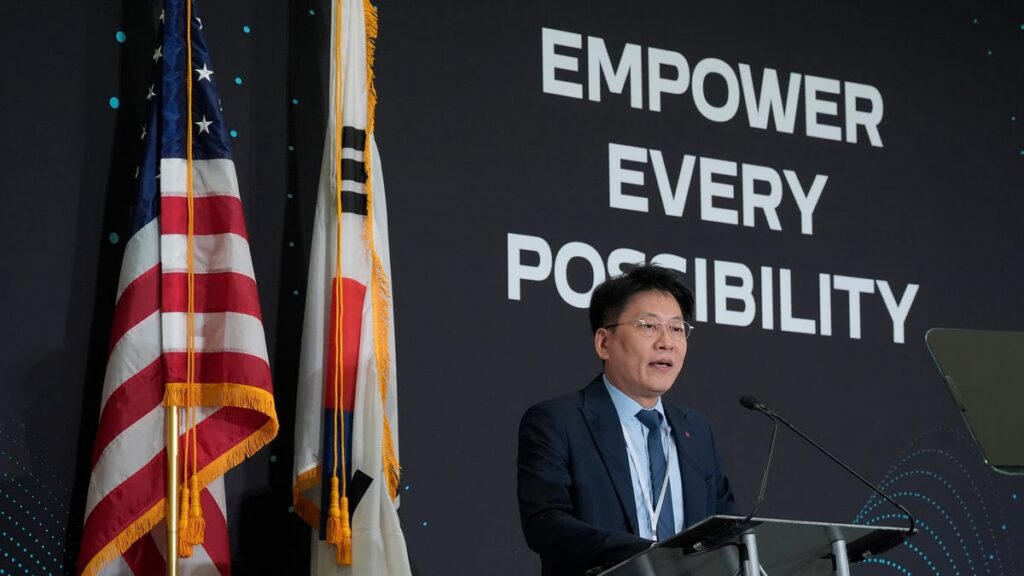
David Kim, CEO of LG Energy Solution, emphasized the strategic importance of the Lansing plant, stating it will support both the future of mobility and America’s energy infrastructure. “We are strengthening America’s battery ecosystem, expanding our manufacturing footprint and reaffirming our long-term commitment to the United States,” Kim stated.
Looking ahead, LG Energy Solution plans to expand the Lansing facility to include prismatic cell production and add Tesla Inc. as a client, alongside its existing partnership with Toyota. The plant will produce advanced nickel-manganese cobalt cells for vehicles such as the 2027 Toyota Highlander EV.
Since 2010, LG Energy Solution has invested $5 billion in Michigan, with additional facilities in Holland and a research and development center in Troy. By year-end, the company’s Michigan workforce is expected to surpass 3,300 employees.
GM’s Involvement and Timeline
- In 2022, GM announced a $2.6 billion investment plan for a battery cell plant in Lansing as part of the Ultium Cells joint venture.
- GM received $600 million from Michigan’s Strategic Outreach and Attraction Reserve Fund for the plant near Lansing and the expansion of Orion Assembly.
- GM sold its stake in the Lansing plant in December 2024, transferring the SOAR funding to LG Energy Solution.
- In March 2025, the Michigan Strategic Fund decided to remove GM references from projects initially covered by SOAR funding.
- In July 2025, GM announced a shift in production focus at Orion to produce the Cadillac Escalade and other large vehicles while maintaining battery module production.
Original Story at www.freep.com