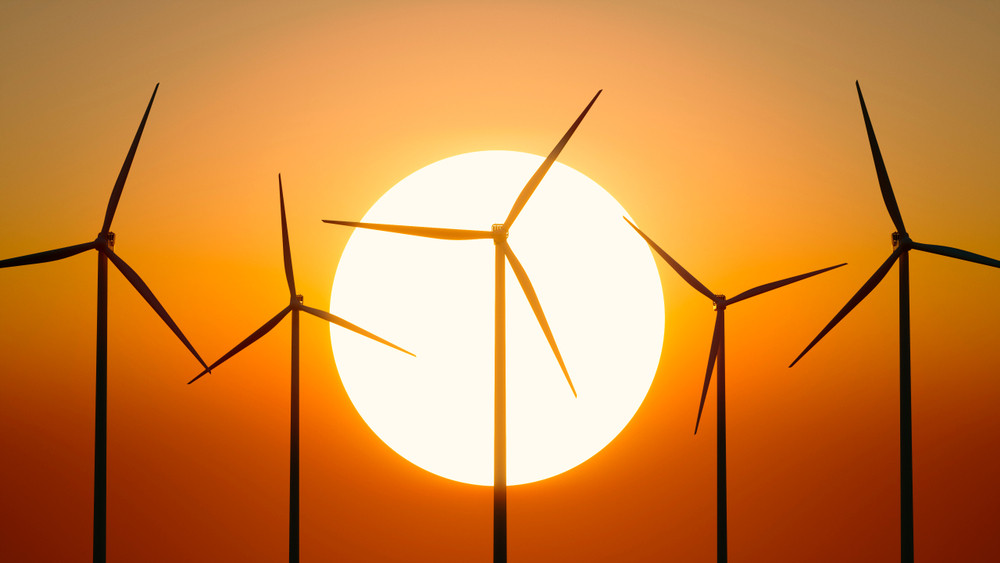
Latin America is harnessing the power of the wind to fuel its clean energy ambitions, with countries like Brazil and Mexico at the forefront of this green revolution. As the region seeks to bolster energy security and diversify its energy sources, wind energy capacity is set to soar in the coming years.
In 2022, the region’s wind energy capacity exceeded 44.7 GW. According to a Wood Mackenzie report, South America’s wind power is projected to reach 83 GW by 2034, growing at an annual rate of 6.5%. The Global Wind Energy Council (GWEC) also anticipates that Latin America could more than double its onshore capacity by 2035, surpassing 120 GW, with offshore installations also expected.
Ben Backwell, CEO of the GWEC, remarked, “The growth of renewable energy is an energy transition success story – 92.5 per cent of all new capacity additions in 2024 came from renewable sources.”
However, the expansion faces hurdles, notably in transmission infrastructure, which several nations must enhance to match the pace of project developments. Kárys Prado, Senior Research Analyst at Wood Mackenzie, noted that “Power oversupply is complicating sustained development in Brazil and Chile, following the recent renewables boom.” She further explained that grid restrictions and strong solar competition are expected to slow growth in the near term. Nonetheless, easing permitting bottlenecks could attract more investors, even as growth remains limited by demand and infrastructure constraints.
Brazil is a leader in this movement, boasting around 35 GW of commercial onshore wind capacity, ranking it fifth globally, according to the Brazilian Association of Wind Energy and New Technologies (ABEEólica) and the GWEC. Most of Brazil’s wind turbines, about 90 per cent, are situated in the northeastern region, taking advantage of consistent strong winds.
The Ventos de Santa Eugênia Wind Complex, operated by the Statkraft Group in Bahia, is the company’s largest project outside Europe, comprising 14 wind farms with 91 wind turbines. This site is also part of Brazil’s first hybrid renewable energy project with the addition of the 162 MW Santa Eugênia Solar.
Mexico is also witnessing significant investment, with projections from the National Energy Control Centre and other bodies estimating up to $5 billion by 2030 for new wind capacity, including nearly 2.2 GW of additional installations. Currently, over 3,000 wind turbines are operational across 16 states, contributing more than 8.1 GW to the grid and powering around 12.1 million homes. The sector employs approximately 10,000 people.
BloombergNEF’s Mexico Transition Outlook 2026 suggests that Mexico could attract $630 billion in new power generation investments by 2035, focusing on green energy projects and energy storage. This could enable Mexico to hit 269 GW of wind, solar, and storage capacity by 2050, making up over 80% of the national grid’s capacity.
In Argentina, wind power capacity has achieved close to 4.6 GW. The International Finance Corporation (IFC), a World Bank Group member, plans to finance the Olavarria Wind Farm and enhance the Bahía Blanca-Abasto transmission corridor. This project, led by Petroquímica Comodoro Rivadavia and Acindar Industria Argentina de Aceros S.A., aims to decarbonize steel production using wind energy.
The wind farm, approved under Argentina’s Large Investment Incentive Regime, includes 29 wind turbines with a 185.6 MW capacity and a 25 km transmission line. This initiative marks Argentina’s first renewable project with privately financed transmission infrastructure, potentially paving the way for future public-private partnerships in energy.
Latin America’s wind energy expansion is poised to tap into natural resources and fuel a broader green transition, supported by policies that attract private investment in clean energy.
Original Story at oilprice.com