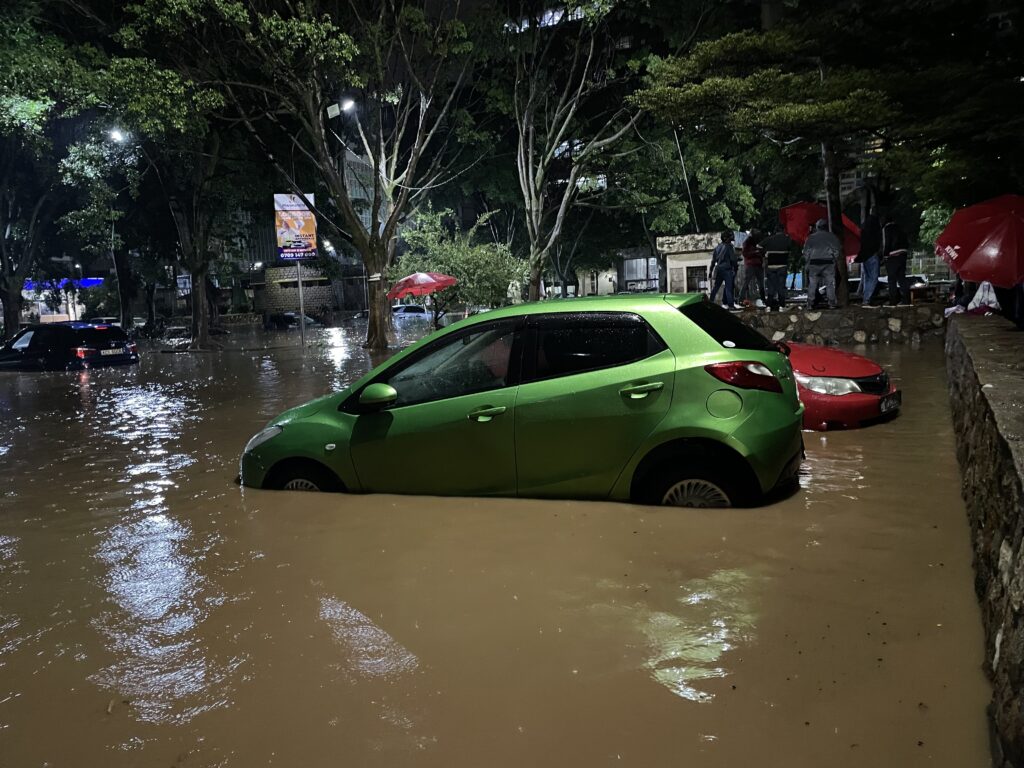
Kenya is grappling with the aftermath of severe flooding that has resulted from sudden heavy rainfall following a prolonged drought. Over 40 individuals have tragically lost their lives due to the flooding, and the capital city, Nairobi, recorded an entire month’s worth of rain in just one day. More details on the severe drought that preceded these events can be found here.
Kenya’s President, William Samoei Ruto, addressed the nation stating, “The ongoing flooding in parts of Nairobi and several other areas of our country has caused immense distress to many families, resulting in the tragic loss of lives, displacement of residents, and damage to homes, property, and livelihoods.” He emphasized the urgent need for sustainable solutions to address the recurring flooding issues in urban areas. The full statement from President Ruto can be accessed here.
Changing Climate Patterns
East Africa is no stranger to weather extremes due to its geographical location. The region typically experiences two rainy seasons and two dry seasons each year. However, with rising global temperatures, these seasons have become increasingly unpredictable. This unpredictability was starkly observed when East Africa suffered five consecutive failed rainy seasons from 2020 to 2023, marking the most severe drought in four decades. Scientists have linked these phenomena to climate change, which is intensifying both droughts and storms. A study highlighted that human-induced climate change exacerbated the conditions during the 2021-2022 drought, leading to significant agricultural and water resource losses. Read more about the study’s findings here.
In 2024, East Africa faced heavy rains and floods that resulted in hundreds of fatalities and displaced vast populations. Infrastructure failures, such as dam breaches and river overflows, compounded the devastation. A rapid attribution study from that year indicated that such events have become more frequent and intense due to climate change. For more detailed insights, view the study here.
Urbanization and Flood Risk
In addition to climate change, rapid urbanization in East Africa has increased flood vulnerability. Many buildings in Nairobi and other urban centers are constructed in flood-prone areas, often without proper authorization, which disrupts natural water pathways. This issue is exacerbated by the removal of ecosystems that naturally manage floodwater, replaced by impermeable surfaces like concrete. According to Hussam Mahmoud, a civil and environmental engineering expert at Vanderbilt University, “When you’re constructing all these new buildings on floodplains or on riparian land, you are … blocking the natural path of the river flow.”
Efforts to address these challenges include demolishing structures in high-risk areas and improving drainage systems. However, these measures struggle to keep pace with the increasing severity of weather events. Globally, cities are adopting nature-based solutions, such as restoring wetlands, to mitigate urban flood risks. Kigali, Rwanda, has been at the forefront of these initiatives by transforming degraded swamps into functional wetlands.
Additional Climate News
Recent geopolitical tensions, including strikes by the U.S. and Israel on Iran, have caused fluctuations in the oil market, with prices reaching $120 per barrel. Experts suggest that investing in renewable energy could mitigate such economic impacts in the future. Details on these developments are available here.
In other news, a comprehensive report on U.S. land, water, and wildlife, discontinued by President Trump, has been completed by a group of volunteer scientists. The report, now open for public comment, highlights significant risks to plant and animal species but also emphasizes the potential of conservation efforts. More about the report can be found here.
A new study reveals that rising sea levels could affect 132 million more people than previously estimated, particularly impacting regions like Southeast Asia. The gap in estimates is attributed to outdated sea level metrics. Learn more about this study here.
Original Story at insideclimatenews.org