Emerging Electric Truck Innovations: A Global Perspective
As the transportation industry pivots toward sustainable solutions, electric truck innovations are gaining momentum worldwide. Notably, electric truck swap infrastructure is making headway, offering unique advantages for fleet operators. This shift is spearheaded by companies like CATL and Janus Electric, each contributing distinct approaches to the electrification of trucks.
China’s CATL is actively working on establishing electric truck swap systems in Europe, providing comprehensive solutions for battery swap stations. Meanwhile, in Australia, Janus Electric has carved out a niche by retrofitting existing diesel trucks into electric vehicles, presenting a cost-effective pathway for fleet owners to transition to electric power. This conversion approach is significantly more affordable—approximately 25% of the cost of manufacturing a brand-new electric truck.
Traditionally, diesel trucks are retired when their engines wear out, but electric motors offer a longer lifespan with proper maintenance. The introduction of Battery as a Service (BaaS) allows fleet operators to manage costs and risks effectively. Battery swap systems ensure trucks are equipped with functional batteries, with older packs being repurposed for secondary uses.
A notable feature of Janus Electric’s offering is the rapid battery swap, which can be completed in about four minutes, as highlighted in an interview with Janus CEO Ben Hutt. This swift process is gaining attention among those who witness it in action.
In a series of articles, the advantages of electric truck battery swapping, such as reduced grid demand and infrastructure costs, have been explored. Janus Electric’s system operates on 300A at 240V, negating the need for grid upgrades. Additionally, using smaller battery packs optimized for specific routes decreases truck weight and enhances efficiency.
The retrofit of diesel trucks by Janus results in lighter vehicles compared to their original diesel configurations, unlike fixed battery electric trucks that are bulkier. This weight reduction also circumvents regulatory challenges associated with heavier vehicles.
Janus Electric emphasizes that standardization is not a critical concern for fleets using proprietary systems, especially for short-range vehicles. However, interoperability becomes important for long-distance fleet operations. As Ben Hutt states, “We don’t need to be the people who electrify the Hume highway from Sydney to Melbourne. There are many use cases where our technology makes sense immediately, bypassing the need to wait for national charging infrastructure.”
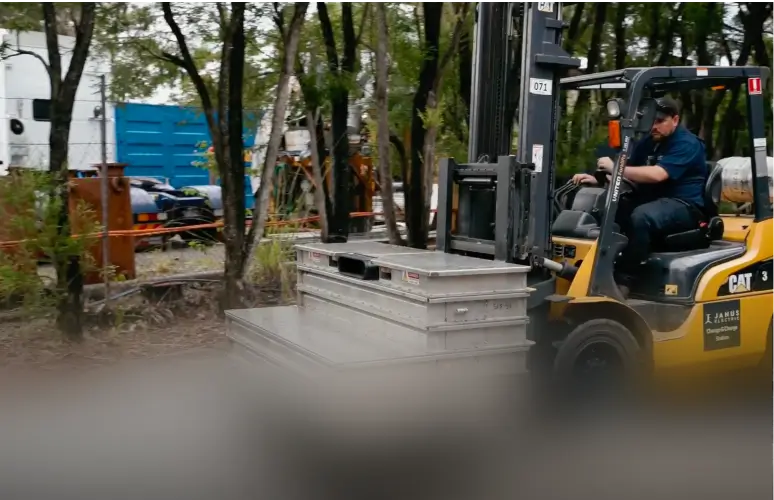
Janus Electric’s swaps are currently executed using forklifts, with plans to develop automated swap stations. These efforts align with a broader strategy to scale operations, with the company aiming to expand to 50 conversion kits monthly from a current base of 30 trucks. As diesel costs and availability fluctuate, electric trucks present a compelling alternative for fleet upgrades.
Original Story at cleantechnica.com