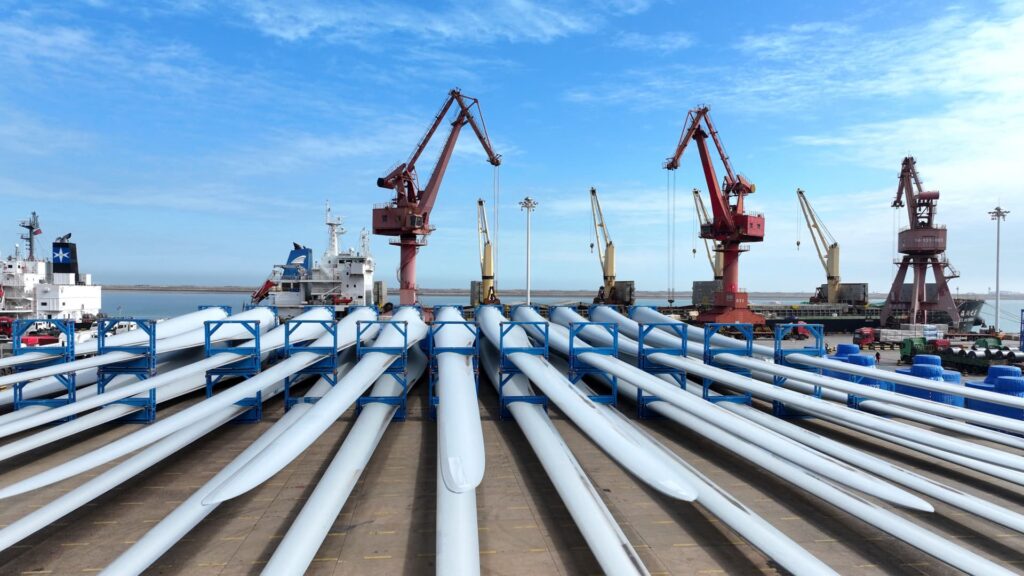
As geopolitical tensions escalate, the global push for renewable energy gains new momentum. The ongoing conflict in Iran has catalyzed a shift in energy strategies worldwide, prompting countries to reconsider their reliance on traditional energy sources in favor of renewables like wind and solar power. This renewed focus on clean energy is benefiting major players in the sector.
Danish wind turbine manufacturer Vestas reported a significant rise in first-quarter profits, attributing its success to strong execution in both its onshore and offshore business segments despite the volatile political climate. Similarly, Danish utility Orsted exceeded profit expectations for the quarter, while Norway’s Equinor, predominantly an oil and gas company, anticipates increased returns from its clean tech division due to the Middle East crisis.
Torgrim Reitan, Chief Financial Officer at Equinor, noted that the energy transition’s drivers have shifted amidst the Iran conflict. “In Europe, we see that there is clearly big momentum behind that,” Reitan commented on CNBC’s “Europe Early Edition.”
Equinor, which posted its strongest quarterly profit in three years, is advancing large offshore wind projects in the U.S., Poland, and the U.K., with the latter expected to become the world’s largest offshore wind farm upon completion.
The surge in fossil fuel prices, a consequence of the U.S. and Israeli-led war against Iran, has led to substantial first-quarter profits for oil and gas companies, including Equinor. Analysts believe this energy shock could spur further investment in clean energy resources, presenting opportunities for green tech companies.
Energy Transition
Orsted emphasized the urgency of accelerating Europe’s energy transition, particularly through offshore wind, as a means to reduce reliance on fossil fuel imports. “When we look at what’s happening in the world, there’s no reason not to switch gears in the energy transition towards renewables in Europe,” stated Orsted CEO Rasmus Errboe. “Offshore wind and other renewables can deliver secure, green energy and can significantly lower total system costs for households and businesses when deployed at scale.”
Despite challenges such as rising costs and supply chain disruptions, Orsted is doubling down on its European ventures, especially given the U.S. administration’s resistance to wind power. President Donald Trump has a history of criticizing wind energy, asserting at the World Economic Forum that wind turbines harm the land and are financially unviable. EU Climate Commissioner Wopke Hoekstra countered, saying the EU takes “a fundamentally different view” on shifting away from fossil fuels.
Data Centers
Vestas’ CEO Henrik Andersen celebrated the company’s best first-quarter earnings since 2018 and highlighted the potential benefits of electrifying the grid. “We are in a much better place, probably than what we expected to be a few months ago,” Andersen shared on CNBC’s “Squawk Box Europe.”
Andersen also indicated plans to engage with data center builders in the U.S. to discuss how renewable energy can support AI infrastructure development, indirectly addressing Trump’s criticism by stating, “Just because one person in the world has a maybe wrong perception of what reality … is, that doesn’t take the rest of the community off the scale. So, things keep motoring.”
Despite the optimism, not all investors are convinced that recent geopolitical tensions will significantly accelerate investment in renewables. Tancrede Fulop, a senior equity analyst at Morningstar, stated via email that while energy security concerns could bolster the long-term case for renewables, the Iran conflict hasn’t yet resulted in a notable change in fundamentals. He noted that Vestas appears better positioned to benefit from increased renewable deployment, whereas Orsted remains focused on executing its current projects.
Original Story at www.cnbc.com