The Rising Tensions between US Automakers and Chinese Electric Vehicle Imports
The possibility of Chinese electric vehicles entering the US market has raised concerns among American auto manufacturers. Industry leaders fear that low-cost, technologically advanced imports from China could disrupt their businesses.
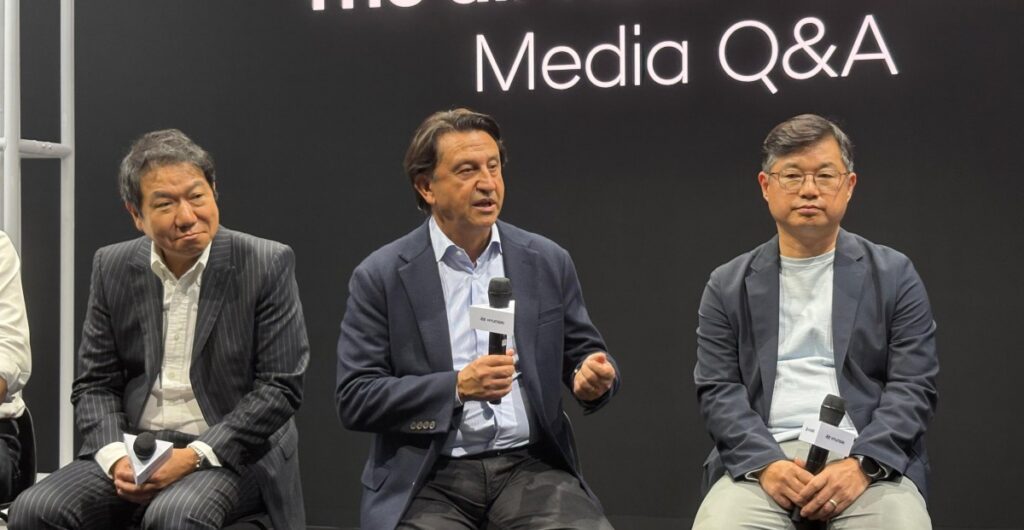
Hyundai’s CEO, José Muñoz, remains more optimistic compared to his industry peers. He believes that a strategic combination of protectionist measures and product enhancements could counteract the potential influx of Chinese vehicles. While acknowledging the pressure from Chinese automakers, Muñoz asserts the importance of maintaining fair competition. He highlights the need for “a level playing field for everybody,” a sentiment he expressed during the unveiling of the 2027 Hyundai Tucson in New York City. “We compete everywhere in the world, and then we have seen that in the markets where that position is respected, so it’s really good for us,” he stated.
Chinese carmakers have already made significant inroads into the European market by offering affordable vehicles, thus capturing market share at the expense of established brands like Volkswagen and Volvo. US auto executives caution that similar scenarios could unfold in America absent protective measures.
Currently, high tariffs and regulations prohibiting Chinese software in vehicles serve as barriers to Chinese car sales in the US. However, these restrictions might soon ease. Former President Donald Trump has indicated openness to Chinese manufacturers setting up facilities in the US, provided they employ local workers. Industry analysts predict that China’s entry into the US market is inevitable.
Despite the potential challenges, Hyundai has not devised a specific strategy to counter Chinese imports. Muñoz explained, “We don’t develop strategies specifically because of the Chinese or because of other types of consumers, or other types of competitors.” Instead, Hyundai focuses on vertical integration to reduce costs. By manufacturing its own technology and components, the company aims to enhance competitiveness through “better quality over cost.” A prime example of this approach is Hyundai’s $5.8 billion investment in green steel production in Louisiana, which aims to produce more competitive and environmentally friendly materials.
Muñoz also addressed the state of the US electric vehicle market, which lags in adoption rates compared to Europe and China. Political divisions and a lack of infrastructure contribute to this disparity, but the limited availability of affordable EV models remains a significant obstacle. Nevertheless, Muñoz believes the US market is highly competitive, with Hyundai experiencing strong EV sales, largely driven by its hybrid offerings. The Hyundai Group recently surpassed Honda to become the second-largest seller of hybrids in the US, trailing only Toyota.
Regarding battery production, Muñoz acknowledged China’s lead in the sector but expressed confidence in the US’s capacity to catch up, thanks to partnerships like Hyundai’s joint venture with SK On in Georgia. “Obviously if you don’t have the critical mass, the volume, it’s very difficult to be competitive,” he noted, emphasizing the importance of battery cost management and domestic production capabilities.
Original Story at www.theverge.com