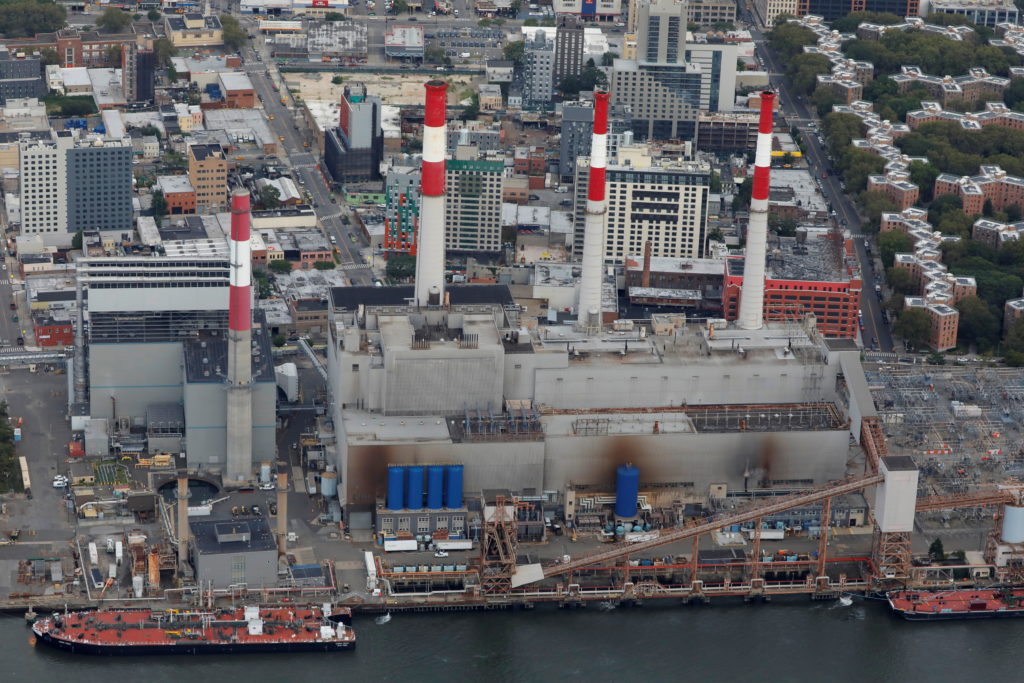
In a landscape marked by evolving political and economic challenges, New York Governor Kathy Hochul is advocating for a delay in the state’s ambitious climate goals originally set in 2019. As energy prices surge, the governor’s proposal aims to alleviate the financial burden on consumers, emphasizing affordability over immediate environmental action.
Governor Hochul points out that the circumstances have “radically changed” since New York committed to a 40% reduction in greenhouse gas emissions by 2030. She argues that enforcing planned fees on polluters now would excessively inflate energy costs, affecting households across the state.
“I cannot in good conscience — knowing the moms and dads and the seniors and the families that are struggling, paying their bills now — I cannot do something I know at this very moment that’s going to raise those prices,” Hochul stated during a recent public appearance.
WATCH: Trump rolls back landmark policy regulating greenhouse emissions
This shift in strategy is reflective of a broader trend among Democratic leaders who are reconciling clean energy initiatives with the pressing need to maintain economic affordability. Particularly in the Northeast, some states are reconsidering their energy targets, while others are evaluating the reduction of utility bill charges that support efficiency programs.
Environmental advocates are concerned by these changes, viewing them as a step backward. They highlight that states like California continue to uphold aggressive policies aimed at reducing reliance on fossil fuels.
Liz Moran from Earthjustice criticized Hochul’s approach, suggesting it prolongs dependency on gas, the same fuel contributing to rising energy bills. Despite these criticisms, Hochul maintains her commitment to combating climate change, attributing some current financial challenges to the reduction of clean energy grants during President Trump’s tenure.
Affordability versus Climate Action
A report by the Lawrence Berkeley National Laboratory notes a 27% increase in average U.S. residential electricity prices from 2019 to 2024, with significant hikes in California and Northeast states. Factors include greater demand from data centers and natural gas prices, a common electricity generation source.
Energy costs were a pivotal issue in recent gubernatorial elections in New Jersey and Virginia, and the current geopolitical climate has only exacerbated these concerns. Rhode Island and Connecticut have already adjusted their renewable energy timelines, citing high electricity costs as a primary concern.
Workers install solar panels on top of a Walmart in Chula Vista, California. Photo by Walmart/Flickr
Massachusetts and New Jersey are contemplating reducing charges on utility bills that finance efficiency programs, with affordability taking precedence over environmental concerns.
Kyle Murray from the Acadia Center remarked, “It is hard to talk about climate at times, because everyone is very laser-focused on affordability and customer bills.”
Cap-and-Invest Challenges
New York’s initial plan to reduce emissions involved a “cap-and-invest” system, which requires polluters to buy emissions allowances, with the proceeds funding clean technology and renewable energy. While California has effectively implemented such a system, New York missed its 2024 regulatory deadline, leading to legal actions and further delays.
The governor’s current plan, still under legislative review, suggests extending the regulatory timeline to 2030 and setting new emissions targets for 2040.
Contentions Over Cost Projections
Governor Hochul warns that not delaying could impose over $4,000 annually on some households. Environmentalists challenge these projections, arguing they overestimate costs and overlook the benefits of reducing fossil fuel dependency.
In Washington, a cap-and-invest program was upheld by voters, suggesting public support for such initiatives. Caitlin Krenn from Washington Conservation Action noted, “The sky has not fallen, and the program is working as intended.”
Republican gubernatorial candidate Bruce Blakeman criticized Hochul’s delay, advocating for the complete removal of the plan to avoid future financial burdens.
Original Story at www.pbs.org