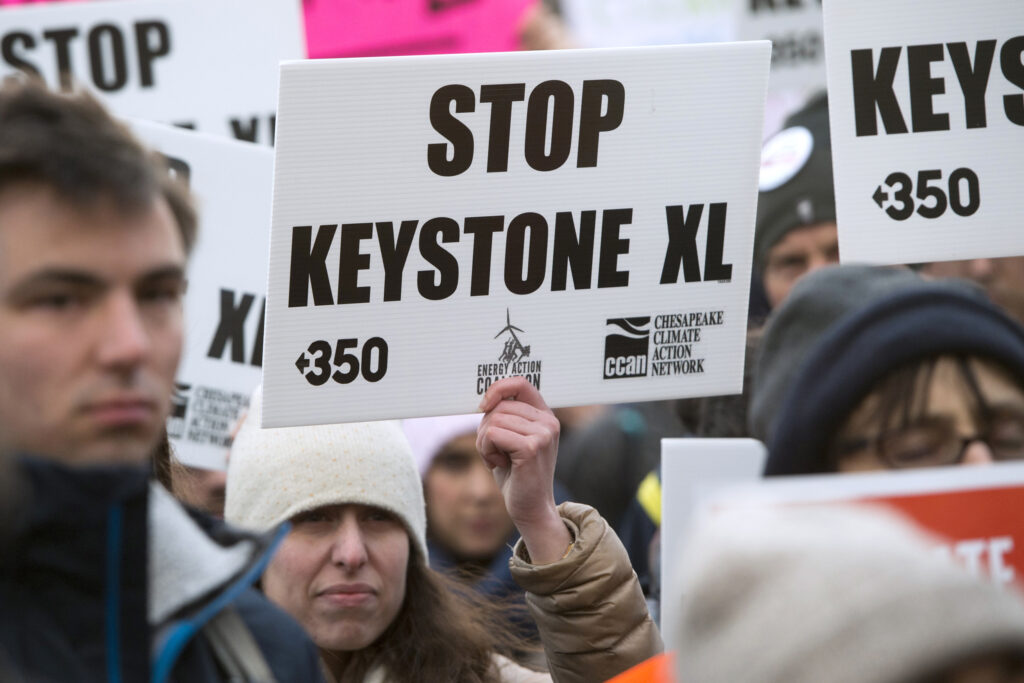
The Keystone XL pipeline has become a symbol of fluctuating climate and energy policies in the U.S. Initially proposed in 2008 to transport Canadian oil to the U.S. Gulf Coast, it was canceled by President Barack Obama, revived by Donald Trump, and canceled again by Joe Biden.
Currently, Montana authorities are seeking public comments on a new 647-mile crude oil pipeline from Canada to Wyoming. Bridger Pipeline, the company proposing the project, expects it will carry 550,000 barrels per day under current assumptions but could move up to 1.13 million barrels daily to Wyoming.
Environmentalists criticize the project, suggesting it’s likely to connect with pipelines leading to the Midwest or Gulf Coast, echoing the original Keystone XL’s plan. This connection would enable oil companies to access major Gulf refineries and export Canadian oil beyond the U.S.
Reports indicate Trump and Canadian Prime Minister Mark Carney discussed Keystone XL’s revival last year. South Bow, a spin-off from Keystone XL’s developer, held an “open season” to secure commitments for Canadian oil delivery to U.S. sites, including the Gulf Coast.
Bridger Pipeline also initiated an open season with a company linking Guernsey, Wyoming, to Cushing, Oklahoma, a key oil hub. Jane Kleeb, Bold Alliance founder, argues this strategy avoids community opposition by not revealing full plans.
Bill Salvin, Bridger Pipelines spokesperson, said they expect U.S.-Canada pipelines to reach capacity soon and emphasized the market demand for Canadian oil. Solomiya Lyaskovska from South Bow mentioned evaluating an expansion using existing infrastructure.
The Bridger expansion requires multiple permits, including a presidential permit for crossing into Canada. While the application doesn’t specify the oil type, most Canadian oil comes from tar sands, which are costly and environmentally damaging to extract.
Environmental advocates, like Derf Johnson from the Montana Environmental Information Center, express concerns over potential environmental impacts throughout oil production and transportation stages, highlighting bitumen spills’ cleanup challenges.
The U.S. Bureau of Land Management is leading the pipeline review and accepts public comments until May 1, before preparing an environmental impact statement. Public meetings are scheduled in Montana, Wyoming, and virtually.
How to Comment on the Pipeline Proposal
The Bureau of Land Management welcomes comments on the proposed pipeline through May 1. Meetings will be held in Montana, Wyoming, and online in mid-April. More details can be found here.
Original Story at insideclimatenews.org