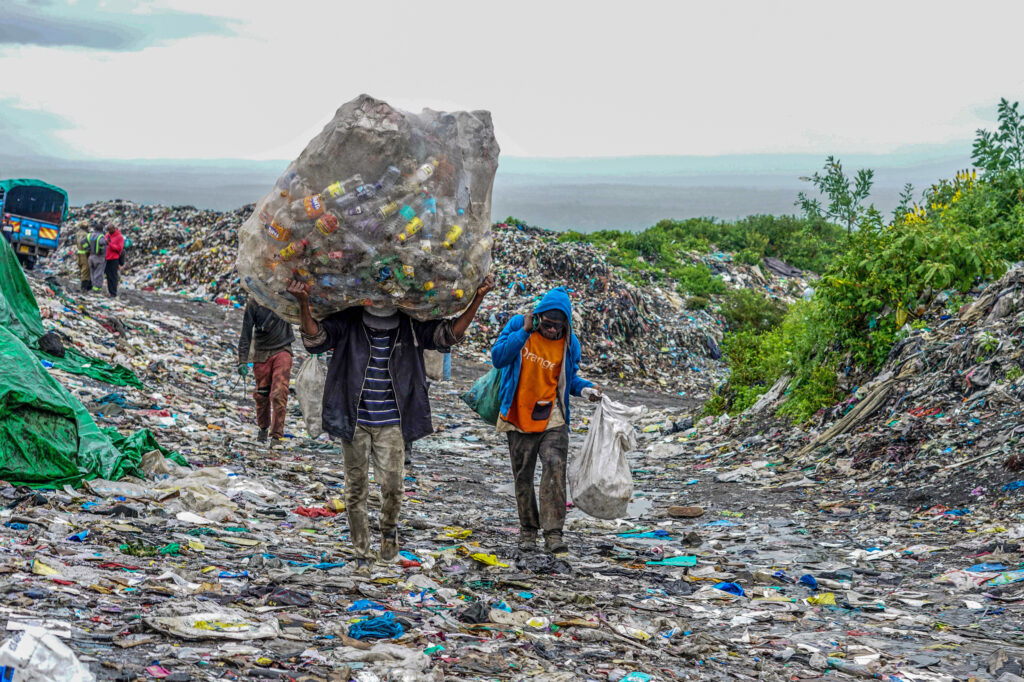
Plastic waste in global dumps supports millions, primarily in poorer nations, who work as waste pickers, searching for recyclable materials to sell. These workers, laboring near burning trash without protective gear, are exposed to toxic chemicals found in plastics, as shown in a recent report comparing chemical exposure among plastic handlers and office workers.
Plastics comprise over 16,000 chemicals, mostly from fossil fuels. Many are hazardous, yet remain unregulated. Environmental groups have urged U.N. treaty negotiators to eliminate toxic chemicals in plastics. Recent talks in Geneva ended without an agreement, as oil and plastic-producing countries, including the U.S., opposed limits on plastic production favored by nearly 100 nations. To illustrate the prevalence of hazardous chemicals, the International Pollutants Elimination Network (IPEN) repeated an experiment they initiated last year during earlier negotiations in South Korea.
IPEN-affiliated groups in Thailand and Kenya had plastic recyclers, waste pickers, and office workers wear silicone wristbands for five days. These wristbands absorb environmental chemicals, simulating exposure via lungs or skin.
IPEN also enlisted several U.N. officials to wear the wristbands. An independent lab analyzed them for six classes of unregulated chemicals linked to plastics and health risks. Office workers were used as a control group, expected to have minimal exposure.
Still, all participants, including Luis Vayas Valdivieso, chair of the U.N. plastics treaty committee, showed exposure to at least 21 of 73 chemicals from all classes.
The exposure difference between plastic and office workers was minimal, an “extremely concerning” finding, said Dorothy Adhiambo Otieno, a report author, highlighting that both groups faced similar chemical risks.
Therese Karlsson, an IPEN science advisor, emphasized that plastics consistently expose people to toxic chemicals, affecting homes and the environment. She noted the need for better international regulation, hindered by a few oil-producing countries blocking progress.
Veena Singla from the University of California, San Francisco, pointed out that these plastic chemicals are present worldwide, not just affecting waste workers. Phthalates, known as the “everywhere chemical,” were found in all wristbands at high concentrations.
Plastics contribute to climate change through their lifecycle, releasing greenhouse gases when produced from fossil fuels and burned as waste. The chemical cargo in plastics poses environmental and consumer risks, the IPEN report cautioned.
Leo Trasande, an expert on hormone-disrupting chemicals from New York University, stated that plastics interfere with hormones, impacting biological functions from birth to death.
During the Geneva talks, Trasande represented the Endocrine Society, advocating for reduced plastic production and identifying chemicals of concern. He stressed the treaty’s importance for health.
IPEN Executive Director Bjorn Beeler noted that key treaty provisions address problematic plastics and chemicals. A proposal from Switzerland and Mexico for global chemical regulations gained support from 89 countries, up from 65 at talks’ start.
Karlsson hopes future negotiations will strengthen efforts to protect human health and the environment from industry interests obstructing progress. She expressed her concern over ongoing, uncontrolled exposure to plastic chemicals.
Original Story at insideclimatenews.org