Wired for Profit: Series on Alabama Power’s impact on electric rates, renewable energy, pollution, and politics in Alabama.
BUCKS, Ala.—South Alabama features the Mobile-Tensaw Delta, one of the nation’s most biodiverse areas. The Delta drains 44,000 square miles across Alabama, Georgia, and Mississippi, where rivers like the Mobile and Tensaw converge. E.O. Wilson, a famed naturalist, called it the “American Amazon.” Visit the E.O. Wilson Foundation for more information on the Delta’s biodiversity.
The Delta holds significant historical sites, including the island mounds of Bottle Creek, a center for Indigenous Pensacola culture, and the remains of the Clotilda, the last known slave ship to enter the U.S.
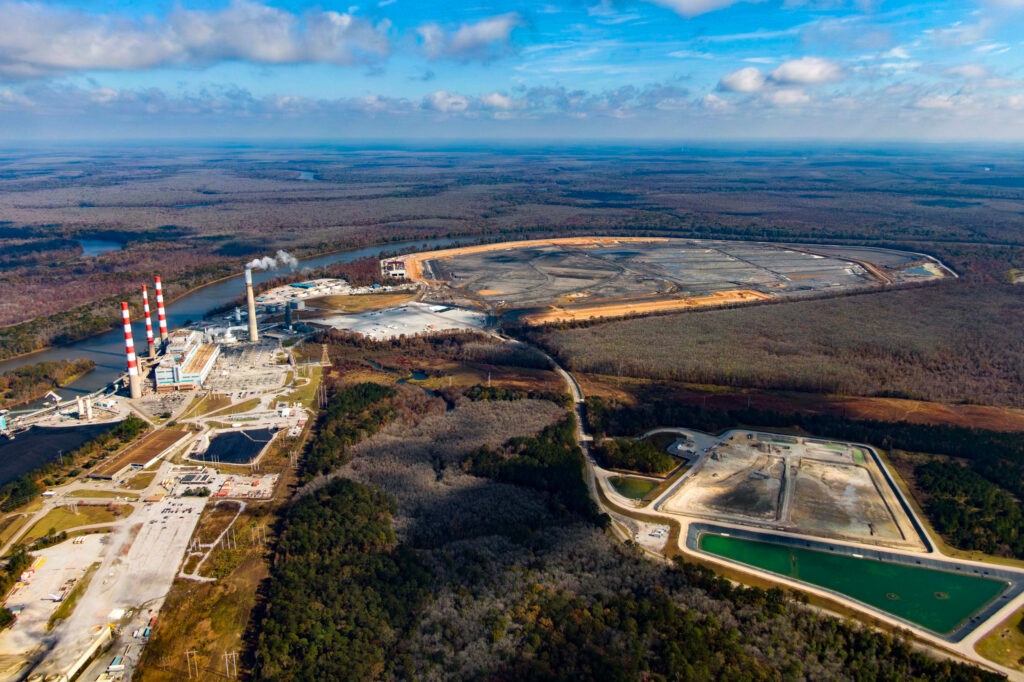
However, the region faces risks from Alabama Power’s coal ash waste, a byproduct of coal burning for electricity. A 600-acre unlined pond near the Mobile River and James M. Barry Electric Generating Plant contains over 21 million tons of coal ash, held back by earthen dikes.
Alyson Tucker, Alabama Power’s media relations manager, stated that the company complies with environmental regulations, approved by professional engineers. However, environmentalists dispute the safety claims of leaving coal waste capped in place.
An Inside Climate News review reveals that more than 117 million tons of coal sludge stored across Alabama pose risks in the event of a breach.
The EPA rejected Alabama’s 2024 plan to allow unlined storage of coal ash, stating it could contaminate groundwater. Environmental groups emphasize the potential for pollution to persist indefinitely.
“The delta is an elegant labyrinth. If flooded with ash, it would be polluted forever.”
— Cade Kistler, Mobile Baykeeper
The 2015 EPA rule tightening coal waste storage standards left implementation to states, but the federal government denied Alabama’s plan in 2024.
The Kingston, Tennessee, coal ash spill in 2008 demonstrates the potential disaster from a breach. Alabama Power’s own reports confirm heavy metal contamination at Plant Barry.
Environmentalists urge action for relocating coal waste, particularly considering the potential impact of climate change, which can exacerbate risks.
Efforts to recycle some coal waste at Plant Barry through Eco Materials have been announced, but details remain sparse. Eco Materials, now owned by CRH, plans to start recycling by 2026.
The company’s emergency action plan lacks specific details regarding extreme weather, a concern given Alabama’s susceptibility to hurricanes.
Alabama Power has faced fines from ADEM for groundwater contamination at its sites, showing a history of environmental violations.
Environmental advocates argue for better protection and management, noting that Georgia Power has transitioned to more secure coal ash storage solutions.
The ongoing legal and environmental challenges highlight the tension between economic interests and environmental protection.
Original Story at insideclimatenews.org