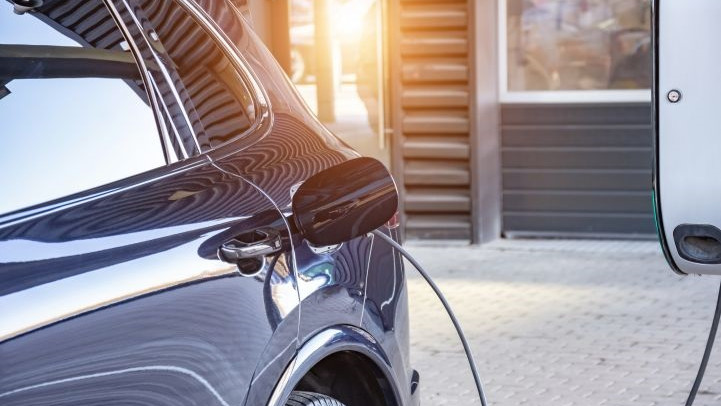
Global Shift: Gasoline Cars Now Less Than Half of New Vehicle Sales
For the first time, gasoline-powered vehicles make up less than half of global car sales, a change driven by soaring fuel prices following the Hormuz crisis. This trend signifies a significant shift towards electric vehicles (EVs), particularly outside China, where the transition had previously been slow.
China reached a milestone years ago with over 50% of car sales being hybrid and electric vehicles, a figure now at 55%. However, it took the fuel market disruption caused by the Iran war for other regions to follow suit.
While global EV sales have yet to reach China’s levels, the transition is accelerating quickly. Record prices for gasoline and diesel have been pivotal in pushing consumers towards EVs, according to Mobility Global data cited by Nikkei Asia.
From January to June, sales of gasoline vehicles, excluding hybrids, dropped 10% from the previous year to 20.25 million cars. This decline brought their share of total global car sales down by 3 percentage points to 49%.
Previously, the adoption of electric vehicles outside China was gradual and fell short of forecasts. However, the combined impact of the Hormuz crisis, $100 oil prices, and unprecedented gasoline prices has prompted a considerable shift towards EVs in Europe, South America, and Asia Pacific.
In Europe, battery electric vehicle (BEV) sales, including in the UK, Switzerland, and Norway, rose by 52.2% in August compared to the previous year, as high fuel prices encouraged consumers to opt for electric options. This data is supported by the European Automobile Manufacturers’ Association, ACEA, in a recent report.
Germany, Europe’s largest car market, saw BEV sales soar by 75% year-over-year in August, with gasoline prices reaching an all-time high of 2.31 euros per liter, roughly $10 per gallon. France also experienced a more than twofold increase in electric vehicle sales.
The German government’s introduction of a purchase premium for EVs in January 2026 has further accelerated sales, as highlighted in an analysis by the German Institute for Economic Research (DIW). Currently, one in four passenger cars sold in Germany is a pure battery electric vehicle, with the share climbing to one in three for August alone.
Globally, the increase in EV sales has been significant this year, a trend driven by the Middle East’s oil supply disruption and the resulting fuel price surge. The International Energy Agency (IEA) noted a sharp rebound in EV sales in the second quarter, with a 35% increase compared to the first quarter, as detailed in an update to its annual EV outlook.
In major markets like Brazil, India, Australia, and Vietnam, electric car sales roughly doubled between March and June compared to 2025, according to the IEA’s report. Additionally, 90 countries reported annual growth in EV sales during the first half of the year.
While challenges remain, such as the need for investment in battery mineral supply and charging infrastructure, analysts at Wood Mackenzie suggest that the ongoing fuel market volatility could further boost global EV adoption beyond previous expectations. For more insights, visit Wood Mackenzie.
Original Story at oilprice.com