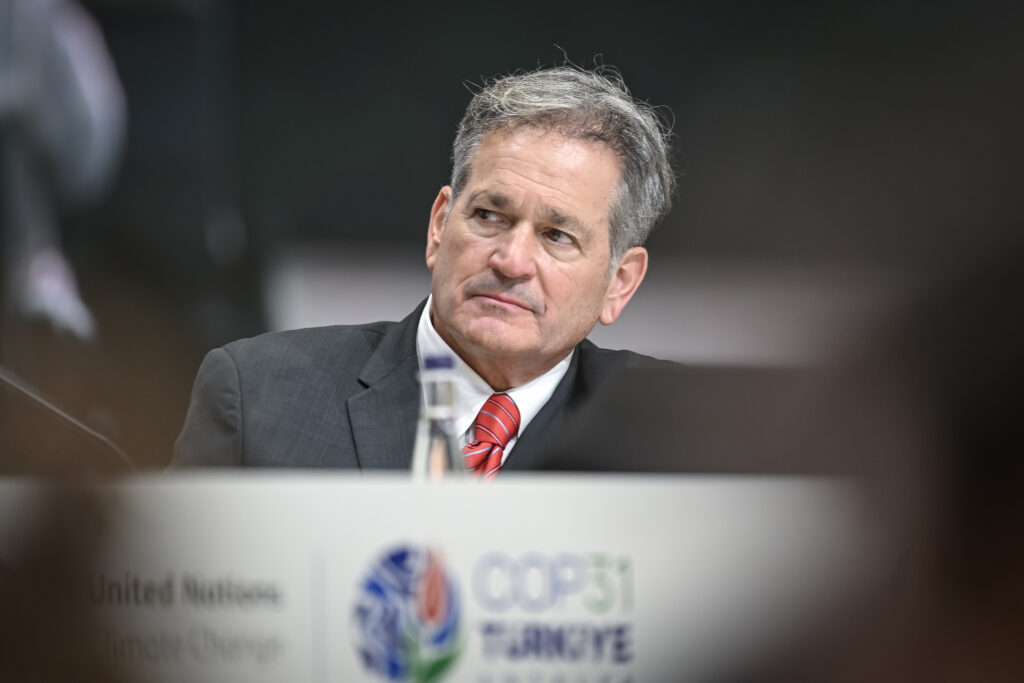
ANTALYA, Turkey—The final days of the United Nations COP31 climate talks are proving pivotal in determining if countries can transcend incremental progress to effectively curb global warming.
Panama, representing a Latin American coalition of developing countries, has threatened to veto any agreement lacking a clear plan to transition from fossil fuels. Panama insists on capping oil production as a crucial initial step.
In a letter to Simon Stiell, UNFCCC executive secretary, Juan Carlos Navarro, Panama’s environment minister, stated that Panama would reject any consensus not aligning with its principles.
This stance complicates the outlook for a final agreement. Should a significant number of countries oppose the text, the conference might conclude without a decision, affecting elements like electrification goals. It remains uncertain if the entire Latin American coalition supports Panama’s position.
Consensus differs from unanimity. At the Dubai conference in 2023, the presidency passed the final document despite objections from some countries.
Panama’s letter coincided with the release of a new draft cover decision that omitted fossil fuels. The letter outlines eight elements necessary for Panama’s agreement, starting with a foundation in science.
“Decisions must be based on the best available science and align with the Intergovernmental Panel on Climate Change,” Navarro wrote.
The science panel guides climate talks, yet countries with fossil fuel-dependent economies have disrupted it recently.
Panama argues for UN process reform, advocating decisions by a simple majority vote when consensus fails, to prevent a few from stalling broader action, Navarro noted.
Panama demands the final document emphasize that developed countries, as major greenhouse gas emitters, fulfill financial commitments to developing nations.
Navarro criticized lengthy speeches, warning that “while we listen to endless oratory, the planet is being destroyed.”
Threats to reject a COP31 agreement are not unprecedented, though rarely enacted, stated Joanna Depledge, a climate diplomacy expert at Cambridge University.
Panama may lack sufficient influence alone, compared to larger nations like China or India, Depledge added.
Navarro might have diluted his position with demands Depledge called “fantastical.” More realistic proposals might have been taken seriously, she suggested.
Nonetheless, Panama’s opposition could be significant “if [Navarro] stands firm,” especially if other countries join. “At least the presidencies are forewarned and can engage with him to defuse tensions.”
The UN Framework secretariat and the conference’s Turkish and Australian co-presidents did not immediately comment on the letter.
Germany’s delegation refrained from commenting on other parties, noting that Carsten Schneider, Germany’s environment minister, held a joint press conference with Navarro on electrification targets.
At a separate press conference, Navarro labeled the climate talks “an exercise in hypocrisy and futility.”
“We face unacceptable, corrupt behavior,” he said, particularly from fossil fuel producers blocking progress.
Jiwoh Emmanuel Abdulai, Sierra Leone’s environment minister, also criticized developed nations, likening negotiations to a scenario where someone “rams a bulldozer into your house and then asks what you’d give for repairs.”
Original Story at insideclimatenews.org