The European Union is setting the stage for a new industrial paradigm with its ‘Industrial Accelerator Act,’ a strategy spearheaded by EU Industry Commissioner Stéphane Séjourné. This initiative aims to bolster the growth of European industries while reducing reliance on the US and China, particularly within the automotive sector. A key element of this strategy is a ‘Buy European’ policy focused on electric vehicles.
Recent developments reveal the European Commission’s intention to connect electric vehicle (EV) incentives to a ‘Europe-first’ mandate. Details from a draft of the ‘Industrial Accelerator Act’ have sparked debate, especially regarding timelines for funding programs. According to Edison, in partnership with Focus Online, the EU document outlines that future public funding in member states must adhere to specific conditions. “State funding programmes that support the purchase, leasing, or rental of battery-electric vehicles (BEVs), plug-in hybrids (PHEVs), or fuel cell vehicles (FCVs) must in future comply with strict EU origin requirements,” the draft specifies. Vehicles must meet ‘Union-origin’ criteria, including European value-added components, to qualify for funding. These requirements will affect programs initiated or updated six months post-regulation enactment.
This proposal could complicate Germany’s EV incentives, which are currently designed with social considerations, including income limits to aid lower-income families in transitioning to electric vehicles. Germany’s funding strategy has not imposed vehicle price or origin restrictions, as outlined by Federal Environment Minister Carsten Schneider (SPD) in January. However, Germany’s plan still awaits a final funding guideline and EU Commission state aid approval.
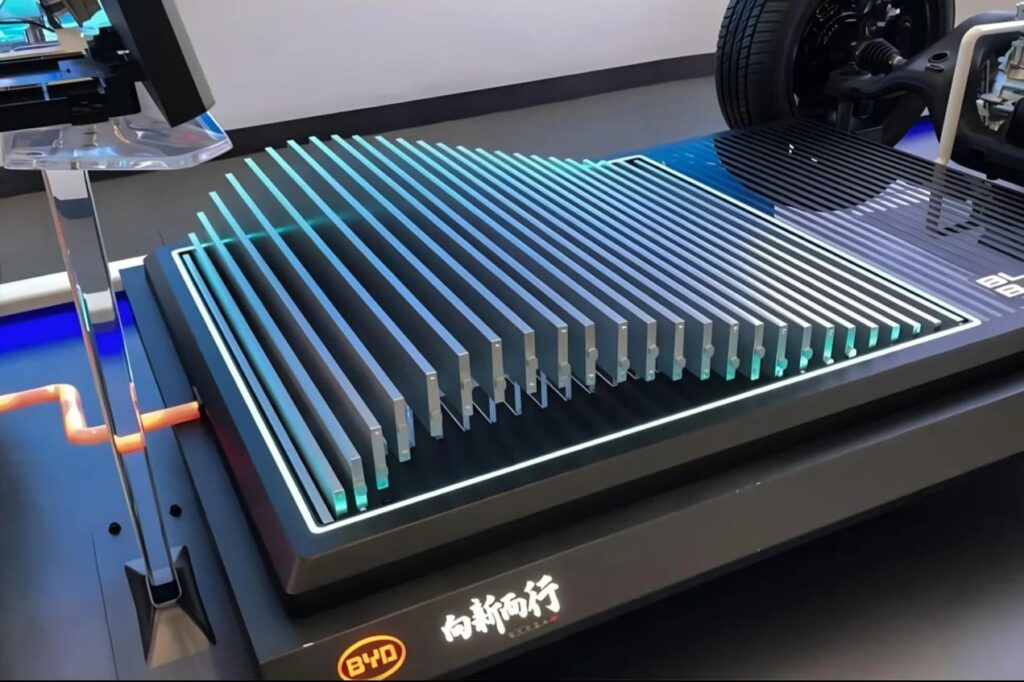
The ‘Union-origin’ criteria extend beyond vehicle assembly to encompass the battery, a pivotal EV component. Initially, assembling battery systems from non-EU cells within the EU, combined with locally produced battery management systems, will suffice. While Asian battery cells could be used during this phase, by the third year, both the cells and cathode materials must be EU-sourced.
It is still uncertain how finalized the draft is, with Séjourné expected to present it by early March. Despite delays, the content of the ‘Industrial Accelerator Act’ may still undergo changes. Even if Séjourné introduces the ‘Union-origin’ criteria as they stand, these proposals must progress through several stages before becoming EU-wide law.
Regardless, some form of ‘Union-origin’ criteria is anticipated, though specifics might be renegotiated. The automotive industry shows mixed reactions: VW CEO Oliver Blume and Stellantis CEO Antonio Filosa advocated for a CO₂ bonus for European-made EVs in a joint statement. In contrast, German premium manufacturers remain wary due to their significant Chinese market presence and the risk of trade disputes.
The German government faces a tough decision. Its current incentive model conflicts with the anticipated EU policy. Berlin might attempt to implement funding before the EU regulation’s activation, with potential post-implementation adjustments to meet compliance. Alternatively, adjusting the plan beforehand could align it with EU policy but might exclude many cost-effective EV options from a scheme designed to be socially inclusive.
For further reading, explore sources from edison.media and focus.de.
Original Story at www.electrive.com