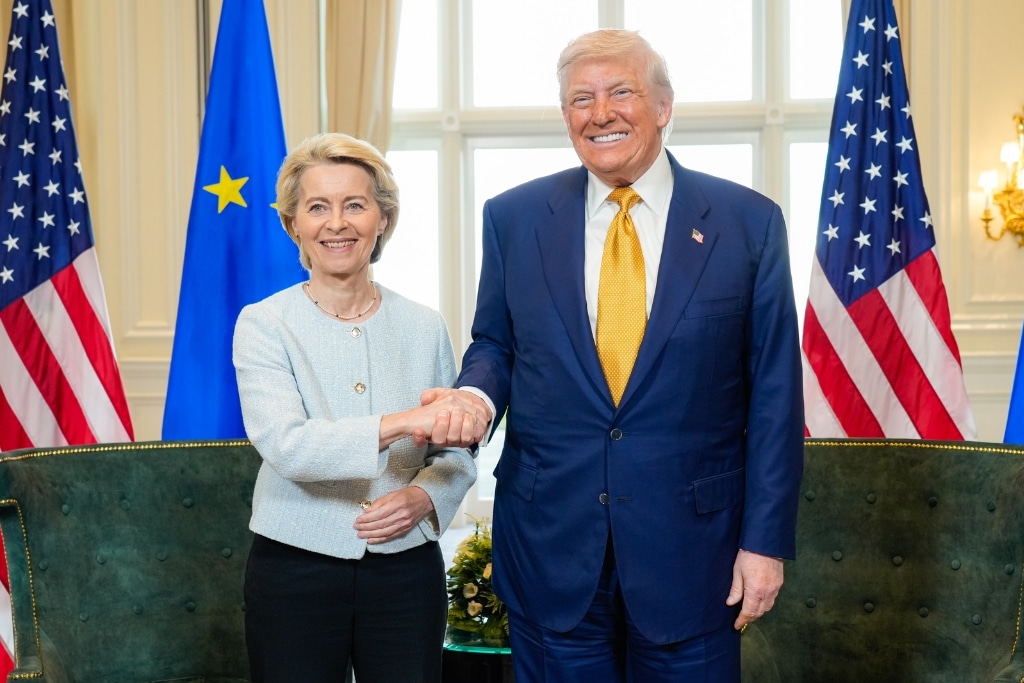
The evolution of the EU-US climate relationship has been a journey from collaboration to conflict, mirroring the shifting dynamics of global environmental leadership. From the early days of modern environmentalism to recent trade tensions, this relationship has seen both cooperation and discord.
—
Back in the 1970s, the United States took center stage as a global leader in environmental initiatives. This was a time when domestic incidents like the infamous 1969 Cuyahoga River fire and the Santa Barbara oil spill had galvanized public opinion, leading to landmark legislation such as the Clean Air Act. The creation of the Environmental Protection Agency (EPA) marked a significant step in the US’s commitment to environmental protection. Internationally, the US played a pivotal role in environmental governance by ratifying key agreements like the 1972 UN Conference on the Human Environment and the Montreal Protocol.
Meanwhile, across the Atlantic, the European Economic Community, the forerunner of the European Union (EU), was slow to catch up. Lacking an environmental mandate in the 1957 Treaty of Rome, its early actions were modest and often driven by external pressures. Yet, by the 1990s, the EU began to assert its influence, notably during the 1997 Kyoto Protocol negotiations. The EU’s commitment to significant emissions reductions under the protocol underscored its strategy of using “soft power” in global environmental governance.
In contrast, the US’s climate policy trajectory from the 1990s became increasingly erratic. Domestic political divisions and a lack of public support hindered international commitments, such as the failure to ratify the Kyoto Protocol due to partisan opposition. This divergence deepened the transatlantic gap as the EU continued its ambitious climate initiatives.
A Shifting Climate Partnership
The era of President Obama marked a renewed US engagement in global climate governance. The US and EU strengthened ties through the EU-US Energy Council, contributing to milestones like the Paris Agreement in 2015. This collaboration highlighted the importance of a strong transatlantic partnership in advancing global climate governance.
However, the election of Donald Trump in 2016 brought a dramatic shift. Trump’s decision to withdraw from the Paris Agreement in 2017 strained US-EU relations, reviving a “decades-long distrust” as reported by Reuters. During this period, the EU capitalized on the US’s decreased involvement to push its own climate agenda, unveiling the European Green Deal in 2019.
In the wake of Trump’s election loss, the Biden administration rejoined the Paris Agreement and emphasized multilateral climate diplomacy. However, the introduction of the Inflation Reduction Act in the US raised European concerns about its potential impact on EU investments.
A New Era of Climate Tensions
Returning to office in 2025, Trump rolled back numerous climate policies, pushing fossil fuels to the forefront. His administration’s actions included dismantling the regulatory framework established under the Endangerment Finding, described as the “largest deregulation in American history.” Trump’s climate stance reverberated globally, affecting international climate commitments and cooperation.
Meanwhile, the EU faced its own challenges. Economic strains and diplomatic tensions with the US, exacerbated by Trump’s policies, have hampered its climate ambitions. The EU’s attempts to maintain its environmental leadership are evident in its 2040 climate target, committing to a 90% reduction in greenhouse gas emissions. However, external pressures, including US influence on European climate and energy policies, pose significant hurdles.
The trajectory of transatlantic climate policy appears increasingly uncertain. As the US under Trump focuses on deregulation, the EU grapples with balancing its ambitious climate goals with economic realities. The future of global climate efforts like the High Seas Treaty and the Paris Agreement may depend on the EU’s ability to sustain its regulatory influence amid these challenges.
Featured image: Wikimedia Commons.
Original Story at earth.org