An Insightful Exploration into Climate Change by Elizabeth Kolbert
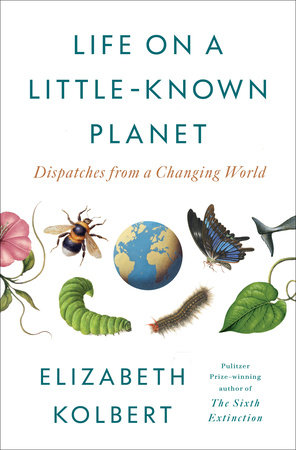
In a world grappling with the realities of climate change, Elizabeth Kolbert’s voice stands out. Her new book, “Life on a Little-Known Planet: Dispatches from a Changing World,” invites readers on a global journey to understand the profound impacts of environmental shifts. Kolbert’s work is not just a call to action, but a testament to the resilience of nature and the power of collective human effort.
Kolbert, a seasoned journalist for The New Yorker since 1999, has been shedding light on the intricate relationships between humans, nature, and the climate. Her previous work, “The Sixth Extinction,” earned her the 2014 Pulitzer Prize, and her latest book, released in 2025, continues to explore these themes. As she prepares to headline the Albany Book Festival on September 26, Kolbert remains a pivotal figure in the ongoing dialogue about climate change.
“We live in astonishing times,” Kolbert remarks from her Williamstown, Mass., home. “There is scientific proof that our world is warming rapidly, and the effects of that will be severe for all of us. It’s tragic. It’s disturbing, and perhaps that’s the main reason people would prefer to turn away and not address the issue.”
Kolbert’s Narrative Strategy
In “Life on a Little-Known Planet,” Kolbert crafts a narrative that takes readers from Denmark to Florida, through a series of 17 essays, many originally published in The New Yorker. Her engaging storytelling is backed by interviews with experts in biology and climate science, breaking down complex issues into digestible insights.
Kolbert’s approach is to “show, not tell,” aiming to immerse readers in the field to witness firsthand the struggles faced by animals and ecosystems. “I hope this collection will show readers why we should take better care of this wonderful planet,” she states.
Global Examples and Policy Impact
Among the essays is an inspiring account of Samsø, a Danish island that achieved carbon neutrality through community effort and smart policy. Kolbert contrasts this with the current U.S. policy environment, which she argues is heavily skewed towards fossil fuels, hindering progress in renewable energy adoption.
“Some of these essays may seem a bit grim,” Kolbert admits, “but I included one story about the island of Samsø in Denmark that has gone carbon neutral. It was inspiring to encounter the people on that island that all came together to do this.”
Kolbert cites historical examples like the Clean Water Act and the banning of DDT, which have led to the recovery of natural environments and species. She asserts that government policy can play a crucial role in environmental conservation, highlighting that the U.S. is at risk of falling behind in green technology advancements.
The Power of Community and Advocacy
Kolbert emphasizes the importance of community action and advocacy in driving change. She recounts the transformation of Samsø into a renewable energy haven as a model for what is possible when communities unite with common goals. “By 2005 it was producing from renewable sources more energy than it was using,” she writes.
She encourages individuals to voice their concerns to representatives, noting that even small groups can influence policy. “There is power in speaking out,” Kolbert advises, drawing from her political reporting experience in Albany.
Kolbert is grateful for the platforms that allow her to report truthfully, amidst a climate where misinformation abounds. “The press is under assault today from politicians and powerful people and organizations, but I have spent my career at institutions that have allowed me to report accurately,” she reflects.
To learn more about her upcoming appearance at the Albany Book Festival, visit nyswritersinstitute.org.
Original Story at www.timesunion.com