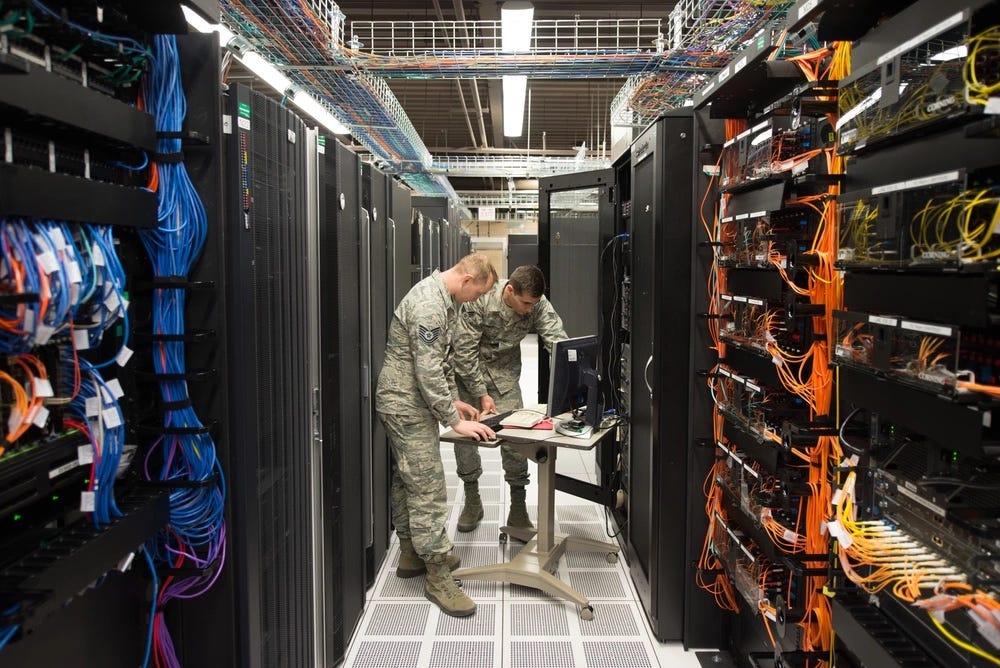
As data centers continue to proliferate across the United States, particularly in the South and Midwest, concerns are rising about their environmental impact and their broader implications on global conflicts. While these facilities promise economic growth, they also contribute to pollution and energy consumption, raising questions about their true cost to communities.
[Photo Credit: Paul Shirk]
Rural America: Hub for New Data Centers
According to Pew Research Center, 67 percent of newly constructed data centers are situated in rural areas, with a significant concentration in Midwestern and Southern towns. While some see these projects as a boon for local economies, the reality for many residents is more complex. In Southaven, Mississippi, a new data center has reportedly brought increased noise and air pollution, leading to community unrest.
The Global Impact of Data Centers
Beyond local environmental concerns, data centers are intricately linked to international issues. These facilities are heavily reliant on fossil fuels, which account for almost 60 percent of their power. The demand for resources such as silicon, gallium, lithium, and cobalt often involves exploitative mining practices and geopolitical tensions.
Moreover, data centers support technologies increasingly used in military applications. The Pentagon’s recent agreements with tech companies like Palantir and OpenAI highlight this trend. These technologies have been implicated in incidents such as the bombing of a girls’ school in Minab, Iran, which resulted in the tragic deaths of around 170 students and teachers, as reported by Amnesty International.
Economic Realities and Alternatives
Despite the promise of job creation, data centers often fail to deliver significant employment opportunities for local communities. A TechRepublic report suggests that these facilities generate few jobs relative to their environmental and social costs.
An alternative approach could involve investing in renewable energy projects that protect local ecosystems and provide sustainable jobs. Such initiatives could preserve the unique cultural and natural landscapes of rural areas.
The challenge remains to balance economic development with environmental stewardship and ethical considerations. As data centers become a fixture in more communities, the conversation around their impact continues to evolve, emphasizing the need for thoughtful planning and community engagement.
Melissa Garriga is the communications and media analysis manager for CODEPINK. She was born and raised in Mississippi, where she continues to live and work. This op-ed was distributed by OtherWords.org.
Original Story at www.codepink.org