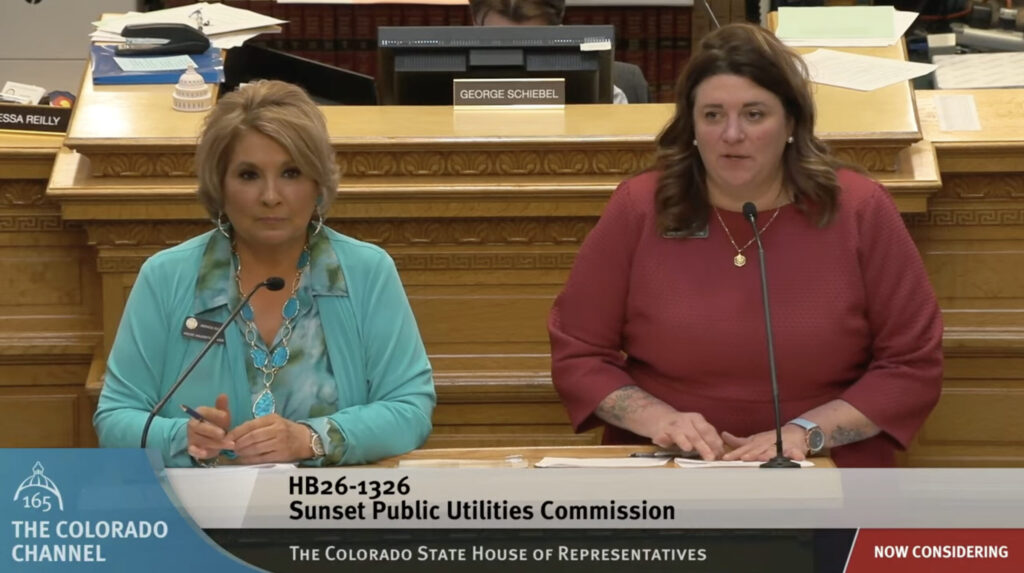
In a significant move for Colorado’s legislative process, House Bill 1326, which seeks to extend the Colorado Public Utilities Commission (PUC), has undergone substantial modifications following intense discussions. The bill’s sponsors, Democratic Representatives Monica Duran and Jenny Willford, made these changes to address concerns raised by business groups and utilities.
During a rare Saturday legislative session, Duran and Willford introduced amendments to the bill. These amendments included removing two controversial utility requirements and initiating studies on other business-related concerns. Among the newly added provisions is a requirement for the PUC to consider workforce implications during clean-energy transition debates, a change requested by Climate Jobs Colorado.
With these adjustments, the House gave preliminary approval to House Bill 1326. This action sets the stage for a smoother passage through the Senate as the legislative session approaches its May 13 adjournment. Final approval from the House is anticipated on Monday.
Significance of the PUC Sunset
Colorado state Rep. Carlos Barron argues Saturday for his amendment to expand the size of the Public Utilities Commission.
The PUC is a powerful regulatory body overseeing utilities, motor carriers, and telecommunications, among others. Recent decisions by the commission to increase clean-energy requirements have sparked opposition from various groups, including utilities and unions. While many sunset bills are passed annually, the PUC’s continuation is particularly consequential due to its broad authority.
During committee hearings, business groups like the Colorado Chamber of Commerce advocated for expanding the PUC from three to five members to enhance ideological and geographical diversity. Although the sponsors did not fully endorse this proposal, they agreed to a third-party study to evaluate the commission’s size and staffing.
Changes to Securitization and Third-Party Contracting

Robert Kenney is president of Xcel Energy Colorado
Originally, HB 1326 granted the PUC greater control over utilities’ financial decisions, such as securitization and third-party contracting. However, these provisions were removed after utilities voiced concerns. Securitization, which involves issuing revenue bonds instead of raising base rates, can lower financing costs but may affect utilities’ creditworthiness. Xcel Energy Colorado’s President, Robert Kenney, warned that it could hinder bond sales for upgrades.
The bill also initially allowed the PUC to mandate third-party management of certain consumer programs, but this was seen as undermining utilities’ operational autonomy. Consequently, the provision was eliminated.
Addressing Public Utilities Commission Meeting Formats
Another amendment addresses the format of PUC meetings. Business groups requested a return to in-person meetings for major issues. The revised bill now requires the PUC to establish criteria for meeting formats by March, giving stakeholders the option to request in-person meetings. Additionally, it sets a maximum timeline of 250 days for ruling on applications, with automatic approval if no decision is made within that period.
Local Control and Utility Decisions

Black Hills Energy workers install a natural-gas pipeline.
Lastly, a contentious issue remains with a provision allowing more entities to appeal local land-use decisions regarding transmission-line sitings to the PUC. While the provision aims to address statewide concerns, it has raised fears of infringing on local control. Efforts to remove this provision were unsuccessful, leaving it as a potential challenge for the Senate to resolve when HB 1326 is reviewed.
Original Story at tsscolorado.com