
An Evolving Auto Market: How Chinese EVs Are Reshaping Global Dynamics
In the face of stiff U.S. tariffs, Chinese automakers are strategically pivoting towards more welcoming markets, including Southeast Asia and Latin America. These regions are witnessing an influx of Chinese electric vehicles (EVs), as manufacturers not only export their automobiles but also establish local production facilities. This shift in focus raises pertinent questions about the survival of traditional automakers in their export-reliant markets.
The debate intensifies over whether Western car manufacturers are adapting or becoming obsolete in this changing landscape. A recent video analysis suggests that companies like Ford and Toyota are undergoing significant transformations, with Ford investing in innovative projects and Toyota warning of existential threats without substantial changes.
Despite the apparent disregard for the American market, Chinese automakers are gaining ground globally by setting up operations in various “Rest of the World” markets. Stella Li, quoted in a CleanTechnica article, asserts that BYD aims to become the world’s leading carmaker even without U.S. sales. This perspective hints at a shift where the U.S. could become less relevant in the global automotive scene.
Interestingly, Chinese vehicles are inching closer to the U.S., with potential entry points through Mexico and Canada. CleanTechnica writer Steve Hanley predicts Chinese cars will arrive in the U.S. sooner than expected. Meanwhile, Zach Shahan highlights in another piece that tariffs have not deterred Waymo from importing Zeekr-based Ojai electric robotaxis, suggesting that market demand might surpass tariff barriers eventually.
Globally, the transition to EVs is accelerating, with most purchases not involving traditional brands like Toyota, GM, Ford, or Stellantis. When asked about the survival of American carmakers without export markets, Google suggests that while theoretically possible, it would necessitate a downsized industry and higher consumer prices. American manufacturers would need to focus on their strengths in large vehicles, which are less popular in markets with stringent regulations and high fuel taxes.
Japan, on the other hand, faces a more daunting challenge. The country’s car industry is heavily dependent on exports due to a shrinking domestic market. The decline in local demand, driven by an aging population, threatens the sustainability of Japan’s automotive sector. Toyota CEO Koji Sato has already flagged a potential crisis, necessitating urgent strategic shifts to maintain relevance.
Dr. Paul Wildman, co-writer at CleanTechnica, humorously proposes the Corporate Darwin Awards for legacy automakers like Ford and Toyota for their strategic missteps. Wildman criticizes these companies for failing to adapt to the EV shift, suggesting that industry CEOs are missing clear trends that even outsiders can see.
Amidst these changes, BYD is exporting electric Kei cars to Japan, offering competitive advantages like greater range and affordability. Japanese automakers are responding with badge engineering, exemplified by the Mazda 6e’s joint production with a Chinese company. Wildman asks if the battle is already lost, suggesting that the strategic misalignment of the U.S. and Japanese auto industries is becoming increasingly apparent.
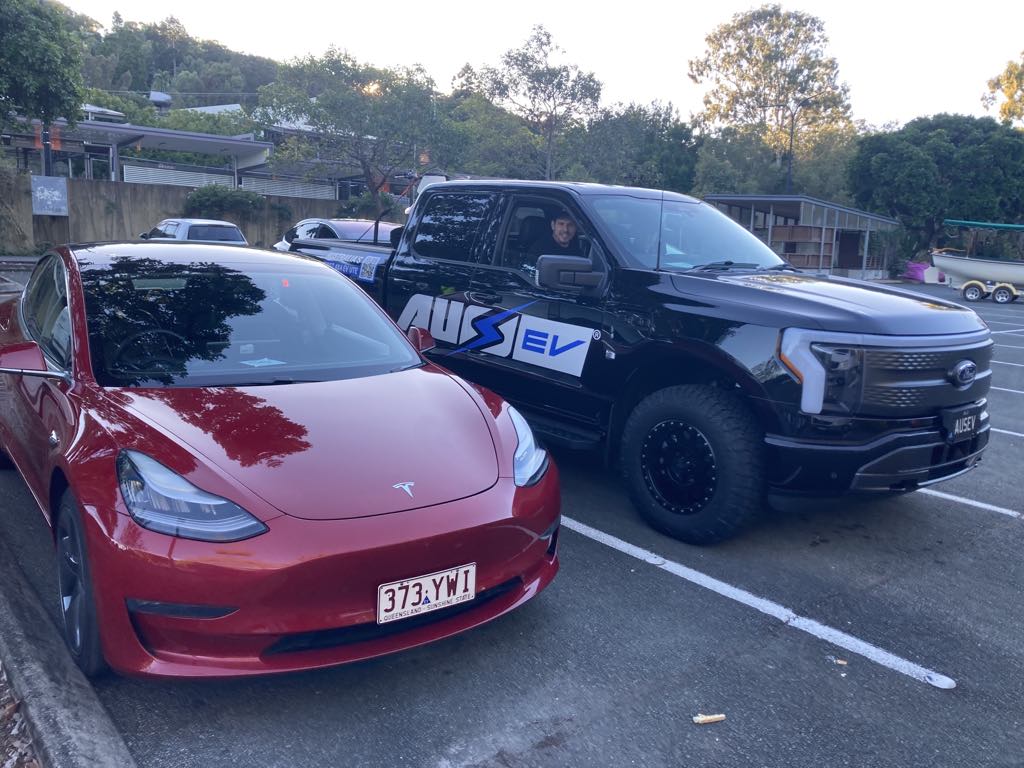
Ford has recently retreated behind U.S. tariff walls, scaling back its EV initiatives. CEO Jim Farley has been quoted as saying the natural rate of EV adoption is around 5%, a stance criticized as shortsighted given the global rise in EV uptake. The company has canceled several EV models, including the F-150 Lightning, which has drawn criticism for its pivot back to combustion vehicles and hybrids.
General Motors (GM) faces a different set of challenges, having overcommitted to its Ultium platform, resulting in production delays and high costs. Stellantis, meanwhile, has been slow to develop competitive EV platforms for North America, and its strategy remains fragmented and hesitant.
Software-defined vehicles are crucial for the future of these automakers, yet none have adequately addressed this need. As a result, their decline seems likely, compounded by protectionist policies and a lag behind international competitors. The U.S. EV industry is trailing behind countries like China, Korea, and even Europe.
Wildman likens the situation to a regietheater—a chaotic and often absurd theatrical production—emphasizing the missteps and failures of the industry. He outlines Japan’s automotive history in seven acts, highlighting the cyclical rise and potential fall of its once-dominant industry.

As the global auto industry continues to evolve, the question remains: how long will traditional automakers hold on before the final act of this regietheater plays out? For a more in-depth analysis, readers can refer to the New York Times.
Original Story at cleantechnica.com