A jury in Plaquemines Parish, Louisiana, issued a decisive verdict.
In April 2025, after an 18-day trial, the jury awarded two coastal parish governments $744.6 million in damages, holding Chevron responsible for the decline of the state’s shoreline and wetlands.
Chevron and other oil companies, facing similar lawsuits, are challenging this ruling. On Monday, eight of the U.S. Supreme Court’s nine justices heard the companies’ appeal. Chevron, Texaco, and Exxon Mobil’s lawyers argued that the case belongs in federal, not state, court. Justice Samuel Alito recused himself, though he had already participated in the decision to address the issue.
Chevron’s lawyers contended that lawsuits against it should be moved to federal court due to historical actions during World War II encouraged by the federal government.
Paul Clement, a seasoned advocate representing Chevron, called it a “relatively straightforward case.” He argued that the federal government’s involvement in the oil market since the 1940s means these suits should be heard by federal judges.
Justice Elena Kagan questioned whether the company’s legal theory would lead to inconsistent outcomes, such as requiring suits against vertically integrated producers to be federal while others remain in state courts.
Clement dismissed this as “a surface anomaly.”
Ben Aguiñaga, Louisiana’s solicitor general, argued that Chevron’s WWII-era actions differed from the contemporary evidence presented in the state court trial. “They do not dispute that they dumped billions of gallons of produced water into our marsh,” he said.
Aguiñaga cited the Supreme Court’s decision in a 2007 case, Watson, where it ruled that Philip Morris could not move lawsuits to federal court due to government regulation.
The lawsuit, alleging Chevron violated a 1978 Louisiana coastal management law, was correctly heard in state courts, Aguiñaga argued, due to expertise on local law.
Legal experts note oil companies view federal courts as more sympathetic, citing national security protections. The Supreme Court’s decision will set the venue for numerous similar cases, impacting 40 lawsuits by Louisiana officials and other climate change-related claims across the U.S.
The court’s liberal justices appeared skeptical of moving the cases to federal courts. Justice Sonia Sotomayor criticized the broad scope of the companies’ argument.
Clement responded that federal law allows for broad removal from state courts.
“If we debate what happened in World War II, it should be in federal court,” he said.
The case pits Louisiana’s legal team against Chevron and the Trump administration, which supports transferring the case to federal court.
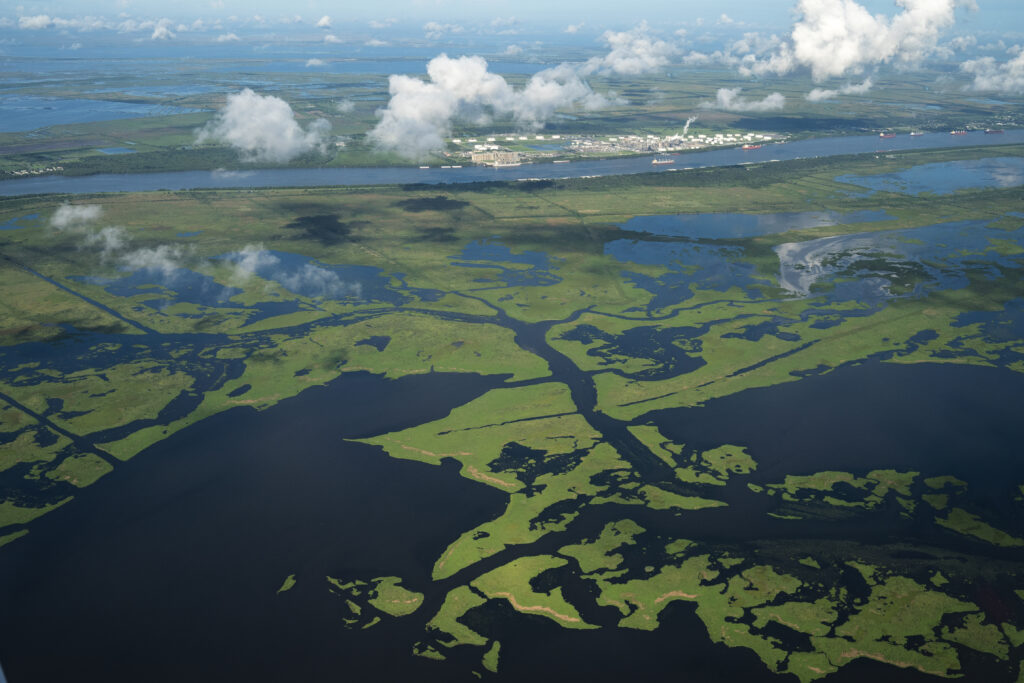
The ruling could significantly affect both the $744 million judgment and future legal precedents. Louisiana has lost over 2,000 square miles of land in the last century, according to the U.S. Geological Survey, though Chevron denies causing this land loss.
Aguiñaga emphasized the environmental impact, calling it a “massive deal for Louisiana.”
Original Story at insideclimatenews.org