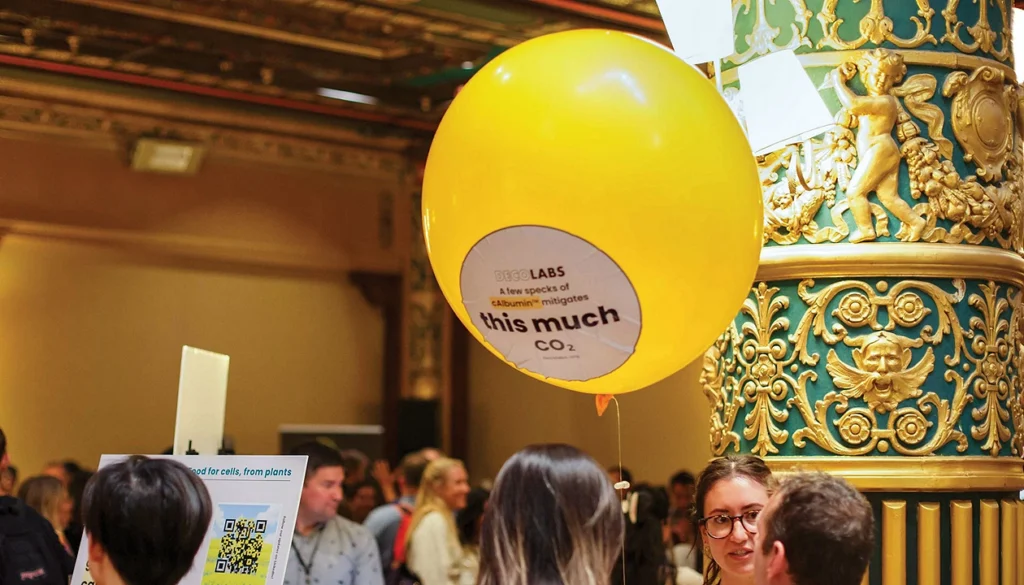
New York City—Amidst the bustling backdrop of New York City, C&EN reporters Craig Bettenhausen, Ana Georgescu, and Aayushi Pratap explored the myriad events of Climate Week NYC, a decentralized conference hosted by the nonprofit Climate Group that staged over 1,500 events. While some consider investing in climate change reversal technologies futile, Climate Week sparks a different perspective. Below is a glimpse into the key takeaways from the event.
Monday
Craig: Arriving in New York City by noon, I dove straight into the Hub Live event by Climate Group. The initial hours hinted at a recurring theme of resilience, emphasized by speakers from various sectors who advocated for investments in projects that enhance grid reliability, stable supply chains, and reduce costs. Yet, opinions diverged on whether these efforts should prioritize mitigating climate change.
“We’ve got to change the narrative; we’ve got to be talking about why it makes energy more affordable, more available, and safer,” stated Mindy Lubber, CEO of the sustainability nonprofit Ceres, reflecting a sentiment shared by several speakers.
At a nearby café, the Jolly Goat, I met Marta Sjögren, co-CEO of Paebbl, a low-carbon cement start-up. Riding high on their recent series A funding, Paebbl has already presold the entire production of its upcoming commercial-scale plant. Sjögren noted that cost parity with conventional cement is expected by 2030, with a current focus on Europe due to its carbon regulations and taxes.
Back at the conference, governmental speakers from Iceland, France, and Mexico discussed their ambition to lead in cleantech. Iceland’s prime minister, Kristrún Frostadóttir, highlighted her nation’s potential in advancing geothermal technology, emphasizing that nations investing in cleantech now will reap early benefits and become global experts.
Evening events included the Carbon Removal Community Reception and the optimistically named “F*ck Doom Hour.” Conversations ranged from direct air capture and reforestation to discussions on biological pesticide alternatives and nuclear technology’s role in reducing chemical manufacturing’s carbon footprint.
Tuesday
Craig: The day began at PlanetHAUS, showcasing sustainable products, where I sampled a pain au chocolat crafted with carbon-captured butter substitute by Savor. Next, the Cool House event spotlighted shifts in air-conditioning refrigerants, moving towards propane and isobutane to replace harmful fluorochemicals.
A tech showcase by Activate Fellowship followed, focusing on critical materials and supply chain independence. Ending the day, I explored Art into Action at Chart gallery, which used art to highlight the environmental impact of methane leaks, featuring pieces on top methane-leaking corporations.
Aayushi: I spent part of the day listening to world leaders at the UN General Assembly. President Donald J. Trump dismissed AI concerns, criticizing previous climate predictions as exaggerated. Later, I attended a session on energy security post-Iran War, where experts discussed vulnerabilities in the energy supply chain.
Ana: Focusing on batteries and critical minerals, I attended discussions on community rights and supply chain security. The NYC Battery Symposium highlighted the US Department of Energy’s workforce initiative, PROSPECT, aimed at training for critical mineral supply chains.
Wednesday
Aayushi: In Midtown, a panel discussed India as a hub for green AI data centers, with officials noting the country’s low-cost renewable energy but acknowledging storage capacity challenges. Eric Gibbs urged Indian leaders to gain “social approval” for new data centers.
Ana: The Swiss ClimateTech Showcase featured pitches from start-ups like Verretex, which recycles glass fibers, and Separatic, developing graphene membranes. Verretex won the jury prize, while Rematter was the audience favorite.
Craig: The day started with Al Roker’s interview of Al Gore, who reflected on the ongoing resistance from fossil fuel industries. Gore expressed optimism about global momentum towards climate solutions, despite challenges.
The Carbontech Summit at Columbia University highlighted advancements by firms like Aircela and Airco in utilizing CO2 for fuel production. The day concluded with an investor-entrepreneur event at SOSV tech incubator, followed by a relaxing evening in New Jersey.
Original Story at cen.acs.org