
Natural gas is rapidly declining in California’s electricity generation, faster than anticipated a few years ago. The state’s peak for gas-fired electricity was in 2014, and it has decreased in eight of the last 11 years. According to the U.S. Energy Information Administration, there is a 15% reduction expected in 2025 compared to 2024, and a 26% decrease in the first half of this year compared to the first half of 2025.
Renewable energy sources now surpass natural gas in California’s electricity generation. This transition began with the development of extensive utility-scale solar projects and the incorporation of battery energy storage to harness solar power. Additionally, grid operators in California and neighboring areas improved electricity sharing efficiency.
Consumers also contributed by installing rooftop solar panels and batteries, reducing the grid’s demand. California’s officials implemented laws and regulations aimed at cutting carbon emissions, though some policies, like rooftop solar net metering, have faced criticism.
Energy analyst Ed Smeloff noted that batteries play a crucial role in this shift. His analysis of data from the California Independent System Operator grid during peak demand on August 26 showed renewable energy surpassing natural gas for much of the day. Batteries charged with excess solar power during low demand and discharged during peak demand.
Compared to September 6, 2022, utility-scale solar and batteries have significantly increased, reducing California’s reliance on natural gas and power imports.
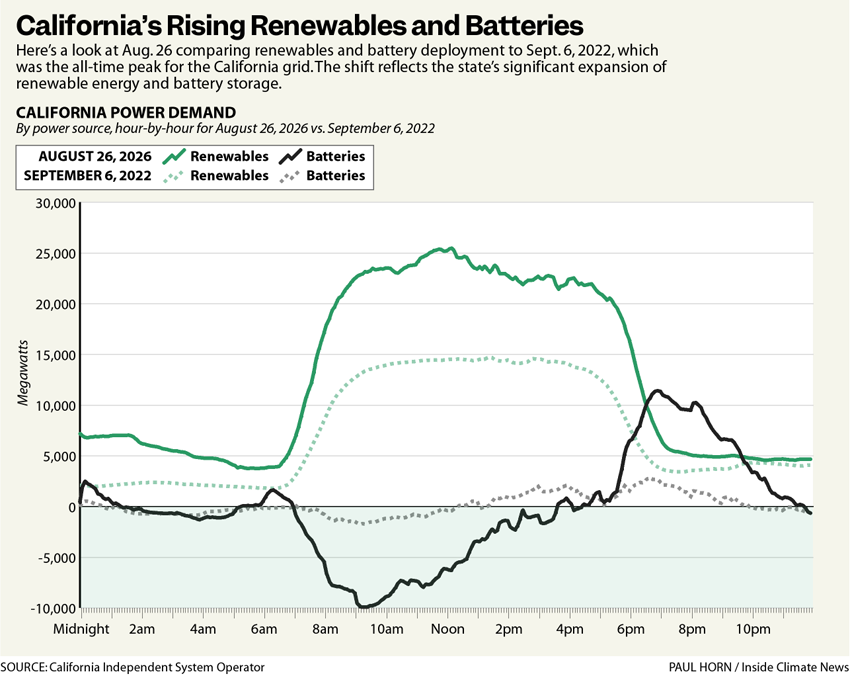
This shift resulted in fewer peaker plants, which are inefficient and costly, reducing consumer costs over time. California’s gas consumption for electricity fell from 10% of the U.S. total in 2014 to 4% in 2025.
Smeloff, in his GridLab blog post, highlighted improved regional grid communication and the impact of the SunZia wind project. California’s advancements in customer-owned solar and battery systems further reduce grid demand.
Smeloff suggests this cleaner grid model is feasible in other states like Texas, where solar and batteries are reducing reliance on fossil fuels. California ISO’s Jayme Ackemann acknowledged the drop in natural gas usage but emphasized gas’s role in grid reliability.
Energy researcher Jonathan Koomey agreed that solar and batteries significantly reduce gas demand. This transition is crucial as the federal government increases natural gas production.
Other notable energy transition stories this week include:
Oil Prices Spike Again: Rising oil prices due to geopolitical tensions and policy rollbacks are impacting consumers. Switching to EVs could mitigate fuel price volatility (details here).
Onshore Wind Projects Hindered: Federal policies are delaying 44 gigawatts of onshore wind projects (more information).
Georgia’s EV Market Struggles: Georgia faces challenges adjusting to market changes affecting EV and battery production (read more).
New Battery Design Increases Density: Fraunhofer ISE developed a lithium-ion battery increasing energy density by up to 15% (full article).
Original Story at insideclimatenews.org