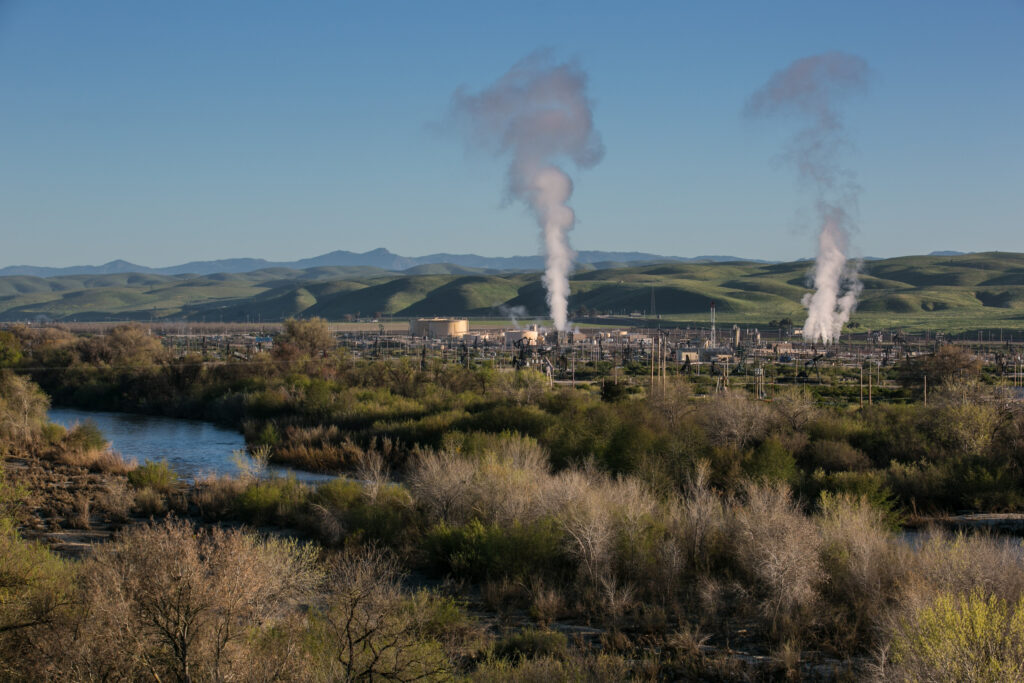
Thousands of gallons of oil and toxic wastewater leaked from a pipe at a Monterey County oil field managed by Aera Energy on Friday, Dec. 5. The incident, involving 168 gallons of oil and nearly 4,000 gallons of wastewater, occurred at the San Ardo Oil Field, located near agricultural lands in the county’s $5 billion sector.
Environmental advocates view this as another indicator of California’s struggle to meet its climate leadership goals under Governor Gavin Newsom. Over the last three months, the state has seen over 70 oil spills monthly, impacting waterways and soil, according to state data. Recent leaks have affected areas such as Kern County ditches, dirt roads, and a highway in Tulare County. Oil also contaminated a creek bed leading to Los Angeles County’s Santa Clara River.
Prior to this, another offshore rig near Santa Barbara County discharged crude oil into the Pacific. The San Ardo Oil Field, known for its high carbon intensity, is among the most polluting in the world. As energy demands increase for oil extraction, climate pollution rises, even as yields decrease, research shows.
Attorney Hollin Kretzmann from the Center for Biological Diversity remarked that while California aims for a fossil fuel-free future, the frequent spills reveal significant challenges ahead. The failed pipe at San Ardo released contaminants near the Salinas River, a crucial irrigation source for the “Salad Bowl of the World,” where farm activities were ongoing during the spill.
State Senator Lena Gonzalez emphasized the need for long-term solutions to prevent such spills, highlighting legislative efforts to curb neighborhood drilling. The quick cleanup by California Resources Corp., following their acquisition of Aera, reportedly removed all contaminated soil in 72 hours.
A Non-Oil Future
Governor Newsom’s participation in COP30 climate talks in Brazil drew criticism for perceived inconsistencies in his domestic policy, particularly with the enactment of Senate Bill 237, which accelerates drilling in Kern County without further environmental review. This policy shift occurred despite $26 million spent by oil interests to influence legislation.
Deborah Sivas from Stanford University argued against new drilling, citing that it doesn’t impact gas prices and that California’s crude is costly to extract. With the rise of electric vehicles and better fuel efficiency, the demand for gasoline is bound to decrease.
Emma Silber from Physicians for Social Responsibility LA criticized S.B. 237 for increasing drilling in overburdened communities. The bill’s impact is compounded by California’s oil production exemptions, which allow significant environmental and health risks, according to recent studies.
Cesar Aguirre from Central California Environmental Justice Network highlighted ongoing oversight issues in Kern County, where exemptions in California law lead to unchecked leaks from heavy oil wells. Aguirre advocates for a diversified energy approach, leveraging Kern’s renewable potential instead of fossil fuels.
County planners recognize the region’s solar and wind capabilities as key to its energy future, a vision Aguirre supports for sustainable development over dependence on outdated oil infrastructure.
Original Story at insideclimatenews.org