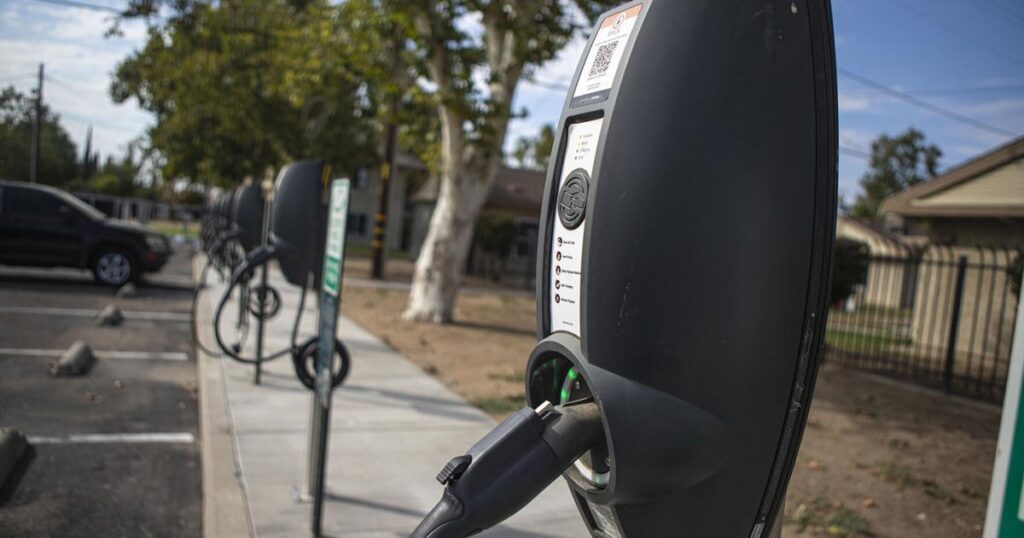
Electric Vehicles and Affordable Housing: A Charging Dilemma in California
As electric vehicles (EVs) become more popular, the debate over their accessibility continues to grow. The question of whether EVs are exclusively for the affluent is being challenged, particularly when considering the charging infrastructure for residents of affordable housing.
California’s legislative move to modify access to home charging for affordable housing residents brings this issue into sharp focus. The proposed Assembly Bill 2748, introduced by Assemblymember Sharon Quirk-Silva, aims to reduce construction costs by allowing developers to adhere to 2022 building standards instead of those set for 2025. However, this decision might inadvertently restrict EV charging access for those who need it most.
Having experienced the challenges firsthand, an EV owner since 2012, highlights the stark differences in convenience and cost between home and public charging. Public chargers not only require users to go out of their way but also cost significantly more, potentially up to six times as much as residential rates, according to research.
The 2025 building code was crafted to enhance charging availability while keeping development costs minimal. It encourages the use of simple, cost-effective outlets in assigned parking spaces, effectively doubling the number of available outlets compared to the 2022 standards, as per the National Charging Access Coalition.
Exempting affordable housing developments from these provisions could significantly reduce charging access, raising future costs for tenants and property managers. Retrofitting charging infrastructure can be as much as 30 times more expensive post-construction, according to a case study.
While the intention behind AB 2748 is to make housing more affordable by cutting construction expenses, EV charging infrastructure represents less than 1% of total building costs. The real drivers of high costs include materials, labor, and land, not the charging outlets themselves, as noted in the California housing cost analysis.
For residents of affordable housing, the ability to charge an EV at home is crucial. It offers a more economical alternative to gasoline or public charging, which can be prohibitively expensive. Ensuring that affordable housing supports EV infrastructure is not just a matter of construction cost; it’s about providing sustainable and affordable living conditions.
Original Story at lompocrecord.com