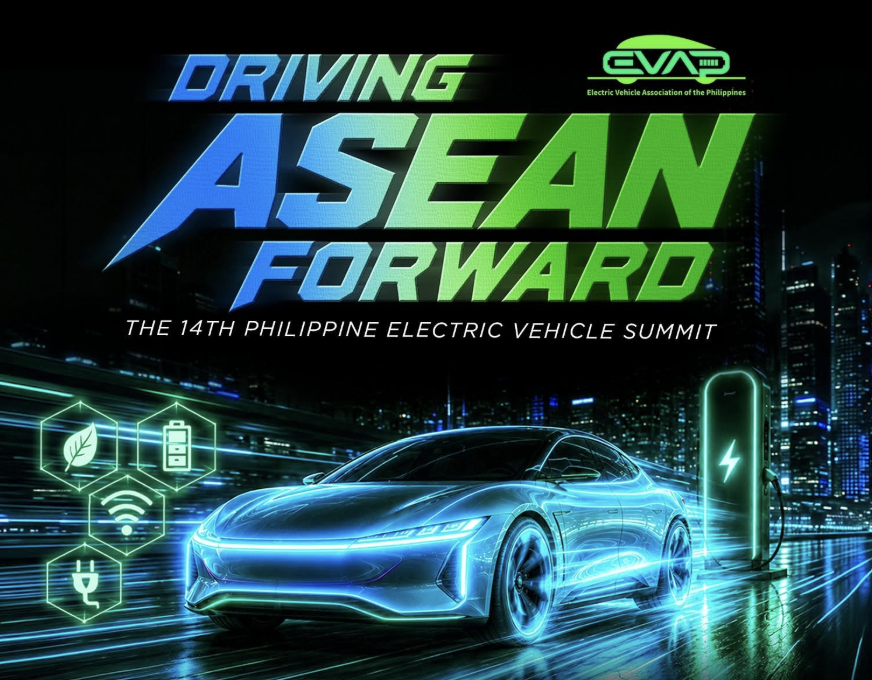
In the bustling metropolis of Manila, the shift to electric vehicles (EVs) is often viewed through a local lens, with commuters, transport cooperatives, and utility companies at the forefront. However, the upcoming 14th Philippine Electric Vehicle Summit aims to broaden this perspective by focusing on regional collaboration across Southeast Asia.
On October 22, industry leaders and policymakers will convene to discuss the role of the Association of Southeast Asian Nations (ASEAN) in advancing electric mobility. This is not a mere formality; the Electric Vehicle Association of the Philippines (EVAP) is a crucial player in the Asian Federation of Electric Vehicle Associations (AFEVA), which includes associations from Thailand, Malaysia, Singapore, and Indonesia.
As the president of AFEVA and former EVAP president, Edmund Araga, emphasizes the importance of regional dialogue at the summit. The event will address cross-border policy, technical cooperation, and advocacy efforts because no single Southeast Asian country can develop a comprehensive electric vehicle ecosystem alone. The Philippines must align its national strategy with the broader regional economic framework, driven by manufacturing scale and technical standards.
The Reality of Regional Supply Networks
Southeast Asia’s automotive industry has long operated as an interconnected network, a trend that continues with electric vehicles. The ASEAN Free Trade Area framework has facilitated this industrial web, where components like transmissions, engines, and chassis are produced across various countries.
Indonesia capitalizes on its vast nickel reserves to dominate raw battery processing, while Thailand has established itself as a major hub for electric passenger car assembly. The Philippines, with its rich deposits of nickel and copper and expertise in electronics and automotive wire harness production, aims to supply essential components rather than compete directly in assembly or refining.
Establishing Common Standards
To avoid technical fragmentation, ASEAN countries are working to harmonize standards for electric vehicles. A unified approach prevents costly adaptations for different markets and ensures that vehicles manufactured in one ASEAN country are compatible across the region.
The summit will promote common technical standards, such as Type 2 alternating-current interfaces and CCS 2 direct-current fast plugs, to facilitate a cohesive regional market. This harmonization benefits consumers and manufacturers, enabling seamless market entry and large-scale production compatible with a market of over 680 million people.
Institutional Ties
As the global powers invest heavily in their clean energy sectors, ASEAN’s unified front allows it to negotiate favorable terms for technology transfers and joint ventures. This regional cooperation ensures that the Philippine transport sector can access affordable, standardized platforms and components, ultimately benefiting local transport cooperatives.
By integrating with ASEAN’s production network, the Philippines can develop a robust electric transport infrastructure that aligns with global trends while addressing domestic needs. This collaboration is essential for building a sustainable and economically viable electric vehicle ecosystem in the country.
Original Story at cleantechnica.com