Alaska’s Coastal Villages Face Relocation Challenges Amid Climate Change
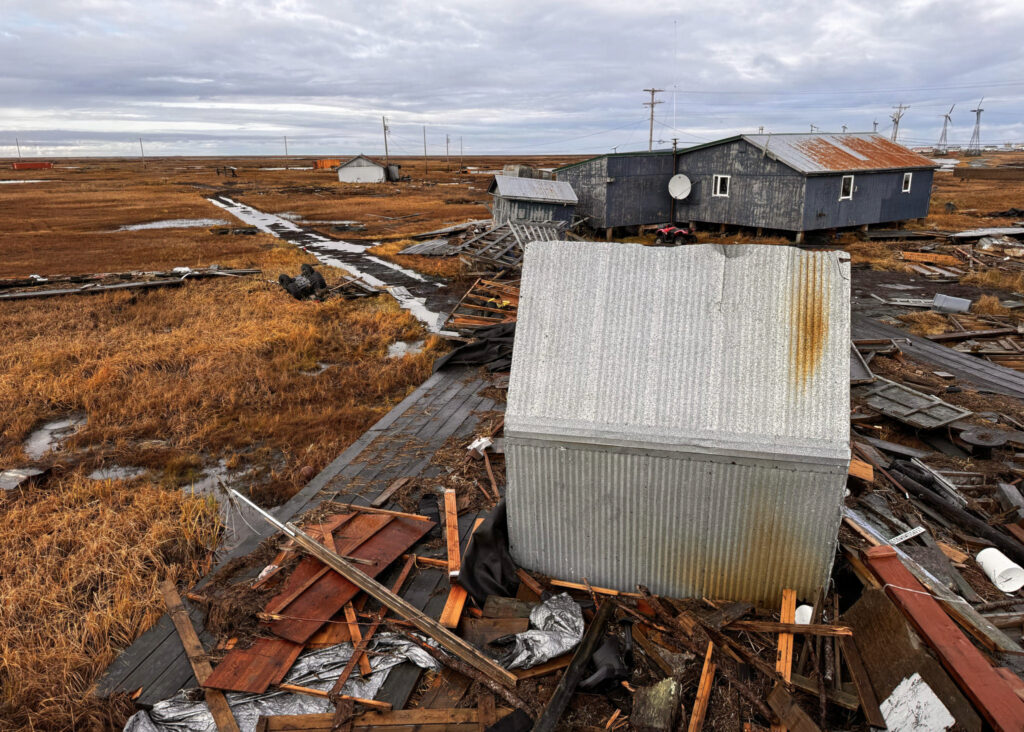
Damage in Kwigillingok from ex-Typhoon Halong is seen on Oct. 16, 2025. (Photo provided by the Alaska National Guard)
In the Alaskan villages of Kipnuk and Kwigillingok, the devastation left by Typhoon Halong still lingers a year after the storm hit. Schools remain closed, homes are strewn across the tundra, and residents work tirelessly to restore essential infrastructure destroyed by the storm’s waves. The stark reality of climate change is evident in these communities as they grapple with the aftermath of a natural disaster that claimed lives and displaced residents.
Typhoon Halong, which struck in October 2025, left a trail of destruction in its wake, affecting over 45 communities in Western Alaska. The storm forced approximately 1,500 residents to evacuate, many of whom have yet to return. As the land slowly recovers, the Federal Emergency Management Agency (FEMA) has been pivotal in providing temporary rental assistance to nearly 200 households, a relief that may extend until October 2027 if state officials succeed in their extension request.
Faced with the harsh reality of increasing storm threats, the communities of Kipnuk and Kwigillingok have decided to relocate. The decision to move was overwhelmingly supported by community votes, with fears of future storms driving the urgency. Dustin Evon, Kwigillingok’s climate resilience coordinator, recalls a time when the land was firm, and the bay’s freeze-up protected the villages. Now, with the Arctic waters iceless, the permafrost is melting, transforming Evon’s childhood village into a marshy expanse.
The challenges of relocation are compounded by questions of funding and logistics. In August, Kwigillingok argued before the U.S. Supreme Court in the climate case Suncor v. Boulder, suggesting that Big Oil companies should bear the financial responsibility for climate damages. Alongside other tribes, Kwigillingok emphasized the threat to their survival, as echoed in their legal brief: “It is accordingly no exaggeration to say that the very survival of many Alaska tribes and their cultures is at stake.”
Alaska’s acting attorney general, however, sided with oil companies, highlighting the state’s economic dependence on the oil industry, despite the pressing climate challenges facing Alaska’s Indigenous populations. The outcome of the Suncor case could set a precedent for over 60 similar lawsuits nationwide, potentially impacting the financial pathways available to communities seeking compensation for climate-induced damages.
As the Supreme Court deliberates, the urgency in Kwigillingok and Kipnuk remains. Both villages are exploring land options for relocation, with Kwigillingok considering federal land for a potential move. However, the path to financing such a migration is unclear. Federal disaster recovery programs focus on repairs and temporary housing, not the creation of new communities. The need for a coordinated federal approach to relocations becomes increasingly evident as climate disasters become more frequent.
For Rayna Paul, Kipnuk’s tribal administrator, the personal and cultural loss is profound. The storm’s aftermath has disrupted traditional practices and community ties, underscoring the broader impact of climate change on Indigenous ways of life. Her vision for the future includes a new village where community bonds remain intact, yet she acknowledges the emotional toll of leaving ancestral lands.
The call for change extends beyond Alaska, as legal advocates and tribal leaders press for systemic reforms to address the financial and logistical challenges of community relocations. As climate threats loom large, the urgency to find sustainable solutions for vulnerable communities grows, pressing stakeholders to come together for the future of Alaska’s Indigenous populations.
Original Story at alaskabeacon.com