AI’s Double-Edged Sword: Boosting Fossil Fuel Emissions Despite Renewable Potentials
Artificial Intelligence (AI) is often viewed as a tool for enhancing efficiency and reducing emissions, but recent research suggests it might be more of a double-edged sword. A study has found that while AI can optimize renewable energy, its role in increasing fossil fuel productivity may lead to higher net carbon emissions.
Researchers conducted a study modeling AI’s potential to enhance both clean energy generation and fossil fuel production. Examining 64 different scenarios, they discovered that yearly carbon emissions could increase by 0.47 to 1.8 gigatonnes, representing a 1-5% rise in the energy sector’s annual emissions.
This study is pioneering in quantifying AI’s climate impact across the entire power sector. Traditionally, research has focused on AI’s indirect climate benefits—like minimizing renewable energy downtime—without considering how it might drive up emissions by increasing fossil fuel productivity.
Lynn Kaack, an assistant professor at the Hertie School, noted, “What most studies have done so far … is compare the datacentre energy use with the emissions savings AI has. They completely omit this picture of AI causing increases in emissions.”
The research indicated that emissions would only decrease if AI did not enhance fossil fuel sector productivity. For emissions to stabilize, AI’s productivity gains in renewables would need to surpass those in fossil fuels by at least four times, assuming equal AI adoption rates.
Holly Alpine, a study co-author, emphasized the conservative assumption that AI would be adopted equally by fossil fuel and renewable sectors. She stated, “Fossil fuel applications are already happening at scale today – real contracts, real deployment, with evidence from industry operators and financial analysts.” In contrast, renewable applications remain mostly experimental.
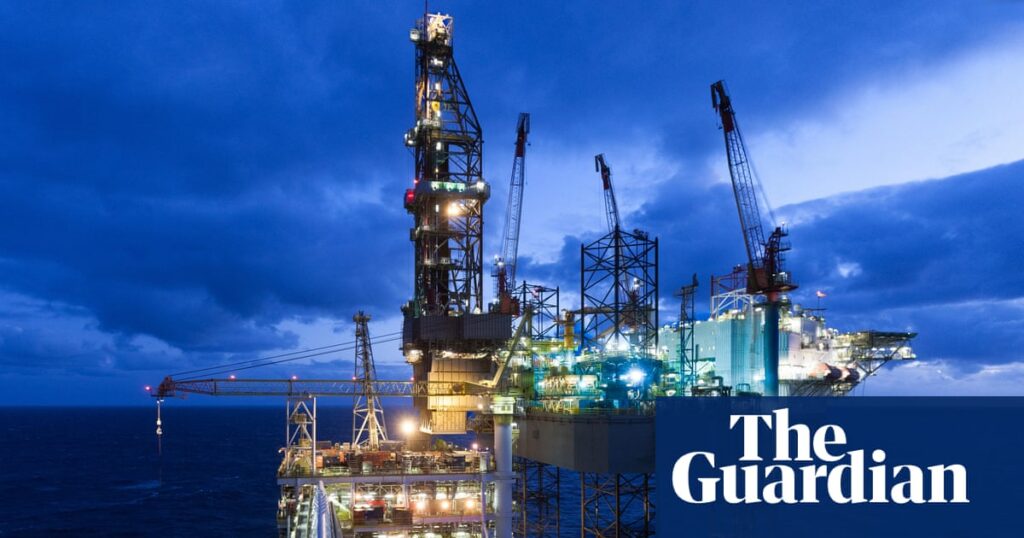
The International Energy Agency estimates AI could increase technically recoverable oil and gas reserves by 5% and reduce deepwater offshore project costs by 10%. Industry leaders have praised AI’s potential, describing it as “the next fracking boom.”
Saudi Aramco reported embedding AI “in everything,” leading to productivity boosts and more wells. Similarly, Equinor attributed significant oil discoveries to AI, highlighting its importance in efficient well planning.
Rystad Energy projected that from 2026 to 2030, AI and digitalization would generate nearly $500bn in value for fossil fuel exploration and production. This stems from enhanced efficiency, increased production, and reduced development times.
While researchers did not include datacentre energy demand in their analysis, they found AI’s productivity gains in fossil fuels could lead to emissions three times higher than current datacentre estimates. They clarified their findings as directional rather than precise forecasts, as the trend remained consistent across all scenarios.
Ketan Joshi, a climate analyst, noted the AI sector’s dependence on fossil fuels extends beyond datacentres. He warned, “Even within some parts of the climate movement, there is still a denial that an unchecked tech industry will inherently boost fossil fuels.”
Original Story at www.theguardian.com