AI Revolutionizes Electric Vehicle Charging, Boosting Battery Longevity
Charging electric vehicles (EVs) rapidly has been a double-edged sword—essential for long trips but detrimental to battery life. However, a breakthrough from Chalmers University of Technology in Sweden promises to extend battery life by almost 23% without lengthening charging time, thanks to smart AI technology.
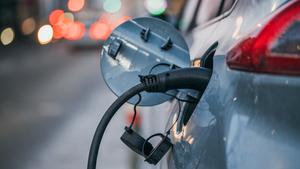
image: Smart AI charging can extend electric car battery life by 23 percent – without increasing charging time. Photo: Ivan Radic | CC BY 2 0
Credit: Ivan Radic
Fast charging is pivotal for EV users, especially for taxis, heavy vehicles, and passenger cars that require quick power-ups during long journeys. “For taxis or heavy vehicles in industry, for example, access to fast charging means a lot, but this is also true for passenger cars,” explains Changfu Zou, a professor at Chalmers University’s Department of Electrical Engineering.
Despite its convenience, rapid charging accelerates battery degradation, a concern for potential EV buyers in Europe. The typical EV battery lifespan ranges from 8 to 15 years, dependent on charging habits and usage.
AI-Driven Charging Innovation
Collaborating with Meng Yuan from Victoria University of Wellington, New Zealand, Chalmers University researchers developed an AI model that adjusts the charging current based on the battery’s health and chemistry. This method extends battery life by approximately 23% without compromising charging speed.
“We show that it is possible to charge more or less as fast as today, but with significantly less long-term degradation of the battery,” says Meng Yuan. The AI strategy combats issues like lithium plating, where lithium deposits on the electrode, potentially causing safety hazards and reducing battery capacity.
Reinforcement Learning in Action
The AI charging strategy employs reinforcement learning, rewarding optimal charging actions. A simulation environment modeled popular EV batteries, incorporating variables affecting charging duration and battery health. The AI adjusted charging based on the battery’s current state and overall health, maintaining short charging times and minimizing harmful reactions.
“Our study shows that smart adaptation of the current during charging, taking into account the changing electrochemical state of the battery, can maximize both the performance and the life of the battery,” states Changfu Zou.
Implementing the Strategy
This innovative strategy is cost-effective and can be integrated via software updates in vehicles’ battery management systems, though calibration is needed for various battery types. “Using transfer learning, we can take advantage of what our AI model has already learned, and thus adapt the AI model to new batteries more quickly,” notes Changfu Zou.
Future tests on physical batteries are planned, aiming to enhance the transport sector’s electrification. “To reduce emissions and transition to a fossil-free society, it is important for people to be prepared to switch to electric vehicles,” Meng Yuan emphasizes. For the auto industry, extending battery life by nearly 23% could lead to reduced warranty costs, improved resale value, and more efficient resource use.
References and Further Reading
For more information on electric vehicle battery life and fast charging impacts, explore the following sources:
- How long does the battery last in an electric vehicle? Vehicle battery life, charging cycles and cost | go-e
- Volvo Cars Battery Information (In Swedish)
- Battery Encyclopedia: End of Life
- EV Battery Health Study: Fast Charging & Degradation | Geotab
- Global Trends in Electric Vehicle Charging Demand and Infrastructure Development
Original Story at www.eurekalert.org