Innovative Researcher Uses Satellite Technology to Combat Climate Challenges for Farmers
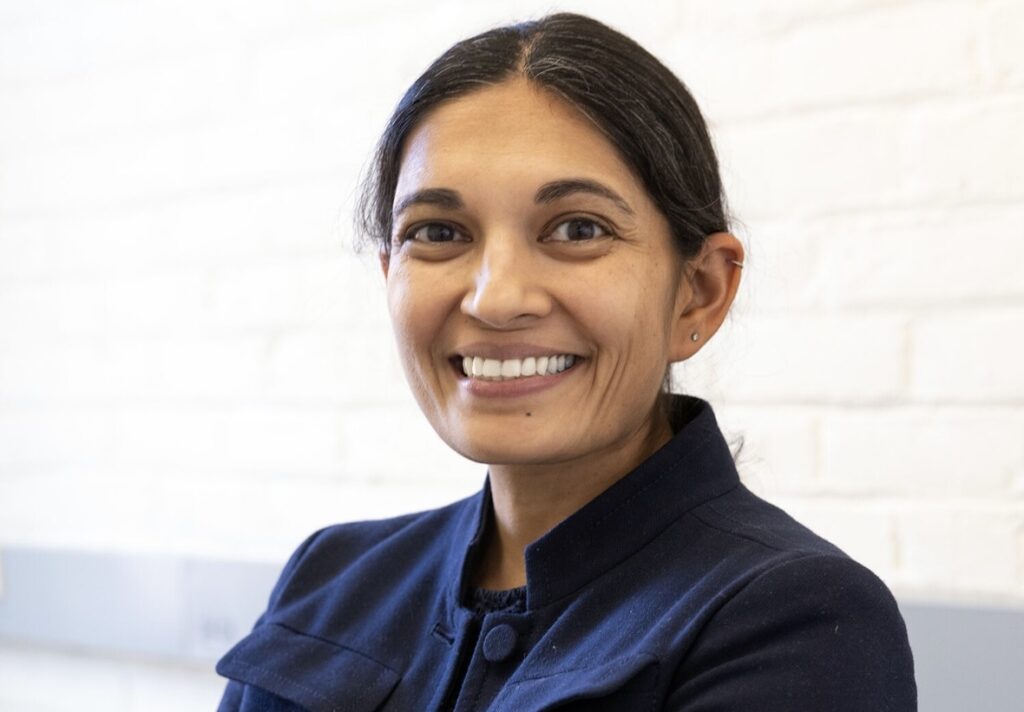
The intersection of advanced technology and grassroots understanding is at the core of Meha Jain’s groundbreaking work. Jain, an Indian American researcher, has been awarded the first ASU-Science Prize for Transformational Impact. Her research offers a fresh perspective on how satellite imagery and machine learning can aid smallholder farms in adapting to climate-induced stress.
Jain, who serves as an associate professor at the University of Michigan’s School for Environment and Sustainability, delves into the hidden costs that these climate adaptations might impose on farms crucial for ensuring food security for millions. Her work aims to create tools that boost food production while maintaining environmental sustainability, as noted in a release from the university.
The ASU-Science Prize, a collaborative effort between Arizona State University and the esteemed journal Science, acknowledges research that not only expands knowledge but also has a tangible societal impact.
Despite the high-tech nature of her research, Jain’s passion is deeply rooted in gaining a true understanding of the challenges faced by smallholder farmers. Since her time before joining the University of Michigan, Jain has been actively engaging with farmers and local organizations to grasp their most pressing issues. These relationships have been instrumental in shaping the satellite datasets her team develops and the patterns they analyze.
Read: From scientist to C-suite: Sruti Balasubramanian is actnano’s new CTO
Jain emphasized the importance of real-world interaction in her research: “Most of my research questions are informed by what we or our collaborators see on the ground,” she said. “Having that real-world interaction is incredibly motivating.”
In her work in India, Jain uncovered a surprising trend: many farmers relied increasingly on groundwater due to inconsistent rainfall and rising temperatures, despite understanding its unsustainability. “What really struck me was that this wasn’t a knowledge gap,” Jain noted. “Farmers understood the long-term consequences of using groundwater for irrigation. It was the circumstances they were in that left them with few alternatives.”
This realization shifted her research focus from questioning groundwater overuse to exploring its prevalence and associated risks. By utilizing satellite data, her team innovated methods to detect irrigation practices across regions, aiming to understand the impacts on crop yield and environmental health.
The findings were stark. Groundwater depletion was more severe in some areas than previously thought, while in others, historical practices or aquifer differences made the situation less critical.
Read: Indian American climate scientist Veerabhadran Ramanathan wins Crafoord Prize
Jain’s research is characterized by its ability to identify nuanced patterns at a large scale. It reveals the complex trade-offs in climate adaptation, showing that while some practices help farmers manage short-term climate stress, they may worsen long-term groundwater depletion.
Her aim is to provide precision insights that help farmers and policymakers develop sustainable management strategies. Recently, Jain has been moving towards direct support, working on a smartphone app that delivers satellite-derived insights to farmers and organizations in a user-friendly format.
Jain’s journey from viewing satellites as mere observational tools to utilizing them for actionable data products reflects her evolving sense of responsibility. “I became more excited about creating data products that could actually be used,” she said.
She hopes her recognition with the ASU–Science Prize will inspire fellow scientists, especially those early in their careers, to pursue impactful research. “Follow what motivates you,” Jain advised. “Don’t worry so much about what you think will be a high-impact paper. Work on the problems that make you want to show up every day.”
Jain holds a PhD in ecology, evolutionary, and environmental biology from Columbia University and a BA from Princeton University in the same field.
Original Story at americanbazaaronline.com