Community Resilience in North Carolina: How Solar Microgrids are Transforming Disaster Preparedness
In the serene backdrop of North Carolina’s mountains, an unexpected hero has emerged in the face of natural disasters: the Double Island Volunteer Fire Department. Positioned 50 miles northeast of Asheville in Yancey County, this community hub is strategically embracing solar energy to bolster its resilience against future catastrophes.
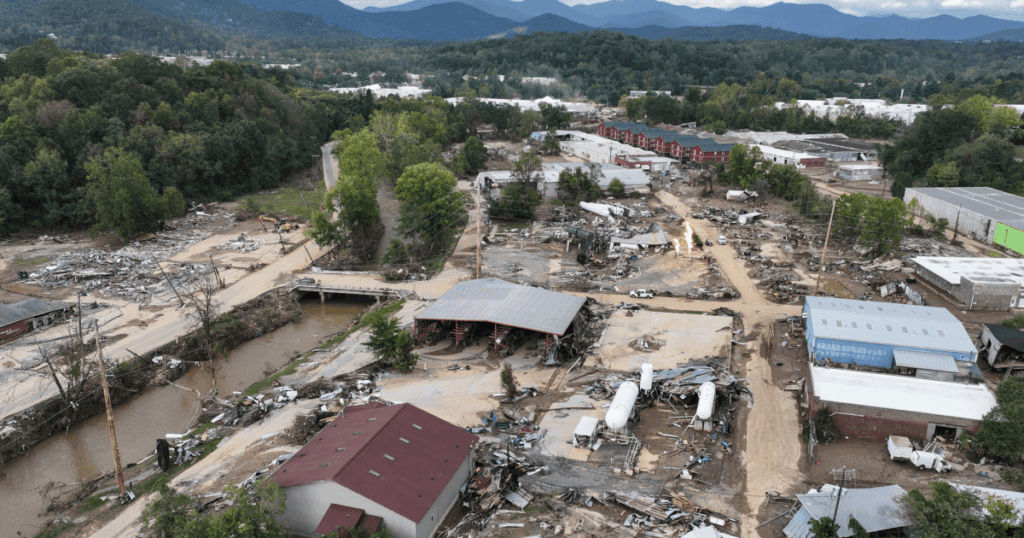
The Double Island Volunteer Fire Department, a pillar in the community since it served as a schoolhouse and church, became a sanctuary when Hurricane Helene struck with devastating floods 16 months ago. Assistant fire chief Dan Buchanan, whose lineage in the area dates back to 1747, recounted how the station became the focal point for relief efforts. “This is [our] ‘downtown,'” Buchanan explained. “In the wake of the storm, people were like, ‘Let’s get to the fire station.'” (source)
Faced with power outages and communication blackouts, Buchanan rallied locals to provide essential supplies and search for isolated residents. “By the end of the fourth day, we had accounted for all the residents of the Double Island community,” Buchanan noted, although some suffered due to delayed access to critical medications.
In response, the fire department has installed a microgrid consisting of 32 solar panels and two four-hour batteries, aimed at reducing energy costs by approximately $100 monthly. This setup is crucial for maintaining essential services during emergencies, ensuring the station can operate radio equipment and refrigeration for medicines.
The microgrid initiative, supported by both governmental and nonprofit organizations, is part of a broader effort to enhance disaster resilience across the region. Jamie Trowbridge, a senior program manager at Footprint Project, emphasized the initiative’s dual focus on disaster readiness and utility cost savings. “We’d like to see this be a pilot for us on what scalable microgrid technology could be across all of western North Carolina—and maybe the country.” (source)
Following the havoc wreaked by Hurricane Helene, many communities turned to local fire stations for aid. In Black Mountain, volunteers led by Kristin Stroup coordinated efforts from the visitor center, providing food and clearing roads. “People [were] just driving around the town with chain saws,” Stroup recalled.
Footprint Project, along with partners like the North Carolina Sustainable Energy Association, has been pivotal in deploying microgrids to various sites, including Double Island. This initiative has been further supported by state funding under Governor Josh Stein’s administration, with plans to install up to 24 microgrids across western counties.
In addition to stationary systems, the state is investing in mobile aid units known as “Beehives,” designed to purify water and establish temporary microgrids during emergencies. This comprehensive approach aims to foster resilience and preparedness for future extreme weather events.
While the path to recovery is ongoing, the collaboration between local entities and organizations like Invest Appalachia highlights a growing commitment to long-term resilience. “What we’re being tasked with as recipients of this money is to try and figure out how we make this a much bigger project,” said Sara Nichols of the Land of Sky Regional Council.
The efforts in North Carolina serve as a testament to the power of community and innovation in disaster preparedness. As Nichols aptly put it, “We were a place that was not supposed to get a storm. We were a climate haven.” These initiatives may well provide a blueprint for communities nationwide seeking to enhance their own resilience against the unpredictable forces of nature.
Original Story at www.motherjones.com