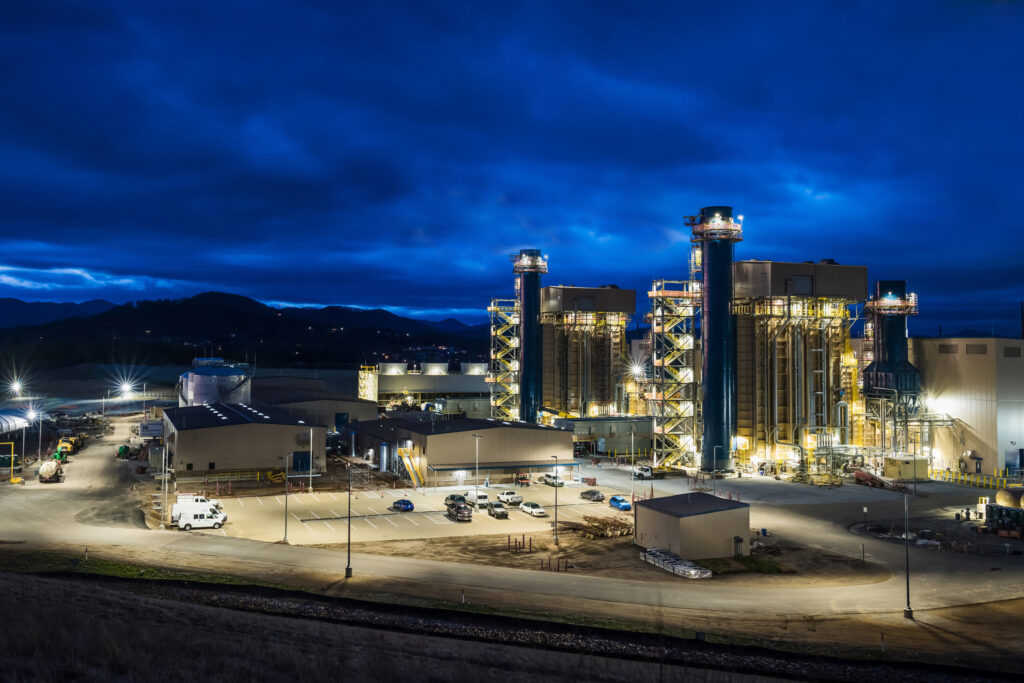
Duke Energy is considering constructing a 1,360-megawatt natural gas power plant in western Davidson County, North Carolina. The facility, if approved by the N.C. Utilities Commission, would significantly increase greenhouse gas emissions in the area.
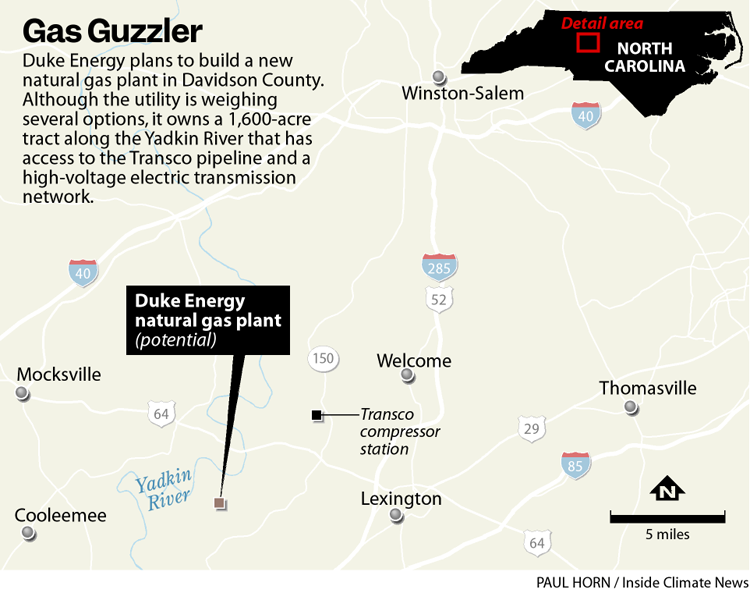
The proposed site spans 1,600 acres at 3714 Giles Road, approximately 8.5 miles west of Lexington, adjoining the Yadkin River.
Bill Norton, a spokesperson for Duke Energy, stated that no final decision has been made regarding the location of new combined cycle facilities. The company is evaluating multiple potential sites across various counties. Combined cycle facilities utilize both gas and steam turbines to enhance efficiency.
Duke’s revised Cluster Study Phase 1 report, dated December 2025, suggests the construction of a natural gas project, CC4, in Davidson County. This is the first report of potential sites for CC4.
The company’s website summary also mentions another plant, CC5, without disclosing its location. Both projects require approval from the Utilities Commission.
Sites for large natural gas plants are limited by land requirements. The North Carolina Electric Membership Corp. (NCEMC) owns a 430-acre site near the Transco natural gas compressor station, northwest of Lexington, that could accommodate such a facility.
However, an NCEMC spokesperson informed Inside Climate News that no projects are planned for the site. The NCEMC provides power to member cooperatives and owns shares in several Duke facilities.
Maggie Shober, a transmission expert with the Southern Alliance for Clean Energy, revealed the potential Davidson County sites. She emphasized the importance of early access to information regarding energy projects to allow environmental advocates to prepare responses.
Duke attributes the need for increased energy capacity to growing data centers, new manufacturing plants, the life sciences industry, and population growth. The Davidson County plant is part of a broader natural gas expansion across North Carolina.
Unlike Duke’s other proposed plants, the Davidson County project would be built on undeveloped land rather than near existing facilities. This has raised concerns about land use compatibility and environmental impact.
Shelley Robbins, senior decarbonization manager at the Southern Alliance for Clean Energy, criticized the project for potentially driving up costs and environmental degradation. She argues it is unnecessary and would divert resources away from agriculture.
Duke acquired the Giles Road property in 1995 from its former real estate division, Crescent Resources. The land is strategically located near a Transco pipeline and high-voltage transmission lines.
Natural gas plants emit less carbon dioxide than coal plants but release significant methane, a potent greenhouse gas. Duke’s Asheville Combined Cycle Station released 1.1 million tons of greenhouse gases in 2023. The proposed CC4 plant would have a generating capacity 2.5 times greater.
Duke’s strategic plans, including the 2025 carbon plan, discuss enhanced liquified natural gas (ELNG) for flexible energy supply. However, details on ELNG at the Davidson County site remain unclear.
State policies have facilitated fossil fuel growth, such as Senate Bill 266, which removed Duke’s interim decarbonization goal. The utility aims for net-zero emissions by 2050.
Duke and other energy companies might pass new project costs to customers, raising bills due to construction and unpredictable gas prices. State law mandates Duke to update its Carbon Plan and Integrated Resource Plan biennially, outlining energy projections and impacts on ratepayers.
The N.C. Utilities Commission will hold a public hearing on these plans on Feb. 4 in Durham, with a ruling expected by year-end.
The Trump administration’s policies have emphasized fossil fuel development while reducing incentives for renewable energy. Recently, the EPA proposed changes to the Clean Water Act to expedite energy project permits, including those for natural gas infrastructure.
Original Story at insideclimatenews.org