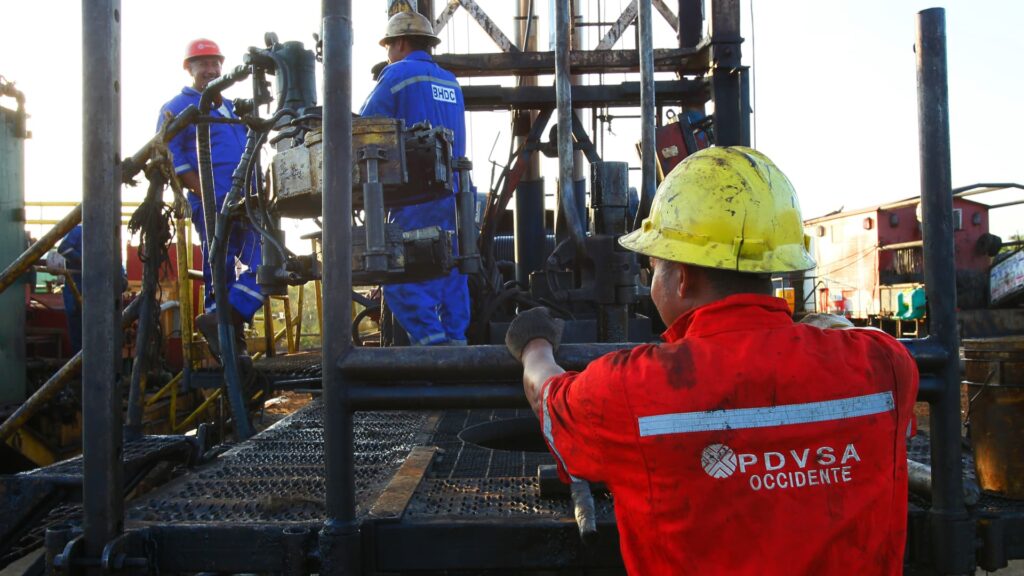
Potential Impact of Political Shift in Venezuela on Global Oil Markets
The recent political upheaval in Venezuela, with President Donald Trump leading efforts to remove President Nicolas Maduro, has raised questions about its impact on global oil markets. Despite the unexpected scale of the U.S. intervention, energy analysts suggest that significant disruptions to oil markets are unlikely in the immediate future.
Arne Lohmann Rasmussen, chief analyst at A/S Global Risk Management, explained that although the U.S. move was unforeseen, the market had already accounted for potential disturbances in Venezuela’s oil exports. Venezuela, an OPEC founding member, boasts the largest proven oil reserves but currently produces less than a million barrels per day, constituting less than 1% of global output.
The country exports nearly 500,000 barrels daily, noted Rasmussen, who also highlighted the current global oil surplus and tepid demand typical of the year’s first quarter. He predicts only a modest increase in Brent crude prices, estimating a rise of $1 to $2 when futures trading opens, with prices possibly dropping the following week.
“Despite this being a huge geopolitical event that you would normally expect to be positive or push up oil prices,” Rasmussen stated, “the bottom line is there’s still too much oil in the market, and that’s why oil prices will not go ballistic.”
Bob McNally from Rapidan Energy advised that while a third of Venezuela’s oil production risks disruption, it does not pose a substantial threat to oil markets short term. The oil market recently experienced its steepest annual decline in five years, driven by increased OPEC+ production and record U.S. output.
With the potential for a new Venezuelan government, analysts foresee a possibility of increased oil production if sanctions are lifted and foreign investment returns. Saul Kavonic of MST Financial estimates exports could reach 3 million barrels in the medium term.
Energy consultant David Goldwyn remarked, “If anything, the future of Venezuela will have a bearish impact on the market, because there’s really nowhere to go but up.”
President Trump confirmed that the embargo on Venezuelan oil remains, but announced plans for U.S. companies to invest in rebuilding Venezuela’s energy sector. However, details on the companies involved and the operational logistics remain unclear.
Goldwyn noted the challenges of predicting U.S. corporate investments amid uncertain government transitions in Venezuela. He emphasized that companies are cautious, recalling past expropriations of foreign assets by the Venezuelan government.
McNally of Rapidan Energy highlighted that while accessing Venezuela’s reserves is tempting for U.S. firms, it requires substantial investment and time. He questioned the necessity of such reserves given the potential halt in oil demand growth due to environmental policies.
“Until late last year, the market consensus had been that demand for oil is going to stop growing in four years,” McNally explained. However, changing climate policies and slowing electric vehicle sales have revived interest in Venezuelan oil reserves.
“All of a sudden you’re starting to say: ‘Whoa, we’re going to need more oil,'” McNally concluded.
Original Story at www.cnbc.com