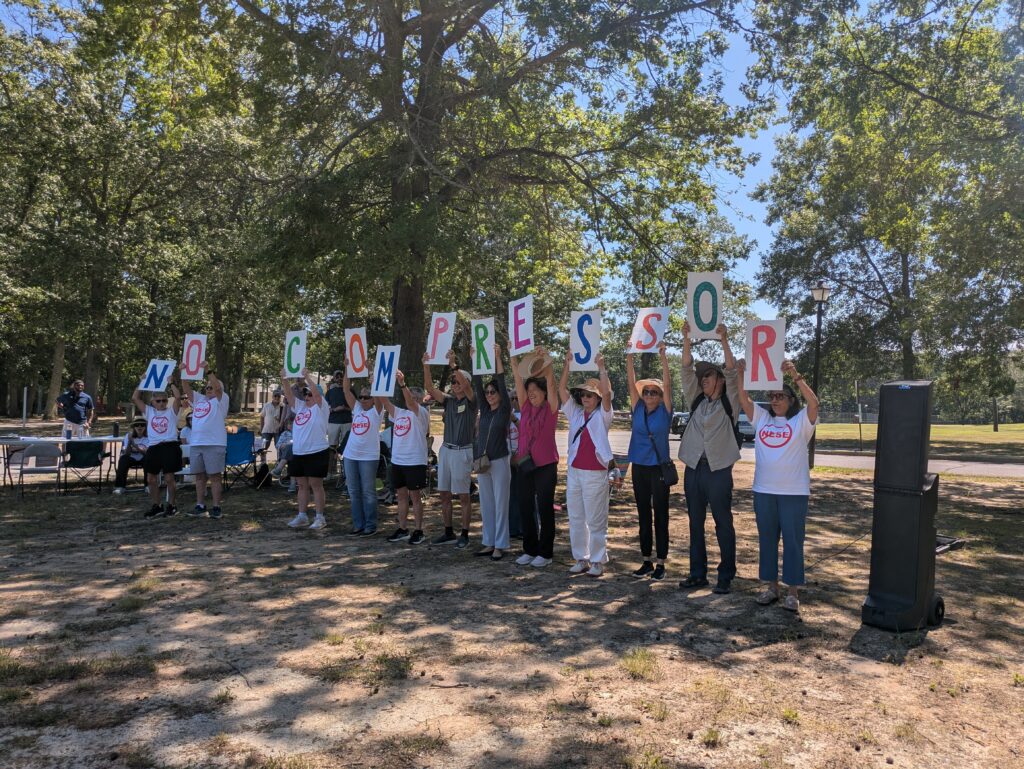
The New Jersey Department of Environmental Protection (NJDEP) is reviewing air permits for a proposed 32,000-horsepower compressor station in Franklin Township, Somerset County, despite strong community opposition. The station is part of the Northeast Supply Enhancement (NESE) pipeline project.
The NESE pipeline, previously rejected twice by New Jersey and New York, aims to extend the Transcontinental natural gas pipeline from Pennsylvania to New York City, under the Raritan and Lower New York Bays. The project, backed by the Trump administration’s push for energy independence, is presented by Transcontinental Gas Pipe Line Company LLC (Transco) as crucial for meeting growing energy demands in New York.
Local residents and environmentalists question NJDEP’s support after past rejections, citing threats to coastal ecosystems, renewable energy goals, and air and water quality. Following NJDEP’s Nov. 7 approval of NESE water permits, environmental groups filed lawsuits challenging the decision.
At a Nov. 13 public hearing on air permits, residents from Princeton Manor, near the proposed site, expressed concerns over potential health risks from air pollution. “In a one-and-a-half-mile radius, 6,000 or more New Jerseyans will be affected by toxic air,” stated resident Rupali Chakravarti.
Transco did not comment. Princeton Manor residents pressed NJDEP on health protections, questioning the safety of living near a natural gas compressor station.
Compressor stations maintain pipeline pressure but can emit volatile organic compounds, impacting air quality. A 2021 EPA report identified 1,790 stations supporting over 279,000 miles of pipelines nationwide. Studies, including those from the Virginia Scientist-Community Interface, confirm their negative environmental impact.
Poor air quality links to health issues like headaches and long-term risks such as lung cancer. Franklin Township Mayor Philip Kramer, who previously installed air monitors, said the compressor’s pollution could equal that of 3,200 cars annually.
Franklin Township has opposed the station since 2016, forming a task force to address health concerns. Mayor Kramer criticized repeated battles against the project, noting a lack of community benefit.
Kramer recounted a meeting with Transco, who dismissed an electric-powered station to avoid customer burdens, hinting at profitability concerns over environmental considerations.
Testimonies during the air permit hearing raised concerns about blowdowns, or controlled gas releases, not addressed in permit applications. Sierra Club’s Anjuli Ramos-Buscot called this omission a “huge mistake,” stressing the need for transparent information.
NJDEP lacks authority over emissions from compressor stations and pipeline leaks, raising concerns about benzene and formaldehyde exposure. Ramos-Buscot highlighted regulatory weaknesses in addressing air quality issues from pipelines.
Original Story at insideclimatenews.org