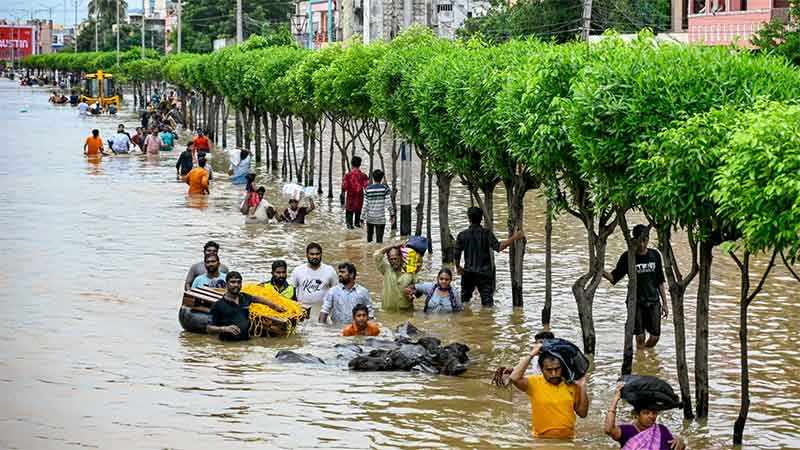
Climate Change: A Stark Reality for South Asia and Beyond
The effects of climate change are becoming increasingly evident across the globe, but their impacts are not evenly distributed. The disparities between the Global North and South highlight a significant imbalance in both the causes and consequences of global warming. With its unique geographical and socioeconomic challenges, South Asia stands at the forefront of those most vulnerable to climate-related adversities.
Unequal Carbon Footprints: The North-South Divide
Historically, the Global North, home to just 16% of the world’s population, has consumed a staggering 69% of all fossil fuels since the Industrial Revolution. In stark contrast, the Global South, which houses 84% of the global population, has only used 31%. This unequal consumption is mirrored in economic disparities, with high-income countries boasting an average per capita GDP of $50,444 in 2024, compared to just $5,975 in low- and middle-income countries, and a mere $2,692 in South Asia (World Bank).
The Global South faces a dilemma: increasing fossil fuel use to boost development risks exceeding the 1.5°C warming limit, while limiting emissions may hinder economic progress. The remaining carbon budget to maintain the 1.5°C target is projected to be exhausted by 2030 (UNEP, 2025. Emissions Gap Report 2025).
South Asia’s Grim Climate Prospects
South Asia, encompassing countries like Afghanistan, Bangladesh, Bhutan, India, Maldives, Nepal, Pakistan, and Sri Lanka, is among the regions most susceptible to climate change. Despite accounting for only 3.6% of global cumulative emissions since 1751, South Asia’s geographical and economic vulnerabilities leave it acutely exposed to climate impacts.
The region’s diverse geography, including extensive river deltas and vast land masses, exacerbates its susceptibility to rising sea levels and severe heatwaves. Coupled with low economic resilience—its per capita GDP is a fifth of the global average—South Asia’s population struggles to adapt to these challenges.
Sea Level Rise and Cyclones: A Double Threat
Bangladesh and the Maldives, with negligible emissions, face existential threats from rising seas. Projections indicate that by 2100, significant areas of the Sundarbans and nearly all of the Maldives could be submerged. This scenario would create millions of climate refugees, leading to potential regional instability and humanitarian crises (Source).
Cyclones, exacerbated by global warming, are becoming more frequent and intense, causing widespread destruction in Bangladesh, India, and Sri Lanka. For instance, Cyclone Remal in 2024 and Cyclone Ditwah in 2025 have caused massive evacuations and substantial economic losses in these countries.
Water Stress and Potential Conflicts
Water scarcity looms large over Pakistan, Afghanistan, and Sri Lanka, countries with marginal contributions to global emissions. By 2040-50, these nations could face severe droughts, threatening food and water security for millions. The decreasing flow of the Indus and Amu Darya rivers, heavily reliant on glacial melt, could exacerbate regional tensions over water resources.
As these vital water sources dwindle, internal conflicts, similar to those seen over the Cauvery River in India, could destabilize regions and potentially lead to broader geopolitical conflicts.
Glacial Lake Outburst Floods: An Impending Hazard
Glacial lakes in the Himalayas pose a significant threat as their moraine dams are increasingly prone to collapse due to rising temperatures. The resulting glacial lake outburst floods (GLOFs) can devastate communities and infrastructure far downstream. The frequency of such events is expected to rise, threatening countries like Bhutan and Nepal with catastrophic floods despite their minimal carbon footprints.
The Need for Collective Action
Given these challenges, the South Asian People’s Action on Climate Crisis (SAPACC) advocates for collective, equitable, and sustainable solutions to mitigate climate impacts. Their core beliefs emphasize responsibility for emissions, equitable risk sharing, and the promotion of sustainability and justice in addressing global environmental challenges.
To contribute or respond to discussions on climate issues, contact [email protected]. Submissions are welcome in English, with a focus on sustainability and equity, as SAPACC seeks to foster dialogue and action for a more resilient future.
Original Story at countercurrents.org