Driverless Cars and the Emerging Landscape of Personal Autonomy
With the rise of companies like Waymo, driverless cars have moved from science fiction to reality, with commercial robotaxi services already operational in several cities. The future could see this level of autonomy extended to personally owned vehicles, with automakers actively working towards this goal in the coming years.
What possibilities could this unlock for personal autonomous vehicles (AVs)? The potential scenarios are diverse. For instance, you might send your vehicle to handle errands or collect meals, an aspiration held by companies like Autolane. Tesla CEO Elon Musk envisions a future where owners could transform their cars into ride-sharing services, generating income with minimal effort.
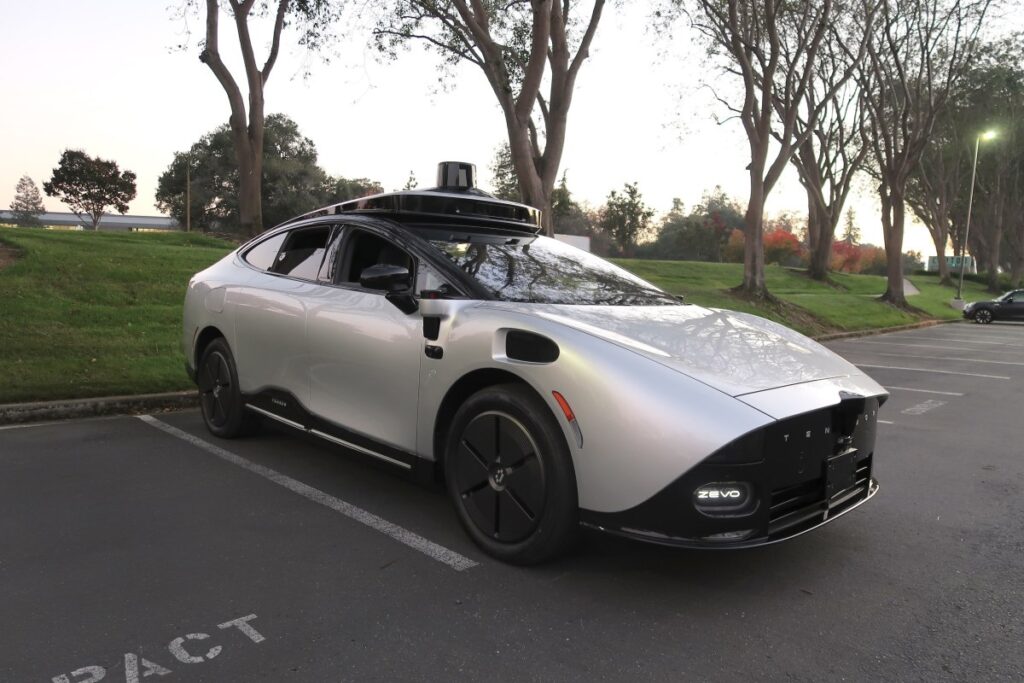
Hebron Sher, co-founder of the Dallas-based company Zevo, is poised to seize these opportunities. Known for its EV-only car-share fleet, Zevo is branching out into robotaxis with a new venture called Tensor.
Emerging from the remnants of a Silicon Valley startup known as AutoX, Tensor ambitiously plans to be the first to offer a fully autonomous car for sale to the general public by 2026. Zevo has committed to purchasing up to 100 of these vehicles, hoping to integrate them into its network despite the significant challenges Tensor faces in scaling production and ensuring reliability.
Tensors’ vision, as articulated by its chief business officer, Hugo Fozzati, is to empower individuals with their own Artificial General Intelligence, thereby granting more time, freedom, and autonomy. This partnership with Zevo is not merely a vehicle sale but a chance for individuals and small entrepreneurs to engage in the AV business era.
While the driver’s progress echoes the optimistic yet unfulfilled promises of a decade ago, the presence of actual robotaxis on roads today makes this vision more conceivable. Zevo’s approach involves leveraging the flexibility of newcomer companies like Tensor and Faraday Future, given their willingness to offer favorable deals and allow deeper software integration, essential for peer-to-peer sharing of robotaxis.
Sher’s previous venture with Faraday Future, a company with a troubled history struggling to deliver its FF91 luxury SUV, highlights the risks. However, Zevo’s strategic partnerships with these startups are driven by the potential for innovation and integration that more established carmakers are less inclined to offer.
Sher views the Tensor collaboration as mutually beneficial: Tensor gains an initial customer and a chance to validate its technology, while Zevo secures an advantageous deal and the ability to tightly integrate its software with the vehicles.
Despite the inherent risks, Sher believes in the American spirit of encouraging startups to take bold chances, stating, “I think that’s what makes America great, you know, the fact that we do encourage startups to take risk.”
Note: This article has been updated to indicate that AutoX was headquartered in Silicon Valley.
Original Story at techcrunch.com