In a rare show of unity, business and labor leaders in Colorado are urging state officials to prioritize energy affordability while pursuing environmental goals. This call to action comes as the state contemplates additional regulations aimed at reducing greenhouse-gas emissions, a move these groups believe could threaten job creation and economic stability.
The collaboration between groups often at odds highlights a shared concern over the potential economic impacts of stringent environmental policies. At a summit held at the International Brotherhood of Electrical Workers union headquarters in north Denver, participants discussed the rising costs associated with environmental restrictions and the resulting loss of job opportunities.
Maria Garduna, senior manager for sustainability and climate at Black Hills Energy, warned that immediate implementation of the state’s Clean Heat Plan could increase customer bills by $215 monthly. Meanwhile, Gary Arnold from the United Association of Plumbers and Pipefitters noted that the focus on renewable energy is hindering job prospects in sectors like manufacturing.
Ray Rivera, director of the newly formed Colorado Energy Crossroads, emphasized, “We came together out of a simple idea — Colorado can meet the state’s climate and energy goals while balancing that with affordability. Our mission is to bring practical, real-world solutions to those goals. The challenges we’re facing aren’t theoretical. They’re here now. They’re real. This is happening.”
State’s Emission Reduction Efforts
Since taking office in 2019, Gov. Jared Polis and Democratic legislators have pursued aggressive emissions-reduction mandates, citing noncompliance with federal ozone standards in the northern Front Range. These efforts target various sectors, from oil and gas to manufacturing and even gas-powered equipment. However, business leaders argue that these regulations have made living and doing business in Colorado increasingly expensive.
Loren Furman, President/CEO of the Colorado Chamber of Commerce, pointed out that Colorado ranks among the highest in the nation for housing costs, cost of living, and business expenses, partly due to its regulatory environment. More details can be found here.
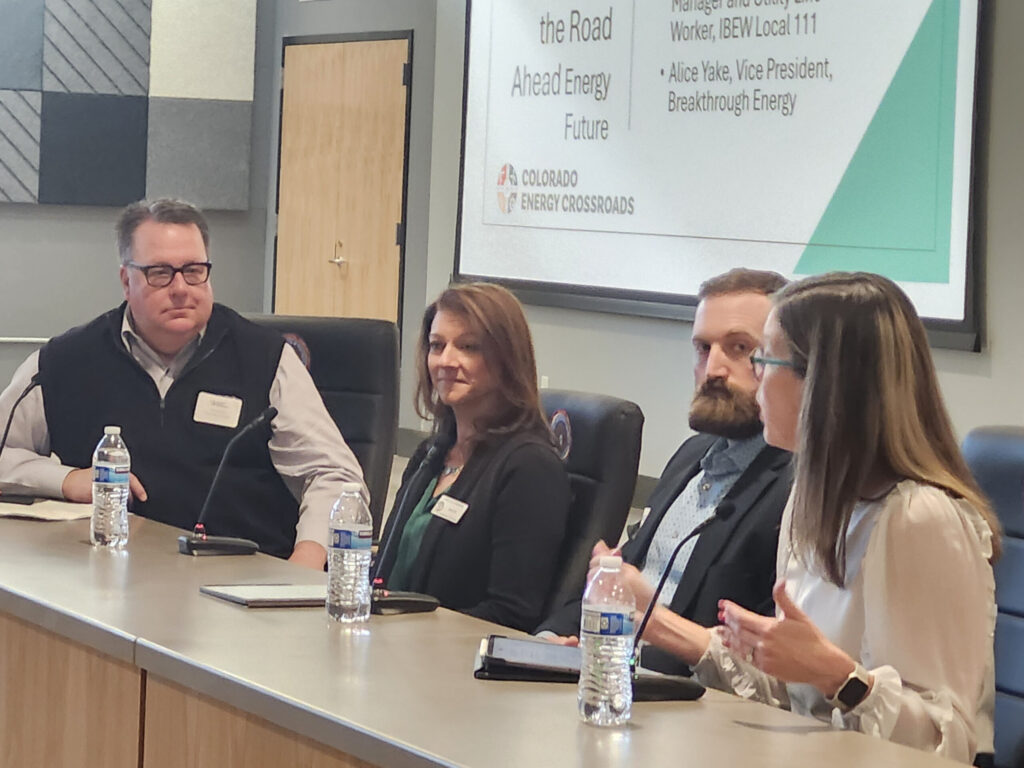
Union leader Gary Arnold speaks to business leader Loren Furman on a panel at Friday’s Colorado Energy Crossroads Summit.
Debate Over Energy Sources
The Clean Heat Plan, recently approved by the Colorado Public Utilities Commission, seeks significant emission reductions by 2050. Critics argue it could inflate costs and disregard labor concerns. Sara Espinoza Blackhurst of Action 22 noted that natural gas remains more affordable than electricity, questioning the plan’s feasibility.
Melissa Shatler from Climate Jobs stressed the importance of including labor representatives in policy discussions. Meanwhile, Dan Hendricks, of the Joint Electrical Apprenticeship and Training Committee, advocated for a diversified energy approach to workforce training, stating, “If you’re going to train a wind tech, shame on you. If you’re going to train a solar tech, shame on you. We need to train electricians.”
Future Legislative Considerations
The summit occurred shortly after Gov. Polis proposed consolidating workforce development programs to enhance job-training accessibility, as noted here. Meanwhile, some legislators are considering accelerating the state’s net-zero carbon emissions deadline to 2040, a move opposed by business and labor leaders due to cost and job implications.
A coalition-commissioned survey revealed conditional public support for current environmental goals, with less enthusiasm for expedited timelines that could raise utility costs. Most respondents favored a balanced energy mix, incorporating varied sources like natural gas and renewables.
Coalition’s Ongoing Efforts
Jeff Liszt of Impact Research highlighted the economic concerns raised at the summit, noting their significance. Coalition members intend to continue advocating for policies that balance climate goals with economic realities, emphasizing energy affordability and grid resiliency. Dave Davia of Colorado Concern remarked, “What we heard today is that Coloradans have a deep focus and a bent to doing the right thing environmentally — but at the same time, a big focus on affordability.”
Original Story at tsscolorado.com