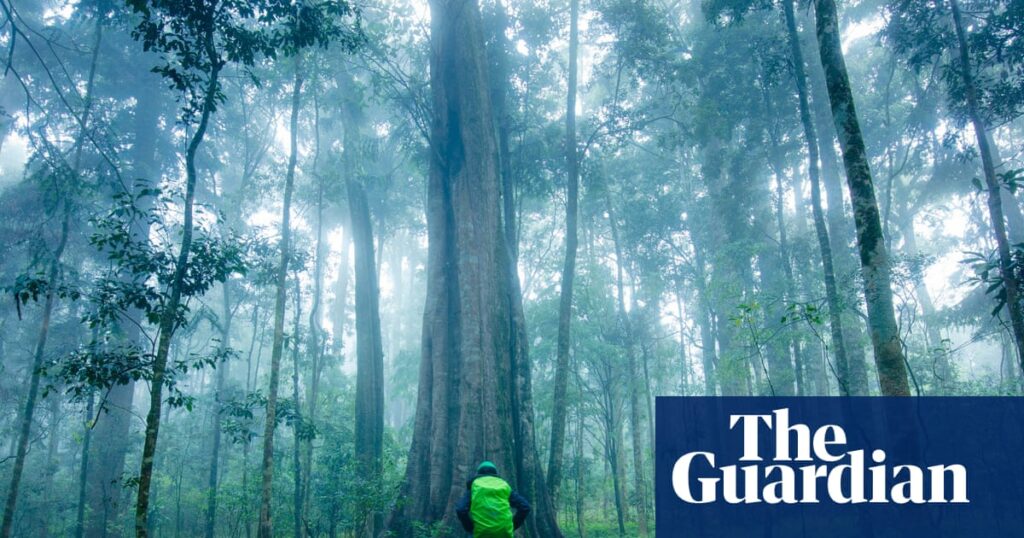
For the first time, tropical rainforest trees in Australia have shifted from being carbon sinks to carbon sources, highlighting a significant environmental change. This transformation is primarily attributed to rising temperatures and drier conditions, which have been intensifying over the past 25 years.
Research published in Nature indicates that while the root systems of these trees remain unaffected, the trunks and branches have started emitting more carbon than they absorb. This shift is rooted in the natural process where trees store carbon during growth and release it upon decay or death.
Traditionally, tropical forests have been recognized as carbon sinks due to their capacity to absorb more CO2 than they emit. However, data spanning nearly five decades from Queensland’s tropical forests reveals a concerning trend: tree trunks and branches have become net emitters due to increased tree mortality and insufficient new growth.
Dr. Hannah Carle from Western Sydney University, the study’s lead author, remarked, “It’s the first tropical forest of its kind to show this symptom of change.” This phenomenon positions Australia’s moist tropics as a potential model for what might occur in other tropical regions globally as climate conditions evolve.
Professor Adrienne Nicotra from the Australian National University, a co-author of the study, emphasized the need for further research to determine if Australian forests are indicative of a global trend. Such findings could impact global climate models, carbon budgets, and policies significantly.
Professor David Karoly, an expert in climate change science from the University of Melbourne, noted, “This paper is the first time that this tipping point of a switch from a carbon sink to a carbon source in tropical rainforests has been identified clearly – not just for one year but for 20 years.” Although not involved in the study, Karoly highlighted that if similar changes are detected in other rainforests, it could lead to underestimations in global warming projections, which would be alarming.
Despite these changes, rainforests continue to play a crucial role in CO2 absorption. However, their diminished ability to sequester carbon underscores the urgency for more rapid transitions away from fossil fuels.
The study utilized a comprehensive dataset dating back to 1971, tracking approximately 11,000 trees across 20 forest sites in Queensland. This research focused on above-ground carbon storage in tree trunks and branches, excluding below-ground factors such as soil and roots.
Dr. Raphael Trouve from the University of Melbourne, who was not involved in the study, acknowledged the importance of long-term data collection. His research on Victorian mountain ash forests, which are thinning rapidly under similar conditions, similarly relied on a 50-year dataset.
Trouve emphasized that these findings challenge the assumption that forests would store more carbon with increasing CO2 levels. “We thought the forest would be able to store more carbon because [CO2] is increasing. But looking at these long term empirical datasets, we find that is not the case – it allows us to confront the theory with reality and better understand how these systems work.”
Original Story at www.theguardian.com