A provision in President Trump’s One Big Beautiful Bill Act allocates millions of dollars in tax credits to U.S. companies producing metallurgical coal, primarily exported for global steelmaking. This language was added to the 887-page bill before the U.S. Senate narrowly passed it on Tuesday. It remains unclear which senators advocated for this pro-coal addition.
After a late-night session marked by GOP energy policy divides, the Senate approved the legislation 51-50, with Vice President JD Vance casting the deciding vote. The bill now moves to the House, which must agree to the Senate’s amendments before it reaches President Trump’s desk for signing.
Key Republican holdout Sen. Lisa Murkowski of Alaska ultimately voted for the bill but expressed hope that the House would return it for further refinement instead of rushing to meet Trump’s July 4 deadline.
Murkowski and at least four other Republicans worked to ease the federal incentives’ phase-out for clean energy. They eliminated an excise tax on wind and solar during weekend negotiations. Nonetheless, the bill, as passed, offers only modest clean energy improvements. It maintains tax credits for solar and wind projects initiated within a year of enactment but requires they be operational by 2027, creating uncertainty for developers.
Fossil fuels benefited from the legislation, with provisions mandating at least four oil and gas lease sales in the Arctic National Wildlife Refuge—an important issue to Murkowski—by the end of the Senate’s session.
The subsidy for metallurgical coal, providing a 2.5% tax credit, is another win for fossil energy producers. It applies regardless of production location and designates coal as a “critical mineral.”
An analysis from the U.S. Energy Information Administration suggests this provision could deliver an annual tax benefit of $200 million to $300 million across the metallurgical coal industry. Approximately three-quarters of U.S. metallurgical coal is exported for steelmaking, with Alabama shipping over 90% to foreign markets.
The White House has not yet commented on the subsidy. Cameron Walkup, an associate legislative representative for Earthjustice, described the subsidy as a last-minute addition that went largely undebated. Sen. Ron Wyden of Oregon expressed shock at the provision.
Critics argue the bill undermines a commitment to clean energy, pointing out the contradiction of cutting renewable energy funds while subsidizing coal exports. Lukas Shankar-Ross from Friends of the Earth criticized the subsidy as contrary to an “America First” agenda, suggesting it favors cronyism.
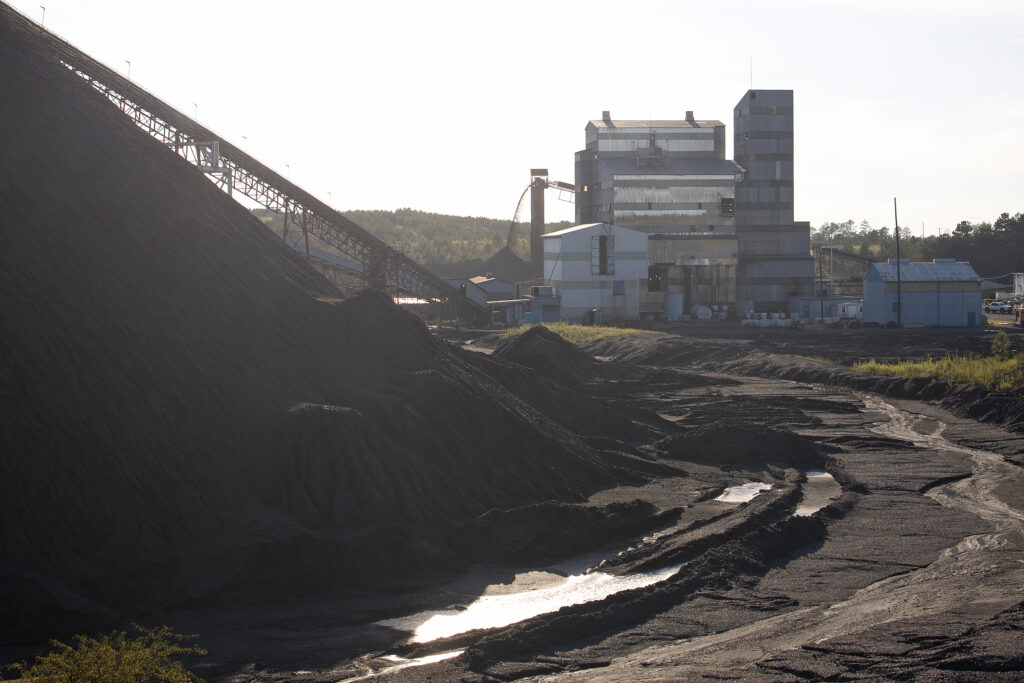
Recent months saw Secretary of the Interior Doug Burgum visiting Alabama met coal mines, emphasizing coal’s importance in U.S. energy policy. The Interior Department promoted “clean, beautiful coal” on social media following his visit.
However, Burgum did not address Warrior Met Coal’s safety and environmental violations, including the death of miner Aaron Haley in 2023. Most of Warrior Met’s coal is exported for international steel production.
Despite assertions of clean coal, coal remains the dirtiest fossil fuel. Warrior Met’s Blue Creek mine expansion could significantly increase coal production in Alabama if approved. State and federal taxpayer support may exceed $400 million.
The expansion seeks approval to mine large public land areas in Alabama. A draft environmental impact statement indicates increased greenhouse gas emissions and heightened risks for nearby residents. Public comments are open until July 21.
Chelsea Barnes of Appalachian Voices expressed concern over the subsidy incentivizing domestic coal production, exacerbating environmental and health issues, including rising black lung disease. Shankar-Ross highlighted the subsidy’s negative impact on transitioning to green steel and its contribution to health problems in coalfield regions.
Original Story at insideclimatenews.org