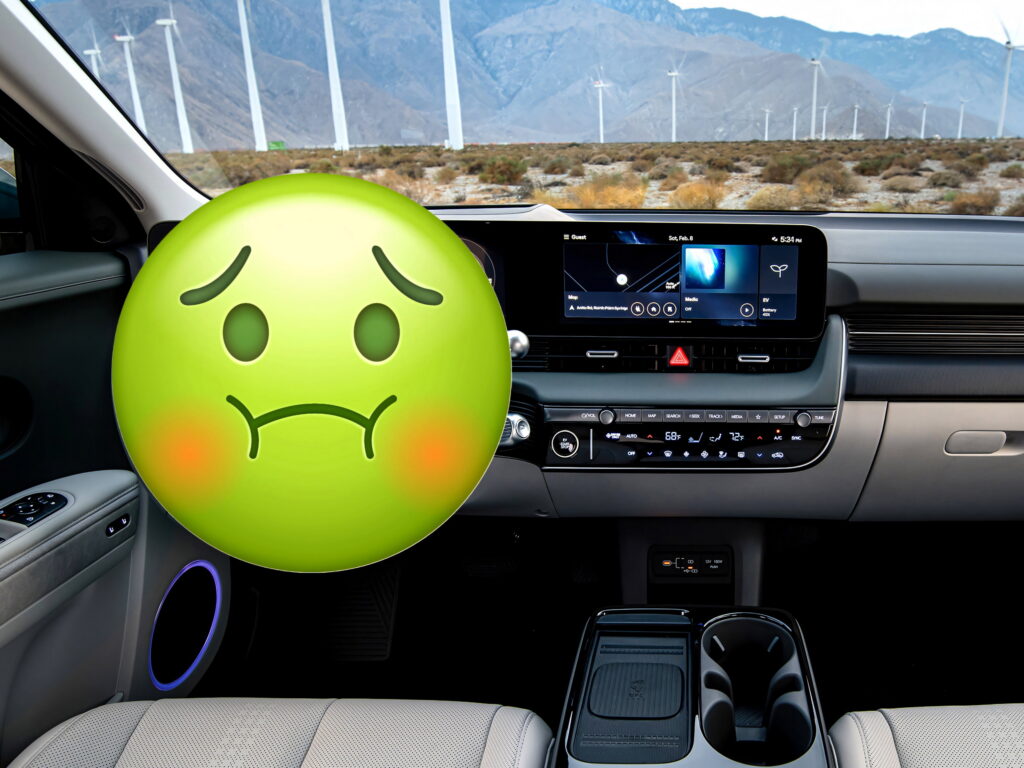
Experiencing Motion Sickness in Electric Vehicles: A Scientific Explanation
As electric vehicles (EVs) gain popularity, some passengers are noticing an unexpected downside: increased motion sickness. Scientists are delving into the reasons behind this phenomenon, suggesting that the unique characteristics of EVs might be to blame.
Many EV passengers report feeling more carsick compared to when they travel in traditional internal combustion engine (ICE) vehicles. This isn’t just their imagination, according to researchers who point to factors like regenerative braking and the absence of engine vibrations as possible causes.
The Unseen Impact of Regenerative Braking
One significant difference between EVs and their gas-powered counterparts is regenerative braking. This system allows EVs to slow down without using the brake pedal, often leading to smoother but more prolonged deceleration. Passengers, particularly those unused to this sensation, might find the experience unsettling, leading to nausea.
Unlike the brief deceleration in ICE vehicles, EVs provide a sustained slowing effect, which can be disorienting for passengers. Drivers new to electric cars might also struggle with the throttle response, as EVs deliver instant torque, making acceleration a different experience altogether.
Adjusting to a New Sensory Experience
Our brains have adapted to the sensory cues from traditional vehicles, such as engine noise and vibrations. However, EVs are notably quieter and smoother, lacking these familiar signals, which can confuse our senses and contribute to motion sickness.
William Emond, a PhD student focusing on car sickness, told The Guardian, “Greater sickness in EVs can be attributed to a lack of previous experience, as both a driver and as a passenger, where the brain lacks accuracy in estimating the motion forces because it relies on previous experience in other types of cars.”
Potential Solutions and Future Considerations
To mitigate these effects, some experts propose that automakers could integrate visual cues within the car, such as ambient lighting changes, to help passengers anticipate movement and reduce nausea. This approach could help the brain adjust to the new motion environment more effectively.
As the automotive industry continues to evolve, addressing motion sickness in EVs could become an essential aspect of passenger comfort. Meanwhile, consumers are encouraged to share their experiences and insights into whether this phenomenon is a genuine concern or merely a phase of adaptation.
Original Story at www.carscoops.com